

What specific cleaning methods are most effective for preparing different types of metal surfaces in electrostatic coating?
The most effective cleaning method depends on the metal and its contamination: alkaline or solvent degreasing removes oils, while abrasive blasting or mechanical abrasion removes rust, mill scale and adhered residues from steel. Aluminium and other non-ferrous metals generally need a suitable low-aggression clean and carefully controlled abrasion to avoid distortion or embedded contamination, followed by thorough rinsing and drying before electrostatic coating.
The most effective cleaning method for electrostatic coating is selected according to the substrate, the type of contamination and the condition of the existing surface. A typical preparation sequence combines contaminant removal with a controlled final clean, rinse and dry stage so that oil, corrosion products, dust, salts and cleaning residues do not interfere with powder adhesion or create surface defects.
Carbon and mild steel can usually tolerate the most aggressive cleaning. Aqueous alkaline cleaning is effective for cutting oils, grease and workshop residues, particularly in spray or immersion systems. Where the steel has rust, mill scale, weld discolouration or firmly adhered deposits, abrasive blasting is generally more effective than chemical cleaning alone. The abrasive and blast pressure must be selected to remove the unwanted layer without excessively roughening thin sections or distorting edges.
For steel components with light corrosion or limited contamination, mechanical methods such as wire brushing, rotary abrasion or sanding may be suitable for localised areas. These methods need careful control because they can smear contaminants across the surface or leave loose particles in pits and corners. After mechanical or abrasive preparation, the part should be thoroughly de-dusted, as residual abrasive and steel particles can become trapped beneath the powder film.
Galvanised and zinc-coated steel requires a less aggressive approach than bare carbon steel. Strong abrasion can remove or thin the zinc layer, while aggressive alkaline or acidic cleaners can attack the coating. A compatible degreaser followed by controlled sweeping or light abrasion is normally preferable when the zinc surface needs keying. White corrosion products should be removed without polishing the surface smooth, and any treatment must be followed by rinsing that does not leave salts behind.
Aluminium is readily degreased with a suitable alkaline or solvent-based cleaner, but high-strength caustic products and prolonged contact can etch the metal or produce an uneven appearance. Light, even abrasion can remove oxide and provide a consistent key, although heavy blasting may embed abrasive, round edges or deform thin profiles. Non-metallic abrasive media or carefully controlled blasting can be appropriate where a larger aluminium component needs uniform preparation.
Aluminium oxide reforms quickly after the surface is exposed. For that reason, cleaning and any subsequent chemical treatment should be planned as one controlled process rather than leaving prepared aluminium exposed to handling, moisture or workshop dust. Clean gloves, dedicated cloths and contamination-free air help prevent recontamination before coating.
Stainless steel generally needs degreasing followed by removal of handling marks, embedded iron, heat tint or other fabrication residues. Light abrasion with clean, suitable media can create a consistent surface, but tools or abrasives previously used on ordinary steel may transfer iron particles. Those particles can later rust and cause staining beneath or through the coating. Stainless components with weld discolouration may require a carefully selected chemical treatment or controlled mechanical cleaning, followed by complete neutralisation and rinsing.
Cast iron often presents a combination of porous areas, graphite residue, machining oil and embedded corrosion. Solvent or alkaline cleaning can remove surface oils, but porous sections may release contamination during heating or coating. Abrasive blasting is commonly used to expose a sound surface, after which the component should be cleaned again and inspected for trapped grit, dust and oil emerging from recesses.
Copper, brass and other non-ferrous metals should be cleaned with products compatible with the particular alloy. Mild degreasing and controlled abrasion are normally safer than a highly aggressive treatment, which can cause etching, staining or preferential attack between different constituents of an alloy. Tarnish and oxide should be removed evenly; polishing compounds must not be allowed to remain because they can act as a release layer beneath the powder.
Fabricated and welded assemblies need particular attention at joints, overlaps, drilled holes and folded returns. These areas can retain cutting fluid, alkaline cleaner, abrasive dust or weld residue after the main faces appear clean. Low-pressure rinsing, suitable drainage and inspection of cavities are important. Blind holes and enclosed sections should be positioned so that liquid can escape rather than remain trapped and later cause staining, blistering or poor adhesion.
Choosing between cleaning methods depends on what must be removed:
- Use aqueous alkaline cleaning for oils, grease and general workshop soil, provided the chemistry is suitable for the substrate.
- Use solvent cleaning for compatible localised degreasing, while preventing dissolved oil from being spread over adjacent areas.
- Use abrasive blasting for rust, mill scale, tightly adhered oxides and heavy surface contamination where the metal can withstand the process.
- Use light mechanical abrasion for local repairs, edges or surfaces that need a controlled key rather than a deep blast profile.
- Use a compatible acidic or specialist treatment only where oxide, weld scale or another deposit cannot be removed reliably by the less aggressive options.
After cleaning, rinsing is as important as the initial treatment. Cleaner residues, dissolved salts and loose particles can cause pinholing, cratering, flash corrosion or inconsistent adhesion. Rinse quality should therefore be checked rather than assumed, especially after chemical cleaning. Parts should be dried completely, including seams, recesses and drilled holes, and handled in a way that avoids fingerprints and fresh contamination.
Before electrostatic powder application, inspect the surface under suitable lighting for remaining oil, dust, oxide, water marks and uneven abrasion. A clean, chemically compatible surface with a consistent profile is more important than using the most forceful cleaning method. Where the component combines materials or includes a pre-existing coating, test a small area or confirm the treatment sequence first, since one cleaning chemistry may be suitable for one metal but damaging to another.
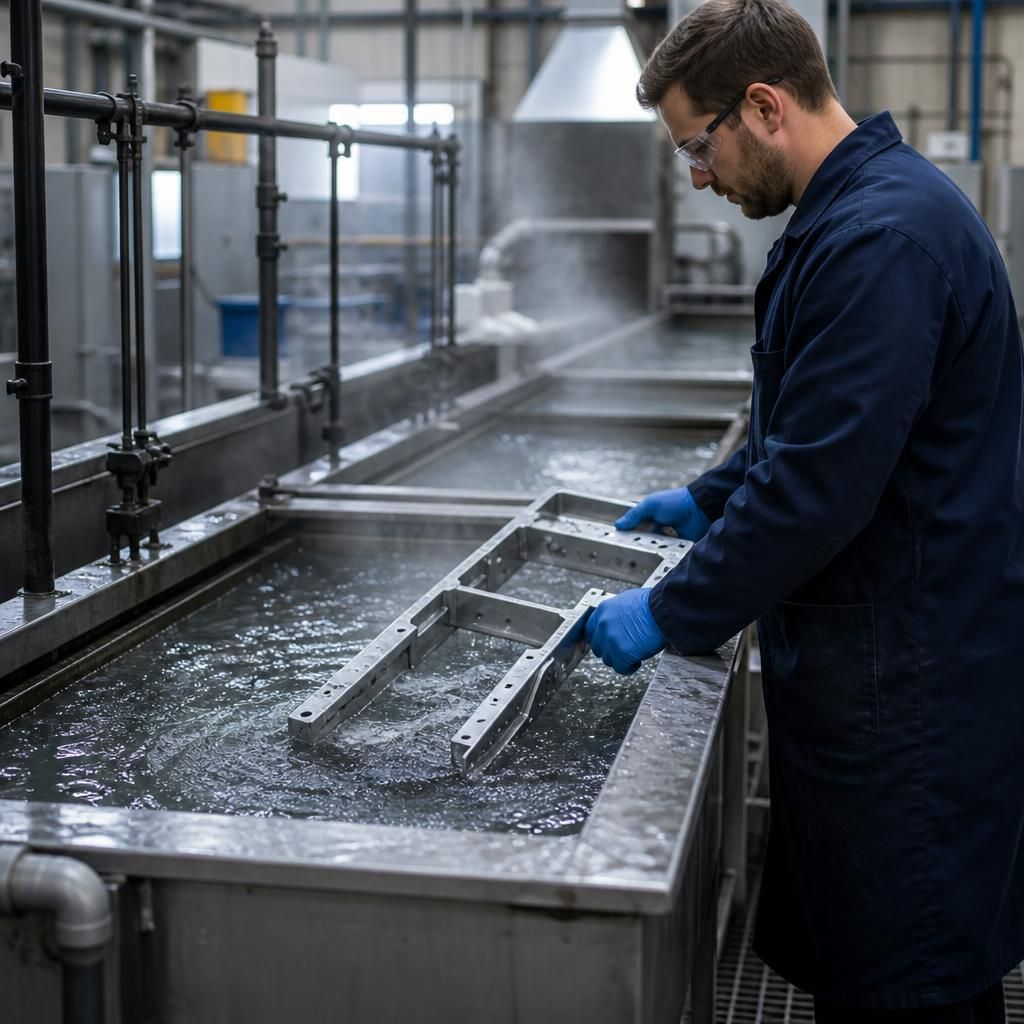
Cleaning temperature and contact time must be controlled as carefully as the choice of cleaning method. A solution that is too cool may not remove heavy oils effectively, while excessive heat or prolonged contact can etch aluminium, attack zinc coatings or cause a cleaner to dry onto the surface. The product supplier’s recommended conditions should therefore be matched to the specific metal and contamination.
Parts should not be allowed to dry with cleaner or dissolved soil still present. Rinsing while residues remain mobile helps prevent deposits at seams, corners and drilled holes. On freshly exposed steel, prompt drying also limits flash corrosion; on aluminium, it reduces the opportunity for moisture and handling contamination to affect the rapidly reforming oxide layer.