

How do conversion coatings or primers enhance the adhesion and durability of electrostatic powder coatings?
Conversion coatings chemically modify the metal surface to provide a more receptive, corrosion-resistant base for electrostatic powder coating, while primers add an intermediate layer that promotes adhesion and helps protect the substrate. Together, they can reduce the risk of coating failure and support a more durable finish when selected and applied for the metal type and service conditions.
Conversion coatings and primers enhance electrostatic powder coating by improving the bond between the metal substrate and the powder film, while also helping the coating withstand moisture, chemicals, abrasion and mechanical damage. They do this in different ways: a conversion coating chemically alters the surface itself, whereas a primer forms a separate intermediate film between the metal and the final powder layer.
Conversion coatings create a more stable bonding surface. Bare metal can contain oxides, residues and areas of uneven chemical activity that make adhesion inconsistent. A suitable conversion treatment reacts with the prepared substrate and produces a thin, adherent layer. This layer gives the powder coating a more uniform foundation and can reduce the tendency for corrosion to spread beneath the finish if the surface is later damaged.
Common conversion systems include phosphate treatments and newer thin-film technologies based on zirconium or similar chemistries. The correct option depends on the substrate, the required corrosion performance, the powder system and the pretreatment equipment. Aluminium, galvanised steel and mild steel do not behave identically, so a process designed for one metal should not automatically be applied to another.
Primers provide an additional protective and bonding layer. A primer can improve the final system where the substrate is exposed to demanding conditions, where extra corrosion protection is required, or where the powder topcoat needs help covering a challenging surface. It can also contribute to impact resistance and reduce the effect of small defects or variations in the substrate, provided that it is compatible with the powder coating applied over it.
Primer is not a substitute for cleaning and preparation. Oil, grease, loose rust, mill scale, salts and residues can prevent the primer or conversion coating from contacting the metal properly. Preparation must therefore remove contaminants and unsuitable oxides before chemical treatment or priming. The surface should then be handled in a way that avoids recontamination before powder application.
The choice between a conversion coating, a primer or both should be based on the complete service environment rather than on adhesion alone. Important considerations include:
- the type and condition of the metal substrate;
- exposure to water, condensation, road salt, industrial chemicals or outdoor weather;
- the level of abrasion, impact or handling the component will experience;
- the required appearance and acceptable total coating thickness;
- the curing schedule and temperature limits of the substrate and coating system; and
- compatibility between the pretreatment, primer and powder topcoat.
Using both treatments can produce a multi-layer system in which each layer performs a separate function. The conversion coating bonds closely to the metal and supports interfacial adhesion. The primer adds barrier protection and can improve the resistance of the system at scratches, edges and other vulnerable areas. The powder topcoat then provides the principal decorative and wear-resistant outer surface. However, additional layers do not automatically produce a better result: an incompatible primer, excessive film build or incomplete curing can create weaknesses between layers.
Application control is particularly important with electrostatic powder coating. The prepared component must be sufficiently dry because trapped water or pretreatment residue can cause blistering, pinholing or loss of adhesion during the oven cycle. Rinsing quality, drainage from hollow sections, flash-off or drying conditions and clean handling all affect the result. Components with seams, recesses, sharp edges and threaded areas may need specific attention because treatment can collect or become uneven in these locations.
The primer and powder must also be cured in accordance with their technical requirements. Under-curing may leave the film soft, poorly bonded or vulnerable to chemicals, while excessive heat can damage the substrate or affect colour and gloss. Where a primer and topcoat are used, the combined cure schedule must be considered rather than treating each layer in isolation. Oven temperature should be assessed against the component’s actual metal temperature, especially for thick or complex parts.
Quality checks should examine more than appearance. A sound process may include inspection for visible contamination, uniform pretreatment, dry surfaces, consistent film build and correct cure. Adhesion testing, where appropriate to the specification, can help identify weaknesses that are not visible immediately after coating. Corrosion testing may also be relevant for components intended for severe exposure, but test results should be interpreted in relation to the actual substrate, edge design, pretreatment and coating specification.
Conversion coatings and primers therefore improve durability when they are selected as part of a compatible preparation and coating system. They cannot compensate for contaminated metal, poor drainage, unsuitable curing or a design that allows water and contaminants to remain trapped. For industrial components, the most reliable specification considers the metal type, service conditions, pretreatment sequence, primer requirements and powder cure together before production begins.
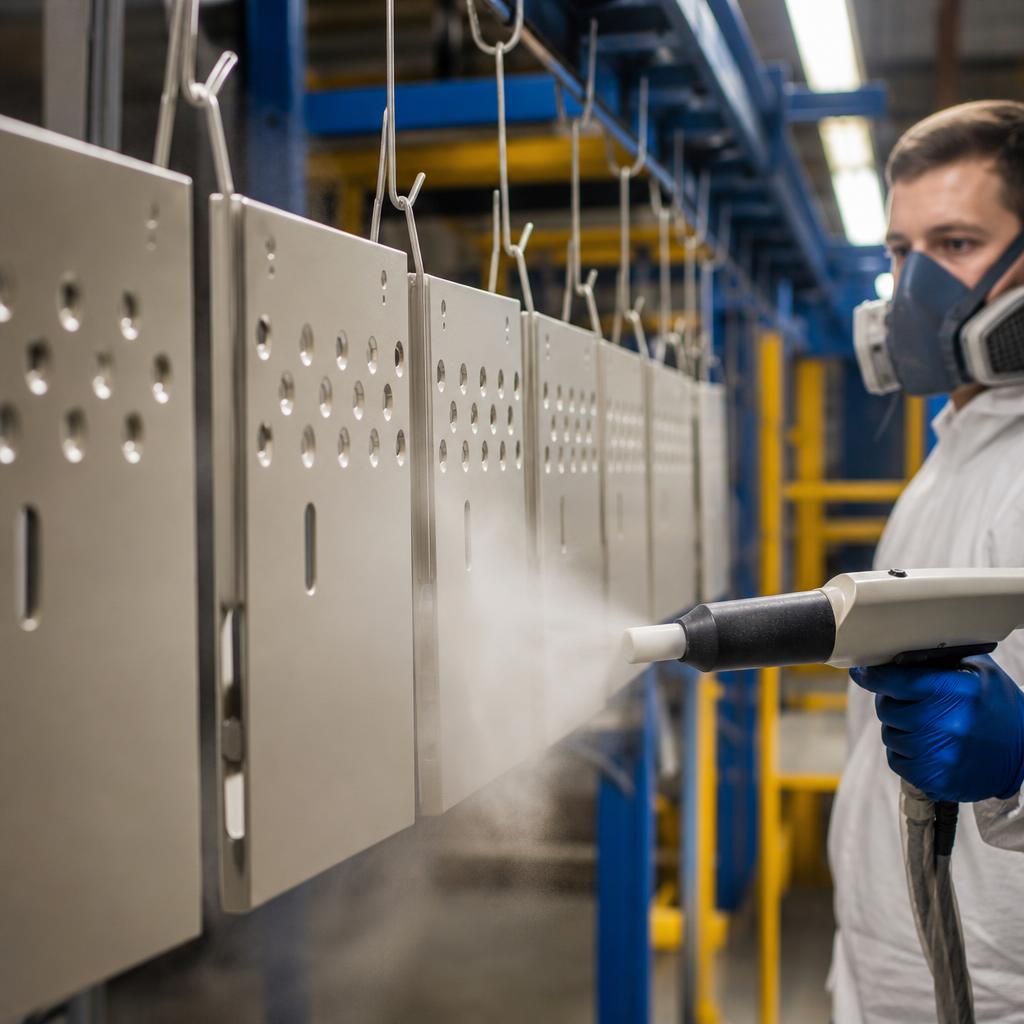
The main benefit of a conversion coating or primer is a controlled interface between the metal and the powder film, rather than simply adding thickness. A conversion coating changes the chemical character of the prepared surface, helping the powder system wet and bond consistently. A primer then provides a continuous intermediate film that can absorb small differences in surface energy and movement between the metal and the topcoat.
This layered interface is particularly valuable where a component may experience repeated handling, temperature changes or localised mechanical stress. Instead of concentrating all the load at the metal-to-powder boundary, the primer helps distribute stress through the coating system. The result depends on using a primer designed for the specific powder chemistry and substrate; an unsuitable combination can introduce a weak boundary even when the visible finish appears sound.
Discuss Your Conversion Coating and Primer Requirements
Discuss your component’s metal type, service environment and proposed powder system with Powder-coatings.co.uk to assess whether a conversion coating, primer or combined specification is appropriate. Provide drawings or sample parts where relevant so the preparation and coating requirements can be considered together.