

What specific steps should be taken to guarantee optimal surface readiness for powder coating on steel?
Guarantee optimal steel surface readiness by inspecting the substrate, removing oil, grease, rust, mill scale and previous coatings, then using suitable abrasive blasting or other profiling to create a clean, consistent key. Finish with the appropriate chemical pretreatment, thorough drying, masking of excluded areas and a final inspection before powder application.
Optimal readiness for powder coating means more than making steel look clean. The surface must be chemically free from contaminants, mechanically suitable for the selected coating system, dry, stable during handling and consistent across the whole component. The preparation process should therefore be controlled against defined acceptance criteria rather than judged by appearance alone.
Begin by assessing the steel and the condition in which it arrives. Identify whether the component is bare steel, previously coated, heavily oxidised, galvanised or affected by fabrication residues. Check welds, folded sections, joints, recesses and enclosed areas particularly carefully, as these locations can retain contamination or prevent uniform treatment. The coating specification should also state the required finish, expected exposure conditions and any areas that must remain uncoated. These details determine how aggressive the preparation needs to be and whether a particular pretreatment is appropriate.
Fabrication quality has a direct effect on coating performance. Remove weld spatter, sharp projections, loose slag and temporary attachments before preparation. Sharp edges can produce a thinner powder layer and are more vulnerable to early damage, while deep pits and porous welds can retain oil, moisture or blasting media. Where practical, edges should be suitably dressed and welds made continuous enough to avoid contamination traps. Any repair materials, sealants or fillers must be compatible with the coating process and fully cured before the steel enters preparation.
Cleaning should be validated as a separate stage, not assumed to have worked because the surface appears brighter. Oils, drawing compounds, cutting fluids, fingerprints and handling residues can interfere with adhesion even when they are difficult to see. Use a cleaning method suitable for the contaminant and substrate, and ensure that residues from the cleaner are removed. A water-break assessment can help identify remaining oily areas: water should wet the surface evenly rather than retreating into isolated beads. This type of check is useful because visual inspection alone cannot reliably detect a thin organic film.
Mechanical preparation must create a consistent surface condition without damaging the component. The selected abrasive process and intensity should remove oxidation, mill scale or remnants of an old coating while producing a profile that gives the powder film a reliable mechanical key. An excessively smooth surface may provide insufficient anchoring; an overly aggressive profile can leave peaks insufficiently covered or increase powder consumption. Inspect broad faces, corners, welds and recessed areas separately, since one blasting setting may not produce the same result everywhere.
After abrasive preparation, remove residual dust and loose particles without introducing new contamination. Abrasive cleanliness matters as well: spent media, oil-contaminated media or unsuitable material can transfer unwanted substances to the steel. Compressed air used for blow-down should be clean and free from oil and moisture. Clean gloves, hooks and contact points should be used when handling prepared parts, because fingerprints and workshop dust can compromise an otherwise suitable surface.
Where chemical pretreatment is specified, control the complete process rather than focusing only on the treatment tank. Concentration, temperature, contact time, rinsing and bath condition all affect the resulting conversion layer. Rinsing must prevent cleaner or treatment chemicals from drying on the steel, and the final surface should be free from visible residue. The treatment must be compatible with both the steel and the powder system; a process suitable for one substrate or exposure category is not automatically suitable for another.
Drying is a critical readiness check, especially around seams, folded edges, hollow sections and drilled holes. Trapped moisture can cause flash rust on prepared steel and may also create defects during curing. Allow water to drain from the component and confirm that difficult areas are dry before coating. The surrounding conditions should be suitable for the prepared steel: condensation risk, humidity and temperature differences between the part and the air can all reintroduce moisture after preparation.
Keep the interval between preparation and powder application under control. Prepared steel should be protected from rain, condensation, workshop vapour, dust and unnecessary handling. If visible rusting, staining or contamination develops, do not assume that applying powder will conceal the problem; reassess the surface and repeat the relevant preparation stage. Components should be supported in a way that avoids contact with dirty surfaces and allows the coating process to reach the required areas.
Use documented checks before release to coating. A practical record can identify the substrate condition, preparation method, abrasive or chemical process, inspection findings and any areas accepted for touch-up or rework. Depending on the specification, checks may include visual cleanliness, surface profile, residual dust, soluble contamination, dryness and the condition of welds and edges. Recording these results makes preparation repeatable across batches and helps distinguish a coating defect caused by surface readiness from one caused later in application or curing.
For complex or high-risk steelwork, agree the acceptance standard before preparation begins and inspect a representative area before processing the full batch. This prevents the specification from changing after work has started and allows the preparation method to be adjusted for the actual steel, geometry and coating requirement. Powder coating providers serving manufacturers, fabricators, construction firms and automotive businesses can use this information to assess whether supplied components are ready for processing or need additional preparation before coating.
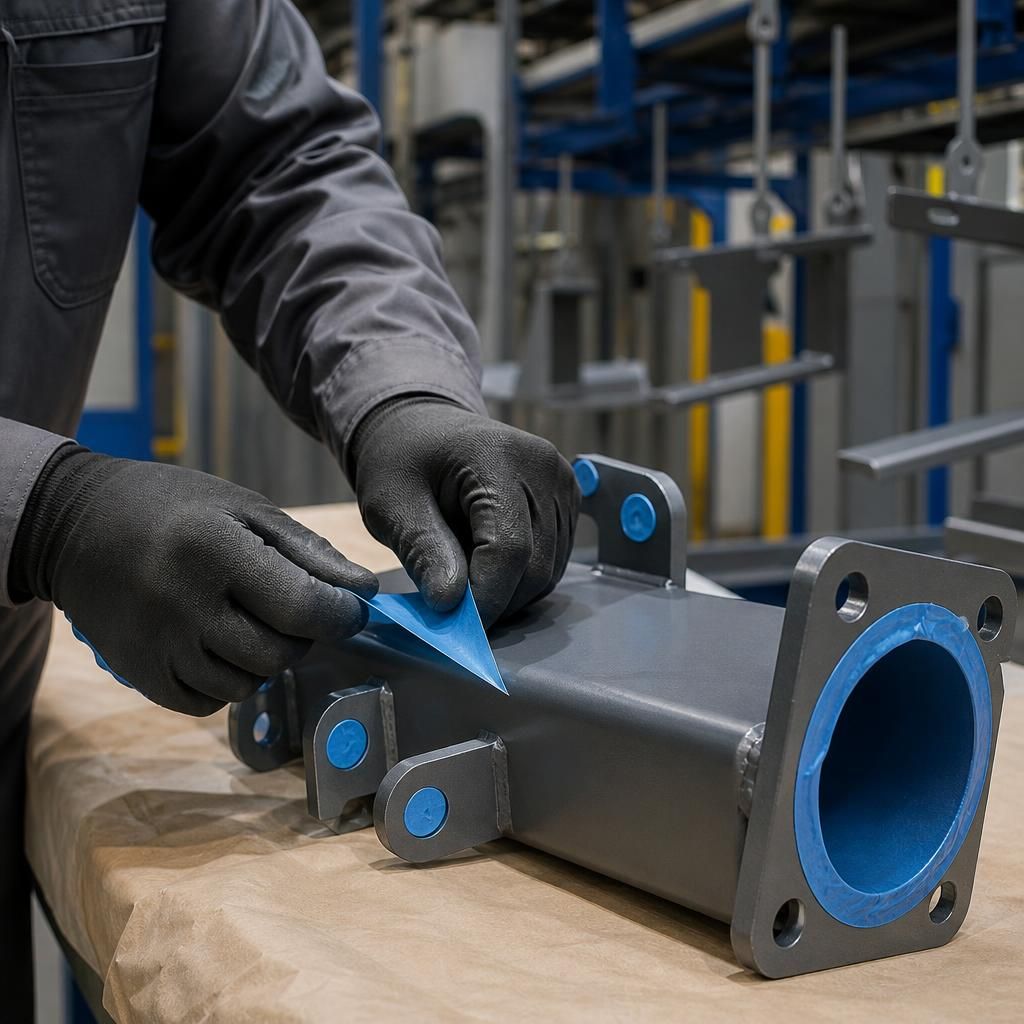
Masking is an important part of surface readiness when specific areas of a steel component must remain free from powder. Threads, machined faces, mating surfaces, drain holes and electrical earthing points may need protection before pretreatment and coating. The masking plan should be based on the component drawing and the function of each excluded area, rather than applied solely for appearance.
Use materials that are compatible with the cleaning, pretreatment and curing stages. Masks must fit securely without trapping treatment chemicals or moisture beneath their edges, and they should not leave adhesive, fibres or other residue on the prepared steel. Check that masking has remained intact before powder application and remove it carefully after curing so the finished coating is not damaged.
Ask About Steel Surface Preparation for Powder Coating
Ask our team to review your steel components and confirm the preparation requirements for the intended powder coating system. Provide the component drawings, substrate condition and finish specification so the appropriate cleaning, profiling and pretreatment approach can be considered.