

What are the necessary steps to ensure steel surfaces are properly prepared for powder coating?
Proper steel preparation involves inspecting the surface, removing oil, grease, rust, mill scale and existing coatings, then using suitable abrasive or chemical treatment to create a clean, lightly profiled surface. The steel should be free from residue and moisture before masking sensitive areas and applying the powder coating.
Proper steel preparation for powder coating requires a controlled, documented process that matches the steel condition, the service environment and the chosen coating system. Preparation is not complete simply because the surface looks clean. The substrate must be suitable for treatment, accessible to the preparation equipment, compatible with the pretreatment chemistry and maintained in that condition until powder application.
- Review the component before processing. Confirm the steel grade, thickness, intended use and exposure conditions. Components intended for internal use may require a different preparation regime from those exposed to rain, condensation, road salts or industrial pollutants. The required corrosion protection should therefore be agreed before selecting the preparation method.
- Check the fabrication quality. Welds should be continuous where the design requires them, with excessive weld spatter, sharp projections and poorly formed joints corrected before coating. Open crevices, unsealed overlaps and drainage traps can retain pretreatment liquids and later cause staining, blistering or corrosion. Drain and vent holes may be necessary on hollow sections so that fluids can enter and leave safely during processing.
- Make the surface accessible. Brackets, hooks, lifting points and other handling arrangements should allow the relevant faces to be treated and coated. Areas hidden by temporary fixtures or tightly touching components cannot be prepared or coated consistently. Parts should be presented so that solution run-off does not collect in recesses or enclosed sections.
- Select the preparation route according to the substrate. Abrasive treatment is often appropriate for mill scale, corrosion products and sound existing coatings, while chemical pretreatment can be suitable where the steel condition and process controls allow it. Heavily corroded, previously coated or contaminated steel may need a different sequence from newly fabricated material. The method should be chosen for the actual condition rather than applied as a standard assumption.
- Control the process variables. Abrasive cleanliness, equipment condition, chemical concentration, solution temperature, contact time and rinsing quality all affect the result. Chemical stages must be maintained within their specified operating range, and abrasive equipment must not introduce foreign material to the steel. Reusable process water and treatment baths require monitoring so that accumulated contaminants do not transfer back onto the component.
- Rinse and dry thoroughly. Any pretreatment residue, loose process material or retained moisture can interfere with powder adhesion and contribute to corrosion beneath the finish. Particular attention is needed around joints, folded edges, hollow sections and threaded features. Components should be dried without reintroducing oil, dust or handling contamination.
- Prevent recontamination. Once prepared, steel should be handled with clean equipment and protected from contact with dirty work surfaces, bare oily hands and airborne workshop debris. Prepared parts should not be stored beside operations that generate dust, overspray or metal filings. If the surface condition is compromised, it should be reassessed rather than coated on the assumption that the original preparation remains valid.
- Apply the powder within the controlled process window. The interval between final preparation, handling and coating should be managed according to the steel condition and surrounding environment. Steel that has developed visible oxidation, condensation or handling marks requires corrective preparation before application. The part must also be at a suitable temperature for the powder application and curing process specified for the coating system.
- Verify the result before release to coating. A practical check should confirm that the surface has an even appearance, no visible residue, no active corrosion and no areas missed by the preparation equipment. Where required by the specification, additional checks can assess surface cleanliness, roughness, soluble contamination or the condition of difficult-to-reach areas. Records of the preparation route and any deviations help maintain consistency across batches.
Design and fabrication decisions made before the component reaches the coating line have a direct effect on preparation quality. Rounded transitions, accessible faces, suitable drainage and properly finished welds make it easier to achieve a continuous protective film. Conversely, concealed crevices and inaccessible surfaces can limit the effectiveness of even a carefully controlled coating process.
For contract work, the component drawing or specification should identify the required finish, corrosion category, masking requirements, areas that must remain uncoated and any restrictions on abrasive or chemical treatment. Providing this information at the outset allows the preparation sequence to be assessed against the part rather than treating every steel item identically. A specialist powder coater can then advise whether the supplied steel is ready for processing or whether fabrication changes and additional preparation are needed first.
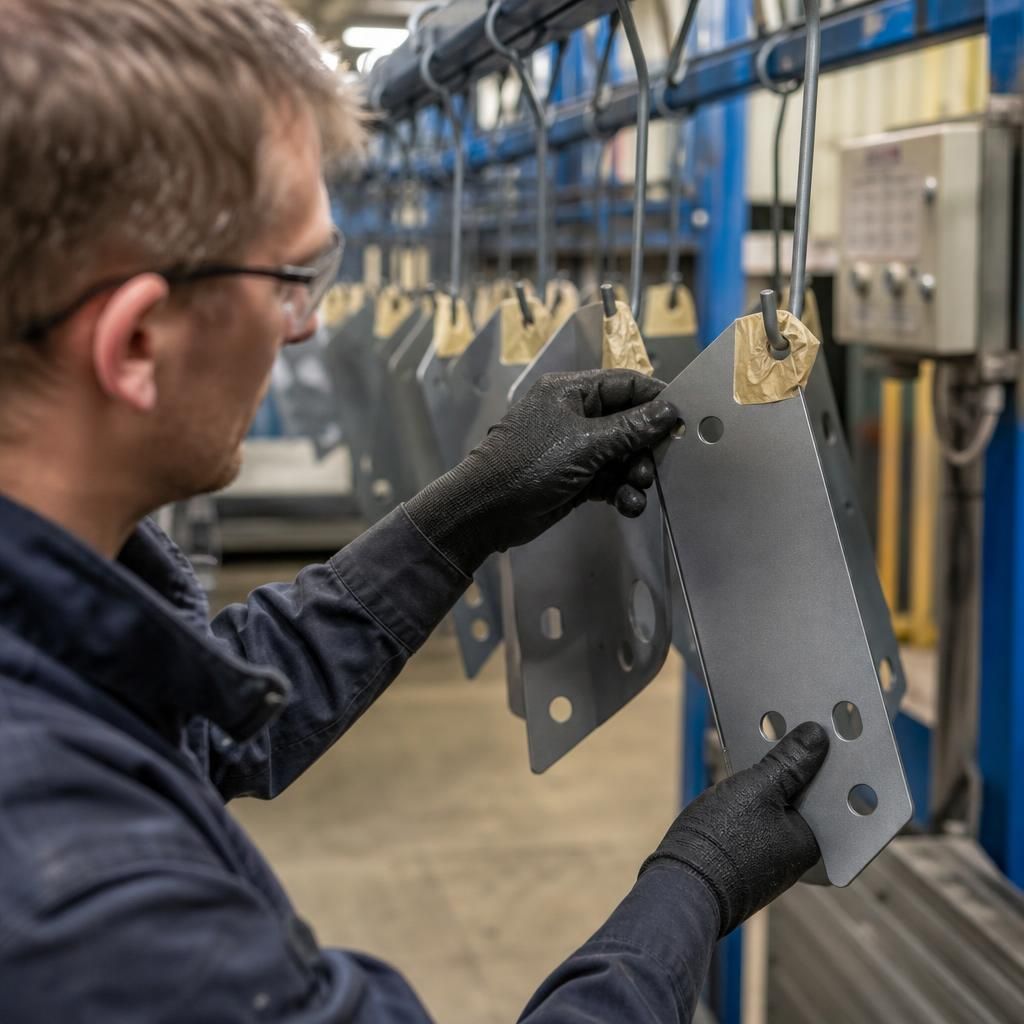
Preparation must also account for the areas used to hang and electrically earth the component during powder application. These contact points should be identified before treatment and kept free from oil, heavy scale and other insulating contamination so that the powder can be charged and applied consistently. Any small uncoated contact mark should be positioned where it can be accepted or concealed in the finished assembly.
Masking requirements should be confirmed at the same stage. Threads, machined faces, bearing seats, drainage openings and electrical contact surfaces may need protection from pretreatment and powder. Use masking materials that remain secure during handling and curing, and check that they have not shifted or trapped residue before the part enters the coating process.