

How does surface profiling contribute to the effectiveness of powder coating on steel?
Surface profiling creates a controlled texture on steel, increasing the physical key available for the powder coating to grip. This can improve adhesion and help the cured finish withstand mechanical wear, provided the profile is suitable for the coating system and the steel is clean before application.
Surface profiling is the controlled formation of microscopic peaks and valleys on steel before powder application. Its contribution to coating effectiveness depends on the profile’s depth, shape, uniformity and compatibility with the coating film, rather than on roughness alone.
Profile depth affects coverage. A powder coating must cover the highest points of the steel while also reaching into the lower areas. If the profile is too pronounced for the specified film build, the coating can be relatively thin over sharp peaks. Those areas may become weak points during handling, abrasion or exposure to corrosive conditions. Conversely, a very shallow or poorly formed profile may provide limited mechanical interlocking and can reduce the coating system’s tolerance of service stresses.
Profile shape is also important. Rounded, consistently distributed surface features are generally more suitable than isolated sharp ridges, torn metal or deep gouges. Abrasive blasting can create an appropriate profile when the abrasive, pressure, angle and exposure are controlled. Incorrect settings can distort edges, produce an uneven texture or remove more steel than necessary. The objective is a repeatable surface condition, not maximum roughness.
The correct profile is selected in relation to the powder coating system, the intended film thickness and the conditions the finished component will face. A coating intended for a smooth architectural appearance may require a different surface condition from one specified for heavy-duty industrial service. The steel grade, component geometry and preparation method also influence the result. Profile requirements should therefore be agreed as part of the coating specification rather than judged by appearance alone.
Uniformity across the whole component matters. Large flat areas may be straightforward to prepare, while corners, folded sections, welds, holes and recessed areas can receive a different degree of treatment. Weld spatter, sharp edges and abrupt transitions can interrupt the profile and make consistent powder coverage more difficult. Inspecting these areas individually helps identify defects that might not be visible when only the main face is assessed.
Surface profile is normally verified using a suitable inspection method rather than relying solely on touch or visual comparison. Depending on the component and specification, this may involve a surface profile gauge, comparator or replica medium. The selected method should be appropriate to the profile and used at representative locations, particularly where blasting access or geometry varies. Recording the findings provides evidence that the prepared surface is consistent with the agreed coating requirements.
Profiling must also be considered alongside surface cleanliness. Abrasive residue, dust, oil, corrosion products or moisture can occupy the newly formed surface features and interfere with the coating process. In that condition, a visually acceptable profile may not deliver the intended coating performance. Dust removal and inspection after preparation are therefore necessary before powder is applied, with the component protected from recontamination during transfer and handling.
Timing is significant where freshly prepared steel could develop flash rust or collect contamination before coating. The longer the prepared surface remains exposed, the greater the need to reassess its condition. Any visible change, contamination or handling damage should be addressed before the powder coating stage rather than concealed beneath the finish.
A practical assessment of profiling should therefore consider:
- whether the profile is suitable for the specified powder and film build;
- whether the texture is consistent across faces, edges, welds and recesses;
- whether sharp peaks, gouges or untreated areas are present;
- whether abrasive residue, dust, oil or moisture remains; and
- whether the prepared steel has been protected from contamination before coating.
In summary, profiling improves the effectiveness of powder coating when it produces a controlled, measurable and compatible surface condition. Excessive or irregular roughness is not automatically beneficial. Proper control ensures that the powder can form a continuous film over the prepared steel and that the surface condition supports the performance expected from the complete coating system.
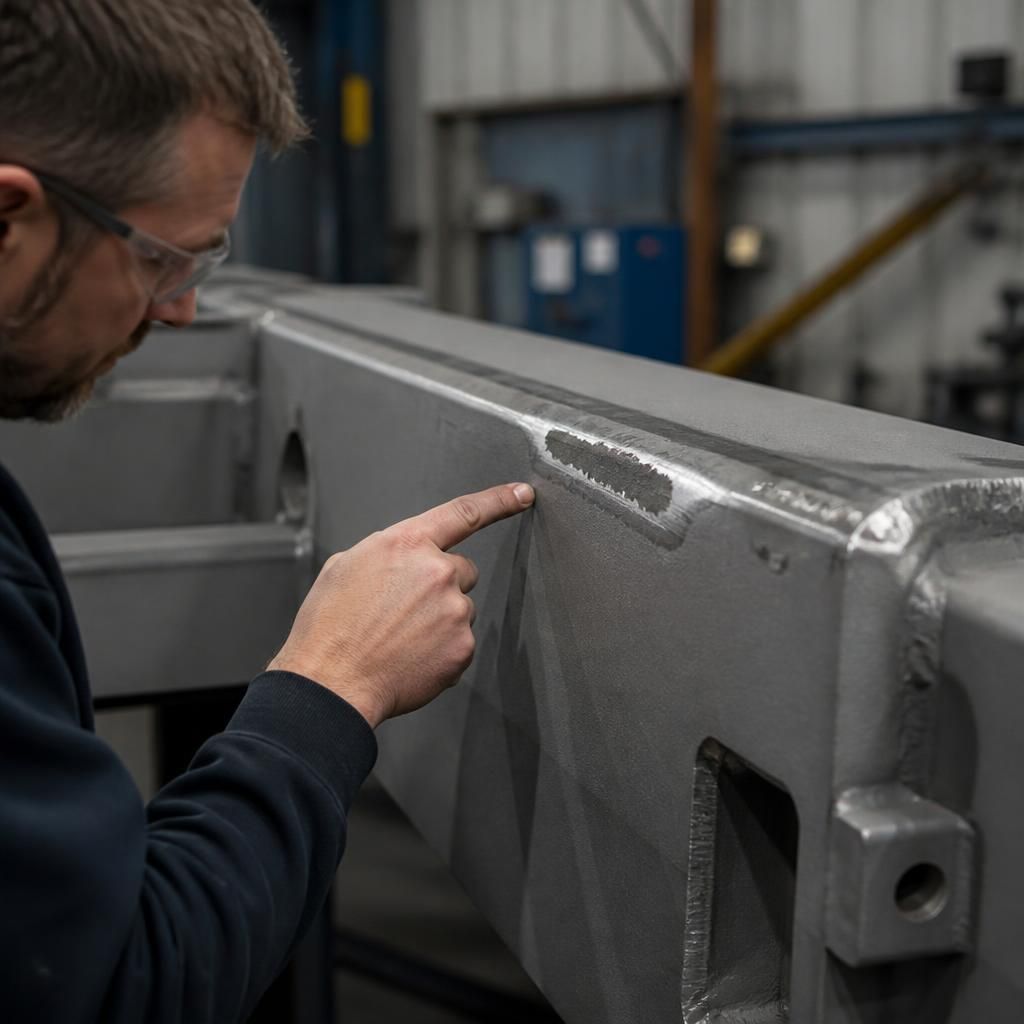
Surface profiling can also reveal defects that would otherwise remain hidden beneath a powder coating. Abrasive preparation may expose pitting, laminations, weld undercut, porosity or localised corrosion, allowing these issues to be assessed before coating. This matters because powder coating forms a protective finish over the steel; it does not repair structural flaws or restore damaged metal.
Any exposed defect should therefore be reviewed as part of the preparation process. Depending on its nature, the steel may require local repair, edge treatment or rejection before profiling continues. Addressing these conditions at this stage helps prevent visible imperfections and reduces the risk of a coating system being applied over a substrate that is unsuitable for the intended service.