

How does chemical pretreatment enhance steel surface readiness for powder coating?
Chemical pretreatment enhances steel surface readiness by removing remaining contaminants and creating a chemically receptive surface for the powder coating. It improves coating adhesion and helps strengthen resistance to corrosion by supporting a more effective bond between the steel and its protective finish.
Chemical pretreatment enhances steel surface readiness by changing the surface at a controlled chemical level before powder is applied. Rather than relying only on visible cleanliness, the process prepares the metal through cleaning, conditioning and conversion stages so the finished coating has a more consistent foundation.
A typical pretreatment sequence includes:
- Degreasing: An alkaline or specialist cleaner removes oils, grease, machining residues and handling marks. These materials can otherwise interfere with the treatment itself as well as the powder coating.
- Rinsing: Clean-water rinses remove loosened residues and cleaner carry-over. Effective rinsing is important because remnants of earlier chemicals can affect later stages or remain beneath the coating.
- Surface conditioning: Depending on the steel and the selected system, a conditioning stage can help produce a more uniform surface for the conversion treatment.
- Conversion treatment: A phosphate or modern thin-film conversion process reacts with the steel to form a controlled, chemically modified layer. This layer helps provide a stable base between the metal and the powder film.
- Final rinsing and drying: The component must be free from treatment residues and completely dry before powder application. Moisture trapped in joints, seams or recesses can create coating defects and undermine the prepared surface.
The conversion layer is not intended to replace mechanical preparation where rust, mill scale, weld contamination or heavy oxidation is present. Such contamination may require abrasive cleaning or another suitable preparation method first. Chemical pretreatment is most effective when the steel arrives in a condition that allows the treatment to contact the metal evenly.
The treatment must suit the steel and its use. Mild steel, galvanised steel and components containing mixed metals may require different cleaning chemistry or conversion systems. Galvanised surfaces, for example, should not automatically be treated in the same way as bare steel. The design of the component also matters: folded sections, blind holes, overlaps and narrow gaps can retain chemicals or moisture and need appropriate drainage and drying.
Process control is central to reliable pretreatment. Factors such as bath concentration, temperature, contact time, spray coverage, water quality and the condition of the treatment solution influence the result. If the chemical stage is too weak, too short or unevenly applied, some areas may remain inadequately prepared. Excessive treatment or poor rinsing can leave deposits that become visible through the powder finish or reduce coating performance.
After preparation, inspection should consider more than appearance. The surface should be visibly clean, dry and free from powdery residue, staining and untreated areas. Where the specification requires it, checks may include monitoring the pretreatment process, assessing the conversion layer and testing the completed coating for adhesion or corrosion performance. These checks help identify whether a defect originated in cleaning, conversion, drying or the powder application itself.
For fabricated steelwork, pretreatment planning should begin before coating. Weld spatter, sharp edges, trapped fabrication debris and residues from cutting or forming can affect chemical coverage and the final finish. Components should be designed, fabricated and presented in a way that allows cleaning, rinsing and drainage across all required surfaces.
In practice, chemical pretreatment is one part of a controlled preparation system. It is selected according to the steel substrate, the degree of contamination, the intended service conditions and the powder coating specification. When these factors are matched correctly, the process gives the applicator a more uniform and technically suitable surface on which to build the powder-coated finish.
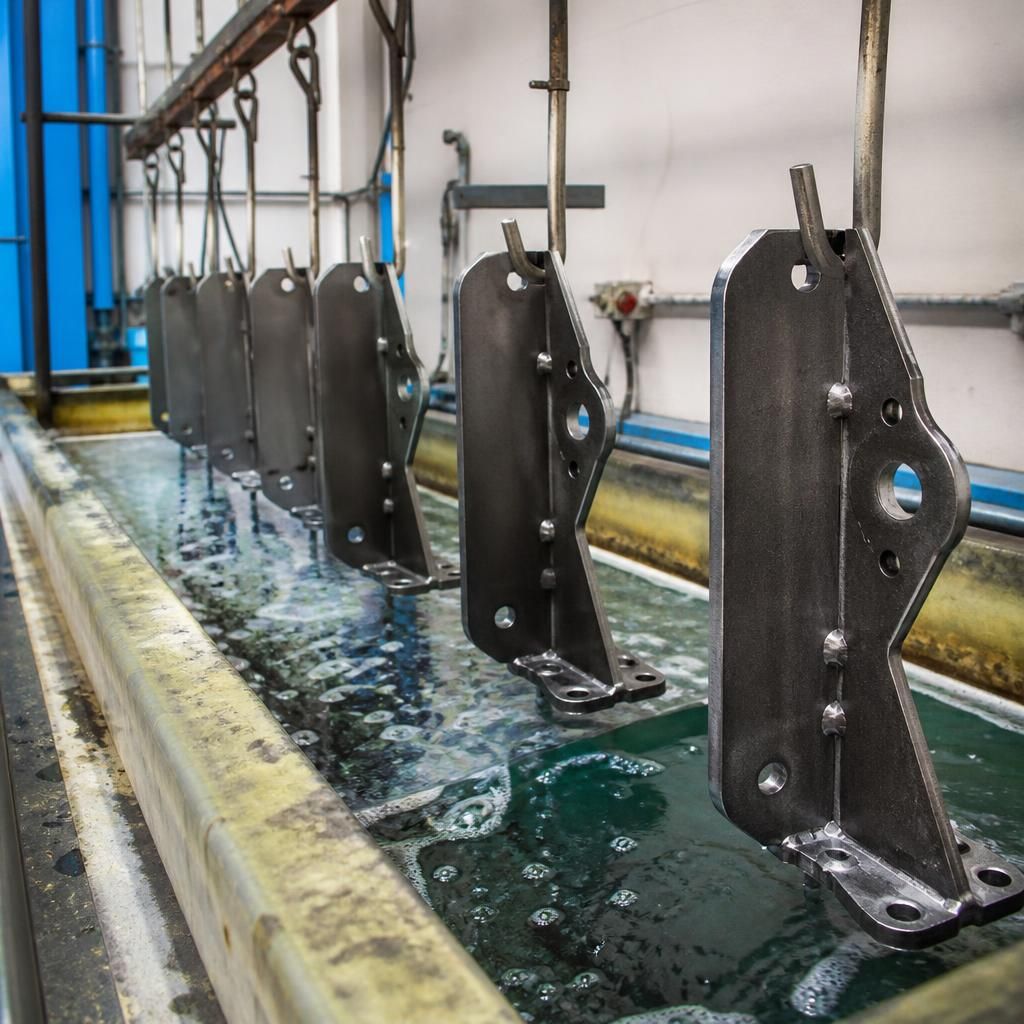
Conversion treatments do not all modify steel in the same way. Iron phosphate systems form a fine phosphate layer on the substrate, while thin-film systems use a much lighter chemically formed layer. The suitable option depends on the steel surface, the pretreatment equipment and the performance requirements of the finished component.
This distinction matters because the conversion stage must remain consistent across the whole part. Variations in chemistry, coverage or rinsing can produce differences between edges, broad faces and recessed areas, even when the component appears clean. Selecting and controlling the conversion system accordingly helps create a more predictable interface for the powder coating.