

What safety and environmental considerations are associated with zinc phosphate spray pretreatment?
Zinc phosphate spray pretreatment requires controlled chemical handling, suitable personal protective equipment, ventilation and procedures aligned with UK workplace safety requirements. Environmental management focuses on preventing chemical releases, controlling rinse water and phosphate-containing sludge, and arranging compliant storage, treatment and disposal of waste.
Zinc phosphate spray pretreatment presents two main areas of responsibility: protecting people from chemical, mechanical and process-related hazards, and preventing zinc- and phosphate-bearing materials from entering soil, surface water or uncontrolled drainage. Effective control depends on assessing the complete installation, from chemical receipt and dosing through to rinsing, maintenance and waste transfer.
Safety considerations
A documented COSHH assessment should identify the hazards of each product used, rather than treating zinc phosphate as a single generic substance. The relevant safety data sheets should be available to operators and used to define storage conditions, incompatible materials, first-aid arrangements and actions following accidental exposure. The assessment should cover normal operation as well as foreseeable events such as a leaking container, blocked spray nozzle, pump failure or maintenance inside the treatment equipment.
Spray systems also create non-chemical risks. Pressurised lines, moving pumps, automated doors and conveyor equipment require suitable guarding, isolation and lock-off procedures. Operators and maintenance staff should understand when the line must be stopped, isolated and made safe before adjustment or cleaning. Interlocks, alarms and clearly marked emergency controls help prevent a process fault from becoming an exposure incident.
Training should be specific to the installation. It should cover chemical labels, safe transfer and dosing, inspection of equipment, spill response, waste segregation and the correct escalation route for faults. Refresher training and supervised instruction are particularly important where temporary staff, contractors or maintenance engineers may enter the process area. Records of training, incidents, inspections and corrective actions provide evidence that the controls are being maintained rather than merely documented.
Emergency arrangements should be practical and proportionate to the chemicals and equipment on site. They may include suitable eyewash and washing facilities, clearly identified escape routes, spill-response materials, first-aid instructions and procedures for contacting emergency services or the relevant site manager. Used response materials should not automatically be placed in general waste; their contamination must be assessed and managed through the site’s waste procedures.
Environmental considerations
Zinc is harmful to aquatic organisms at elevated concentrations, while phosphate can contribute to nutrient enrichment in watercourses. Even a small release can therefore have consequences if it reaches a drain, ditch, stream or surface-water system. Process areas should be designed so that liquids cannot flow directly to uncontrolled drainage, with suitable containment and clearly understood drain identification. Site drainage plans should distinguish foul, trade-effluent and surface-water routes.
Any proposed discharge to a sewer should be checked with the relevant water company and governed by the appropriate trade-effluent consent. Discharge to controlled waters or land may require environmental permitting or other regulatory approval. Requirements vary according to the site, discharge route, quantities and local regulator, so the operator should confirm the position with the Environment Agency, Scottish Environment Protection Agency, Natural Resources Wales or Northern Ireland Environment Agency, as applicable.
Waste should be classified according to its actual composition and contamination, not simply by the name of the process that produced it. This can include residues from chemical maintenance, contaminated absorbents, filters, packaging and treatment solids. Hazardous waste requirements may apply, and waste should be transferred only through an appropriately authorised carrier to a suitably authorised destination. Transfer documentation and consignment records should be retained in line with the applicable UK requirements.
Pollution prevention is stronger when it is built into process control. Useful measures include checking dosing equipment for leaks, maintaining spray nozzles to avoid unnecessary carry-over, using drag-out control between stages and reviewing whether water and chemicals are being consumed efficiently. Regular sampling or other process checks can identify changes in concentration, pH or contamination before they lead to an out-of-specification treatment stage or a larger waste burden.
Environmental controls should also consider abnormal conditions. A power failure, damaged pipe, overflowing tank or failed treatment system needs a defined response, including who can stop the process, how the affected area is isolated and how potentially contaminated liquid is contained. Near misses should be investigated because they can reveal weaknesses in bunding, inspection routines, training or maintenance.
For a coating operation, the most reliable approach is to combine the chemical supplier’s instructions with site-specific risk and environmental assessments. The assessment should be reviewed when the formulation, spray equipment, production volume, drainage arrangement or waste contractor changes. This keeps the controls relevant and helps demonstrate that zinc phosphate pretreatment is being operated in accordance with UK workplace safety, pollution prevention and waste-management duties.
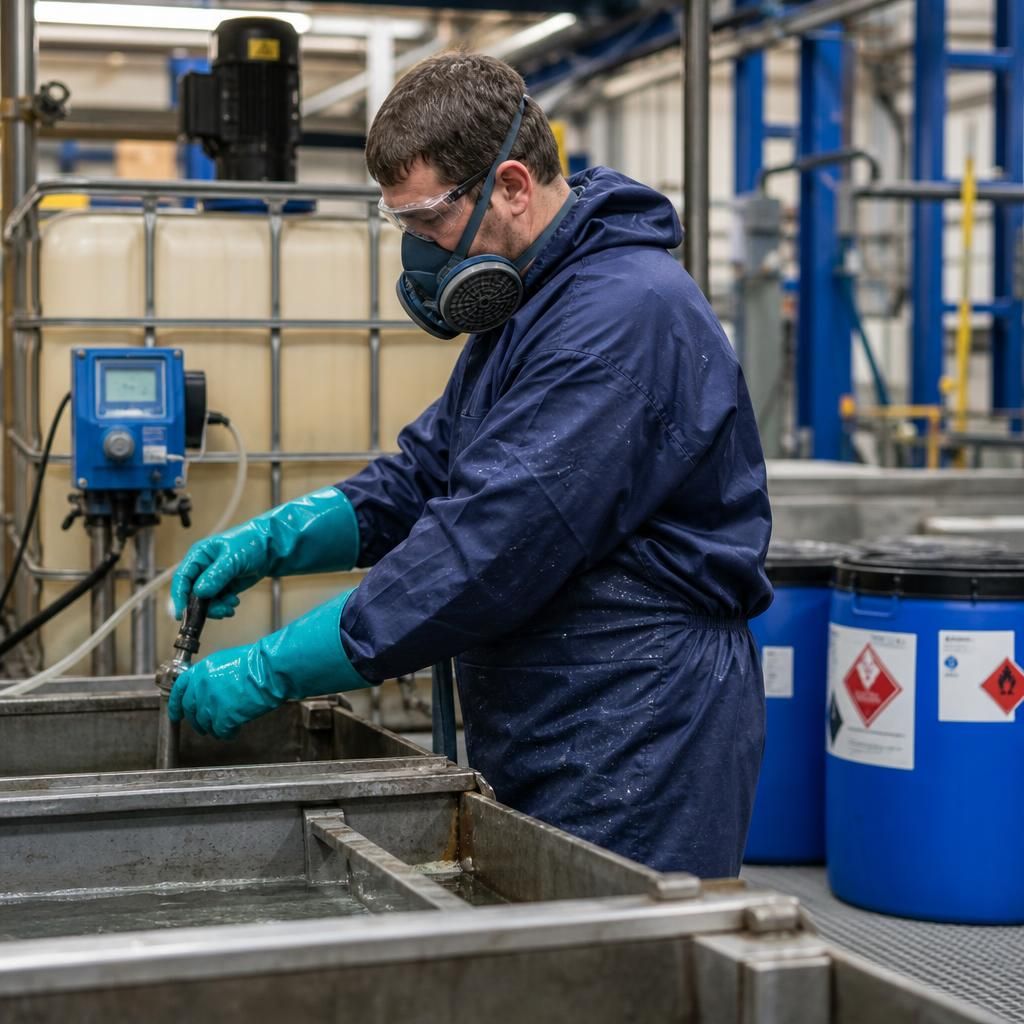
Environmental acceptability cannot be judged from the appearance of a zinc phosphate solution or from whether it produces noticeable fumes. A product’s safety data sheet should be checked for aquatic hazards, corrosivity, reaction risks and disposal information, because workplace exposure controls and environmental controls address different risks.
When reviewing a pretreatment installation, consider the full material path: delivery containers, dosing equipment, process tanks, rinse stages, drainage, treatment plant and waste storage. This approach helps identify where a small leak, transfer error or incompatible waste stream could create a larger incident, and ensures that containment and response arrangements are designed around the actual chemistry and equipment in use.
Discuss Your Zinc Phosphate Spray Pretreatment Requirements
If you are assessing zinc phosphate spray pretreatment for a powder coating project, discuss your component materials, production requirements and existing process controls with the Powder-coatings.co.uk team. This will help establish whether the proposed pretreatment approach is suitable for your application and site arrangements.