

What are the primary benefits of using zinc phosphate spray pretreatment for metal surfaces?
Zinc phosphate spray pretreatment prepares metal surfaces for powder coating by creating a fine, adherent conversion layer between the substrate and the coating. Its primary benefits include stronger powder adhesion, improved corrosion resistance, more consistent finishes and longer service life by helping protect against underfilm corrosion and coating failure.
Zinc phosphate spray pretreatment benefits metal surfaces by chemically conditioning them before powder coating, rather than simply depositing a temporary barrier. The spray process applies a controlled conversion layer of zinc phosphate crystals to a correctly cleaned substrate. This gives the coating system a stable foundation and can improve the reliability of the finished component when the chemistry, rinsing and drying stages are properly controlled.
Key benefits include:
- A chemically active surface: The conversion layer changes the character of the metal surface, helping the powder coating interact with a prepared substrate rather than untreated steel. This is particularly useful where the component needs more than degreasing alone to provide a suitable coating base.
- Microscopic surface texture: Zinc phosphate crystals create a fine, controlled texture. At a microscopic level, this increases the available surface area and provides a more suitable key for the coating film. Unlike coarse mechanical abrasion, the effect is produced through controlled chemistry and does not normally alter the visible profile of the component.
- Preservation of component dimensions: Because the treatment layer is thin, it is appropriate for parts where excessive build-up could affect fit, clearance or the operation of moving interfaces. This can be important for fabricated assemblies, formed components, brackets, panels and parts with accurately defined mating surfaces. Masking, drainage and treatment specifications still need to account for holes, recesses and threaded areas.
- Reduced dependence on aggressive preparation: Zinc phosphate is not a substitute for cleaning, rinsing or removal of mill scale and heavy corrosion. However, once the substrate is correctly prepared, chemical conversion can condition the surface without relying solely on blasting or other abrasive methods. This may help avoid unwanted profile changes on components that are unsuitable for vigorous mechanical preparation.
- Compatibility with production coating lines: Spray application can be incorporated into a staged pretreatment sequence, with cleaning, rinsing, phosphate application and final rinsing controlled as separate operations. This makes it easier to specify and monitor the treatment across repeated batches, provided that concentration, temperature, spray coverage, contact time and water quality remain within the process requirements.
- Lower risk of avoidable rework: A correctly selected and consistently applied pretreatment gives the coater a more controlled starting point. It can reduce problems caused by residual oil, handling contamination or an unsuitable surface condition, although it cannot correct poor fabrication, inadequate cleaning or incorrect powder application. Inspection and process checks remain necessary.
The practical value depends on the whole pretreatment system rather than the phosphate stage in isolation. Parts should arrive free from heavy contamination, have a design that allows drainage and spray access, and be handled in a way that prevents recontamination after treatment. The final rinse and drying stages are also important because retained chemicals or moisture can interfere with powder application.
Selection should therefore consider the base metal, component geometry, expected service conditions, powder specification and available spray equipment. Zinc phosphate is most effective when its operating parameters are matched to those factors and documented as part of the coating process. It should be viewed as one stage in a controlled surface-preparation system, not as a universal solution for every metal component or coating requirement.
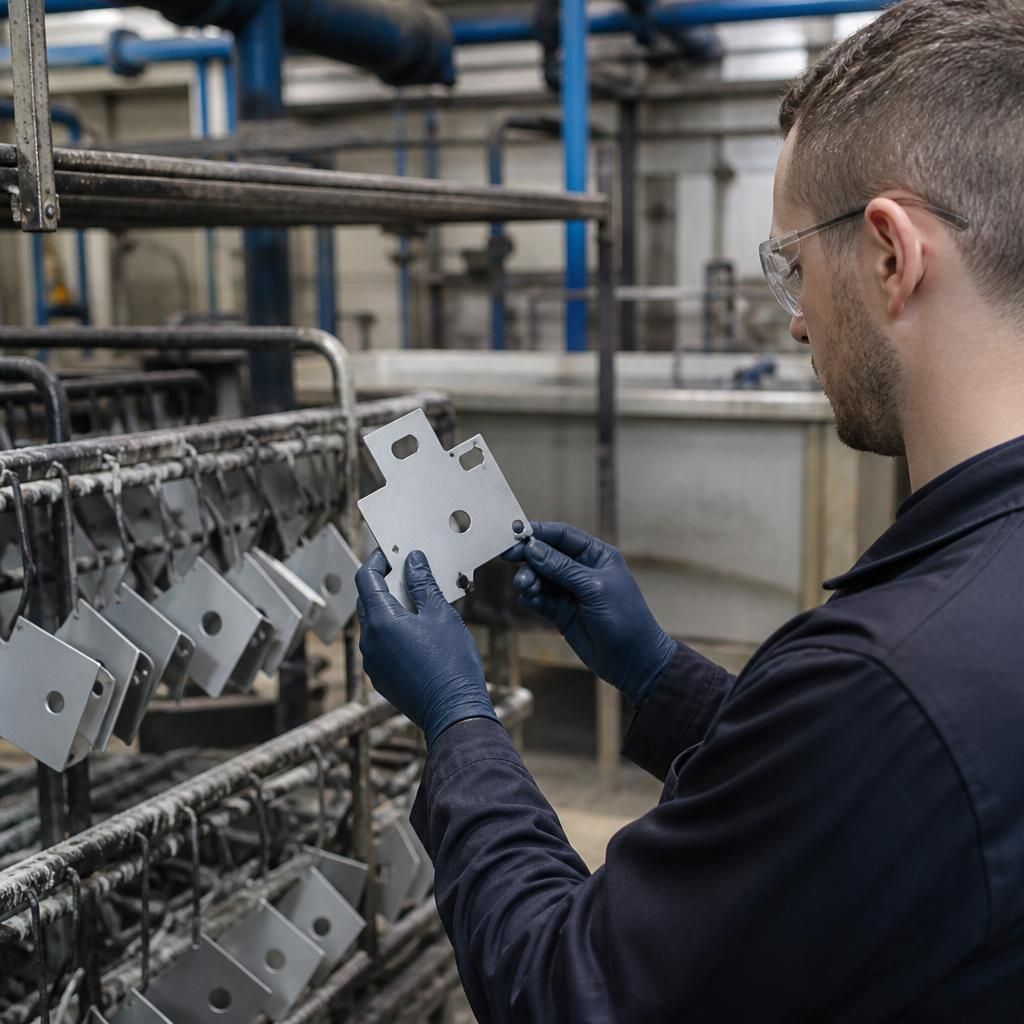
A further benefit of zinc phosphate spray pretreatment is that it makes the coating system easier to assess and control. The pretreatment stages can be checked separately, helping identify whether a defect relates to cleaning, phosphate coverage, rinsing, drying or the powder application itself. This gives manufacturers and fabricators a clearer basis for corrective action and process documentation, particularly when the same component is produced in repeated batches.
Discuss Zinc Phosphate Spray Pretreatment for Your Metal Components
Discuss your metal components, substrate and intended service conditions with powder-coatings.co.uk to assess whether zinc phosphate spray pretreatment is suitable for the coating system. The team can help identify the preparation and treatment requirements before processing begins.