

How does zinc phosphate spray pretreatment contribute to the overall quality and longevity of powder-coated surfaces?
Zinc phosphate spray pretreatment creates a conversion layer on the metal that provides a more receptive, stable surface for powder coating, improving adhesion and finish consistency. It also helps slow corrosion beneath the coating, so the finished surface is better able to withstand service conditions and retain its protective performance over time.
Zinc phosphate spray pretreatment contributes to the quality and longevity of powder-coated surfaces by creating a controlled, chemically converted base for the coating system. Its value is not limited to the phosphate layer itself: it helps establish consistent surface conditions, supports a more uniform powder film and reduces the risk of localised weaknesses caused by contamination, uneven preparation or poor interface control.
It improves consistency across the component. Bare metal can contain residues from fabrication, handling, storage or previous processing. A properly controlled spray pretreatment system cleans and conditions the surface before phosphating, allowing the conversion layer to form more evenly. This is particularly important on batch-produced parts, where small differences in preparation can otherwise lead to variations in finish, film performance and appearance from one component to the next.
The phosphate coating also provides a fine, receptive surface structure beneath the powder film. This gives the cured coating a more stable mechanical and chemical interface with the metal, rather than leaving it dependent on a smooth or inconsistently prepared substrate. The result is better control of the finished surface, including its resistance to lifting, flaking and damage at vulnerable areas when the component is handled or placed into service.
Surface uniformity affects appearance as well as protection. Inadequate pretreatment may contribute to visible defects such as uneven gloss, inconsistent texture, pinholing or localised coating failure. Zinc phosphate does not correct every defect in the metal or powder application, but a consistent conversion layer helps provide a more predictable foundation for the powder coating process. This is valuable where multiple parts must match visually, or where components include a mixture of flat sections, edges, recesses and fabricated joints.
Its contribution is especially relevant at areas where the coating system is under greater stress. Edges, corners, weld zones, drilled holes and joints may receive different levels of cleaning, rinsing and powder deposition than broad flat surfaces. Process control must therefore account for the geometry of the part, spray access, drainage and the condition of the metal before treatment. Where pretreatment reaches the relevant surfaces evenly, the finished system is less reliant on the powder film alone to maintain its performance.
Long-term performance depends on the complete process, not phosphate chemistry in isolation. Important controls include:
- Correct cleaning to remove oil, grease, dirt, oxides and fabrication residues before phosphating.
- Suitable spray coverage and contact time for the component’s material, shape and surface condition.
- Controlled bath chemistry, temperature, concentration and operating condition.
- Effective rinsing between stages to limit contamination and prevent unwanted residues.
- Appropriate final conditioning or sealing where specified for the coating system.
- Thorough drying before powder application so moisture does not interfere with the subsequent finish.
These controls affect the weight, structure and uniformity of the conversion coating. Too little treatment may leave areas insufficiently conditioned, while excessive deposits or poor rinsing can create residues and interfere with the powder finish. Both situations can reduce consistency and may become more apparent after curing, handling or exposure to demanding service conditions.
Inspection should cover the pretreatment stages as well as the finished coating. Operators can assess the incoming metal for rust, scale, oil, weld contamination and other conditions that may require additional preparation. They can then monitor process parameters, check that parts drain and dry correctly, and examine the cured powder film for coverage, visible defects and uniformity. Depending on the component and its intended use, further checks may include coating thickness, cure, flexibility, impact resistance or adhesion testing. These checks help distinguish a pretreatment issue from a powder application or curing issue.
Zinc phosphate is not a substitute for sound metal preparation, correct powder selection or an appropriate cure schedule. It cannot compensate for deeply contaminated steel, trapped moisture, sharp design features, poor drainage or a powder film applied outside its recommended conditions. The durability of the finished system is therefore determined by how well the substrate, pretreatment, powder application and curing stages work together.
For manufacturers, fabricators, construction suppliers and automotive businesses, the practical benefit is a more repeatable coating system that is easier to inspect and maintain across batches. When the pretreatment is matched to the metal and controlled consistently, the powder-coated surface is better positioned to retain its appearance and functional integrity throughout its intended service life.
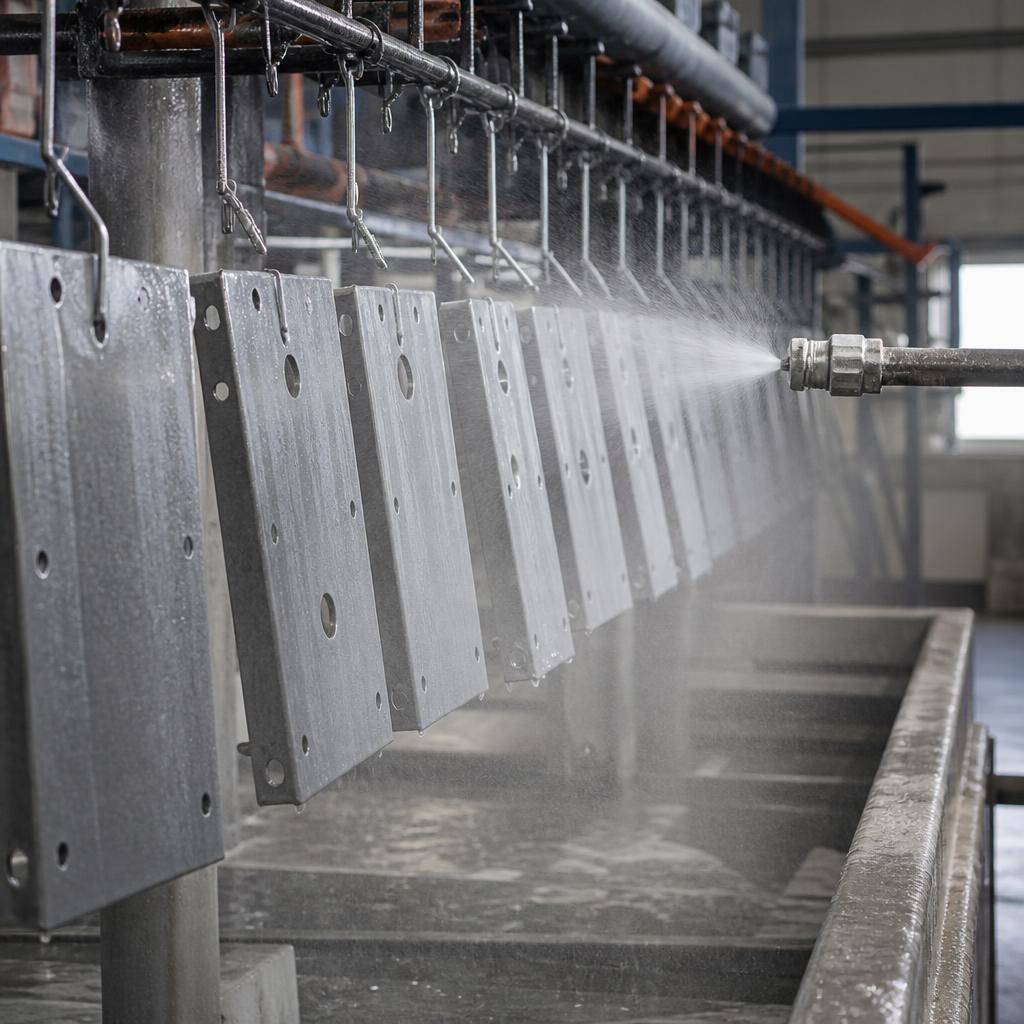
Zinc phosphate spray pretreatment improves the coating system at the metal-to-powder interface rather than acting as a separate decorative coating. The conversion layer is chemically formed on the prepared substrate, creating a stable transition between the metal and the cured powder film. This helps the surface retain its protective function when exposed to handling, vibration and normal service stresses.
Its contribution is therefore best understood as interface protection. The phosphate layer supports the powder coating where the two materials meet, helping reduce the likelihood that small areas of interface weakness develop into wider coating separation. It must still be combined with a suitable powder film and correct curing, but it provides an important underlying layer for maintaining the finished surface over its intended service life.
Discuss zinc phosphate pretreatment for your metal components
Discuss your metal components with a powder-coating specialist to assess whether zinc phosphate spray pretreatment suits the material, design and intended service conditions. Providing details of the component, batch requirements and exposure environment will help identify an appropriate coating system.