

What specific pretreatment processes should I consider to ensure the best adhesion and corrosion resistance for my powder-coated components?
Consider a process that combines thorough degreasing, suitable rinsing and drying, mechanical preparation such as abrasive blasting, and—where compatible with the substrate—a chemical conversion coating. The correct sequence depends on the metal, existing contamination, required corrosion resistance and powder system, so pretreatment should be specified and checked against the component’s service conditions.
The most effective pretreatment specification combines a process suited to the substrate with controlled cleaning, surface activation, conversion protection and inspection. Steel, aluminium, galvanised steel and stainless steel do not respond in the same way, so the correct route should be selected according to the base metal, fabrication condition, contaminants, intended environment and powder system.
In addition to removing visible oil and dirt, consider the following process stages where they are appropriate:
- Alkaline cleaning: A controlled alkaline wash can remove machining fluids, drawing compounds and handling residues that may not be apparent on inspection. The cleaner’s strength, temperature, contact time and rinsing effectiveness need to be controlled, because residues left on the surface can interfere with subsequent treatment.
- Acid activation or pickling: Mild acid treatment may be appropriate for removing light oxidation, mill scale or embedded contamination from some steel components. It must be carefully specified for the material and component geometry. Excessive attack can roughen the surface, affect dimensions or leave residues, while high-strength steels require particular care because inappropriate acid treatment can contribute to hydrogen-related problems.
- Phosphate treatment: Iron phosphate can provide a suitable conversion layer for general-purpose applications, while zinc phosphate is normally considered where a more substantial corrosion-resistant pretreatment is required. The choice depends on the metal, coating specification, service environment and whether the process is designed for spray or immersion application.
- Modern thin-film conversion systems: Zirconium-, titanium- or silane-based treatments may be considered where a low-residue, low-sludge process is preferred or where the substrate mix makes traditional phosphate treatment less suitable. These systems still depend on effective cleaning, correct bath control and thorough rinsing; they are not a substitute for preparing the surface properly.
- Specialist treatment for galvanised or zinc-coated parts: Zinc surfaces may require controlled activation rather than the same treatment used for mild steel. The objective is to remove surface contamination and provide a stable key without unnecessarily attacking the zinc layer. White corrosion products, storage staining and passivation residues should be assessed before the process is chosen.
- Aluminium preparation: Aluminium oxide forms rapidly and can vary between alloys. A suitable activation and conversion process can produce a more consistent surface for powder adhesion, but the treatment must account for the alloy, extrusion or casting condition and any existing anodised or conversion layer.
Fabrication details should also influence the pretreatment plan. Welds can contain heat tint, welding residues, spatter and embedded contaminants, while folded sections, drilled holes and sharp edges can retain process chemicals. Weld cleaning, removal of spatter and correction of fabrication defects should take place before the pretreatment line. Deep recesses and enclosed sections need particular attention because trapped cleaner, rinse water or treatment solution can later seep out and affect the finish.
Edge condition is relevant to both adhesion and corrosion resistance. Very sharp edges can receive less powder coverage than adjacent faces, making them vulnerable to early breakdown. Where the component specification permits, edge radiusing and removal of burrs should be completed during fabrication. Crevices, lap joints and unsealed overlaps can retain moisture and chemicals after treatment, so they should be avoided or designed with suitable drainage and sealing arrangements.
Rinsing deserves its own specification rather than being treated as a minor part of the process. Inadequate rinsing can leave cleaner, acid, phosphate or conversion residues that cause powder defects or reduce adhesion. A final rinse using suitably controlled water may be appropriate for demanding work. Water quality, conductivity and carry-over between tanks should be monitored, particularly where components require high corrosion resistance.
Drying must remove moisture from joints, holes and recessed areas without contaminating the prepared surface. Components should not be handled with dirty gloves or placed on contaminated supports after treatment. If flash rust, staining or renewed oxidation appears before powder application, the cause should be identified rather than simply coating over it. The acceptable interval between pretreatment and coating depends on the substrate, environment and process controls.
For corrosion-sensitive components, specify the required performance by service conditions rather than choosing a pretreatment name in isolation. Indoor equipment, external architectural items, road-related components and parts exposed to chemicals may require different levels of surface preparation and conversion protection. Consider exposure to water, salt, condensation, industrial pollutants, abrasion and temperature changes, together with the consequences of coating failure at edges, joints and fixing points.
Process control is as important as process selection. A pretreatment provider should be able to define and monitor relevant variables such as bath concentration, pH, temperature, contact time, spray pressure, rinse quality and drying conditions. Records of these controls help identify whether a defect originates from the substrate, pretreatment, powder application or curing stage.
Practical checks can include a water-break assessment after cleaning, visual inspection for corrosion or residue, verification that treated surfaces are uniform, and adhesion testing after the powder has been cured. Where corrosion performance is critical, the test method and acceptance criteria should be agreed in advance. Salt-spray results, for example, can be useful for comparative process evaluation but should not be treated as a complete prediction of service life in every environment.
The pretreatment specification should therefore document the substrate, fabrication condition, permitted chemical system, treatment stages, rinsing and drying requirements, inspection points and performance criteria. For mixed-metal batches or components with existing coatings, trial pieces can help confirm compatibility before full production. This approach reduces the risk of selecting a process that appears suitable in theory but produces inconsistent adhesion or corrosion protection on the finished components.
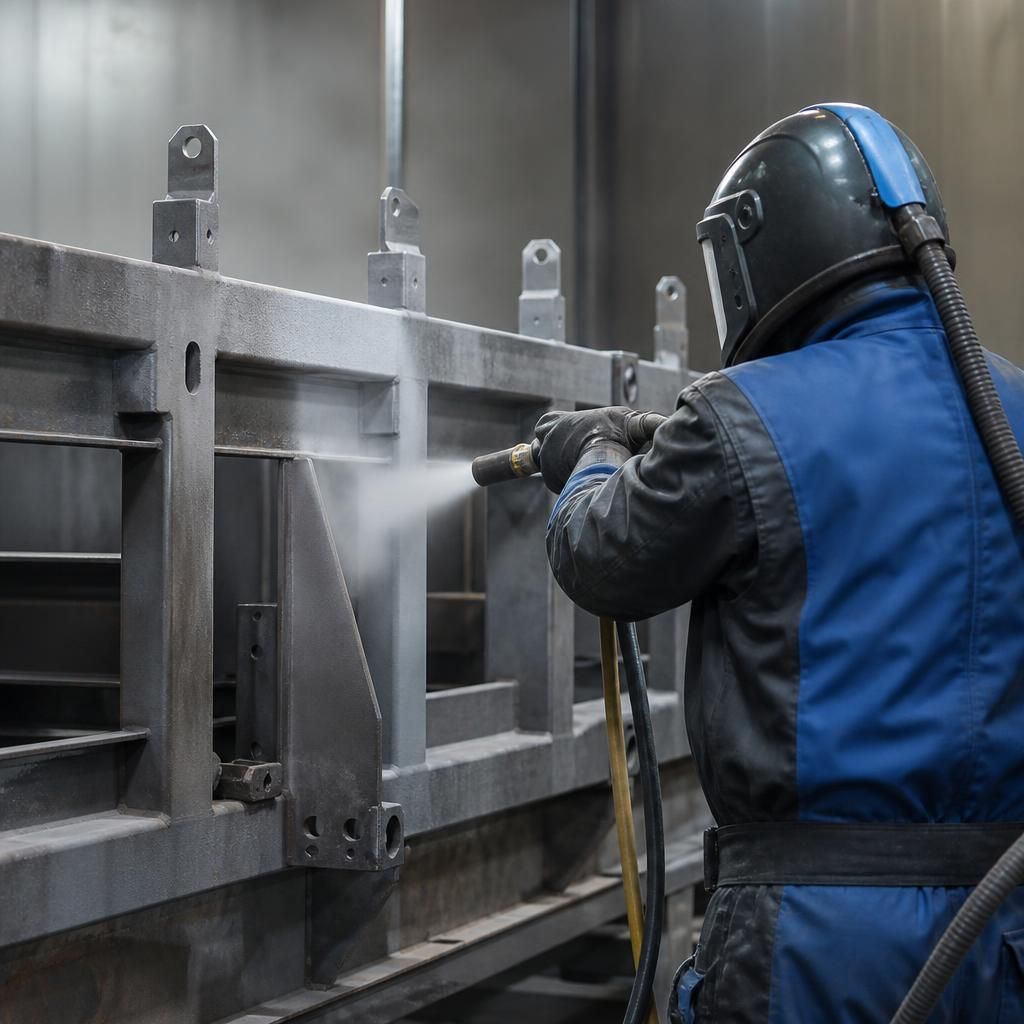
Abrasive blasting can be an important pretreatment stage where steel components carry mill scale, tightly bonded oxidation or an existing coating that chemical cleaning alone cannot remove. The process should be specified by the required cleanliness and surface profile, rather than simply described as “blasting”. Media type, particle size, pressure and stand-off distance must suit the substrate and component geometry.
After blasting, remove dust and loose abrasive, then check that the surface is evenly prepared without excessive roughness, embedded media or distortion of thin sections. The prepared steel should be protected from moisture and contamination before powder application, because a clean blast profile can deteriorate if it is left exposed. For aluminium, galvanised parts or thin fabricated sections, a less aggressive preparation may be more appropriate to avoid damaging the substrate or removing protective zinc.
Discuss the right pretreatment process for your components
Discuss your component drawings, substrate and required service environment with the powder-coating.co.uk team to help identify a suitable pretreatment route. Where compatibility is uncertain, ask about assessing a representative sample before specifying the full batch.