

What factors should I evaluate in a specialist pretreatment provider to ensure they can deliver reliability and quality consistently?
Evaluate a specialist pretreatment provider’s control of surface preparation, suitability for different substrates, inspection and testing methods, process traceability, and ability to handle your component volumes consistently. Ask for clear process specifications, quality records and evidence that pretreatment parameters are monitored and adjusted for the coating system and end-use requirements.
A reliable specialist pretreatment provider should be able to show that its process is technically suitable for your components, compatible with the intended powder coating system, protected against avoidable contamination and supported by a disciplined approach to change and non-conformance management. The assessment should cover the provider’s technical understanding, production controls, handling practices, communication and ability to maintain the agreed standard from initial trial through repeat work.
Assess the technical review before production. A competent provider should examine more than the nominal metal type. Ask how it evaluates welds, castings, machined areas, enclosed sections, sharp edges, joints and areas that may retain oil, moisture or residues. Component geometry can affect chemical access, rinsing, drainage and drying, so the provider should identify risks before accepting the job and explain any design, masking or racking considerations that could affect the finished coating.
Check that the pretreatment is compatible with the complete coating specification. The provider should understand how the chosen preparation system interacts with the powder coating, the component’s service environment and any subsequent processes such as bonding, assembly or forming. Clarify which finish requirements are critical, including adhesion, corrosion protection, appearance, electrical insulation or resistance to chemicals. A technically suitable provider will define what the pretreatment is intended to achieve rather than treating every component in the same way.
Review how process changes are controlled. Reliability can be undermined when chemicals, equipment settings, rinsing arrangements or operating practices change without a formal review. Ask how the provider assesses the effect of a proposed change, who authorises it and how you would be informed if it could alter the coating result. This is particularly important where a component has already been approved or where the finish forms part of a wider manufacturing specification.
Examine component handling between stages. Pretreatment quality can be lost through poor lifting, contact with dirty surfaces, inadequate drying or unsuitable storage before coating. Ask how parts are supported without damaging prepared areas, how water is prevented from collecting in recesses and how prepared components are protected from fingerprints, dust and workshop contamination. Handling arrangements should also account for delicate edges, visible faces and components that cannot be easily reworked.
Ask how non-conforming work is managed. A dependable provider should have a clear method for identifying, isolating and investigating parts that do not meet the agreed requirement. Find out whether the root cause is examined before rework is authorised, how disposition decisions are agreed and how recurring faults are prevented. Rework should not simply conceal a problem, particularly where excessive processing could affect dimensions, edges or the bond between the metal and coating.
Consider trial and approval arrangements. For unfamiliar materials, complex geometries or demanding service conditions, establish whether the provider can support a controlled trial before routine production. Agree the component preparation, coating system, appearance standard and acceptance criteria in advance. A trial should confirm that the proposed process works on representative parts, not just on a convenient flat test piece. It also provides a reference against which later production can be assessed.
Evaluate communication and technical accountability. Identify who handles technical queries, specification changes, damage reports and questions about unusual components. Communication should be precise enough to distinguish a change in metal, contamination level, component design, powder system or required finish. Providers that ask relevant questions at quotation and pre-production stages are more likely to identify risks before they become quality issues.
Check packaging and transport controls. Once parts have been prepared and coated, unsuitable packaging or movement can cause impact damage, abrasion, moisture exposure or contamination. Confirm how components will be separated, protected and loaded, particularly when they have visible faces or awkward geometries. Collection and delivery arrangements should be assessed alongside packaging responsibilities so that the agreed condition of the parts is maintained through handover.
Include environmental and safety competence in the assessment. Pretreatment uses chemicals, water and waste-handling processes that must be managed responsibly. Ask how the provider controls chemical storage, waste streams, operator safety and spill risks. These considerations are relevant to reliability because poor control can interrupt production, contaminate components or create compliance problems for the wider supply chain.
Before appointing a provider, request a written description of the proposed process, the information they need from you, the agreed acceptance requirements, the approach to trials and the procedure for dealing with deviations. Compare providers on the strength and clarity of these controls rather than on price alone. For manufacturers, fabricators, construction firms and automotive businesses, the most suitable specialist is the one that can connect technical preparation with careful handling, controlled change and accountable corrective action throughout the job.
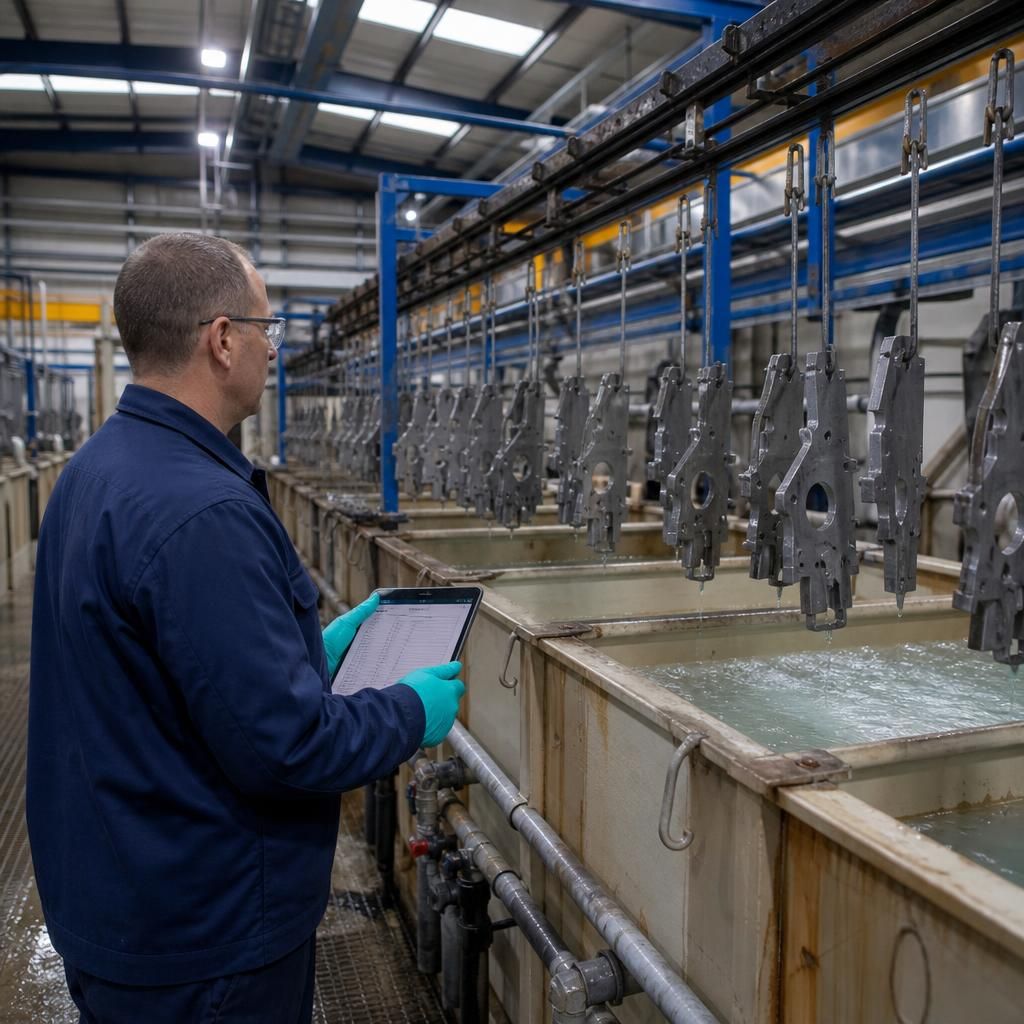
A specialist pretreatment provider should demonstrate that its process remains controlled when handling your normal production load, not only during an initial trial. Ask how it plans batch sizes, manages different component types and prevents one job from affecting the consistency of another.
Discuss the practical limits of the process, including component dimensions, weight, batch quantity and the time parts can remain between preparation stages. The provider should be able to explain how production is organised when work includes mixed geometries or repeat batches, and how prepared components are identified and kept together through coating and dispatch.
It is also worth asking how operational interruptions are managed. A sound provider should have defined arrangements for equipment faults, chemical-control issues, rejected batches and changes to planned production. Evidence of this may include production records, batch identification and a clear escalation route when work cannot proceed to the agreed specification. This helps distinguish a provider with repeatable production control from one whose quality depends mainly on individual operator judgement.