

How does pretreatment affect the performance of specialist powder coatings?
Pretreatment affects specialist powder coating performance by removing contaminants and conditioning the metal surface so the coating can bond consistently. A suitable process improves adhesion and helps the finished coating resist corrosion, wear and environmental exposure.
Pretreatment affects specialist powder coating performance by determining the condition of the coating-to-metal interface. The powder may have the correct formulation and cure, but defects in surface preparation can still cause early lifting, blistering, under-film corrosion, edge failure or inconsistent appearance. For demanding industrial finishes, pretreatment must therefore be selected and controlled as part of the complete coating system rather than treated as a separate cleaning stage.
Surface cleanliness and surface energy
Oil, grease, polishing compounds, fingerprints, dust, mill scale and corrosion products can prevent the coating from making continuous contact with the substrate. Even a light residue may create isolated weak points that become visible after impact, immersion or exposure to corrosive contaminants. Degreasing and cleaning remove these residues, while subsequent rinsing prevents cleaning chemicals and loosened contaminants from being carried into later stages.
Pretreatment also changes the surface energy of the metal. A suitably conditioned surface allows molten powder to wet the substrate more evenly during curing. This is particularly important where the coating is thick, textured, thermoplastic or applied to complex profiles, because poor wetting can leave voids or weak areas at the interface.
Interfacial bonding and mechanical resistance
A conversion layer can improve the chemical key between the substrate and the powder coating. It creates a controlled surface that is more receptive to the coating than untreated metal and can reduce the likelihood of delamination when the component is scratched, flexed or struck. Mechanical preparation, such as abrasive treatment where appropriate, may also provide a controlled profile for the coating to engage with. The profile must be suitable for the substrate and coating system: excessive roughness can show through the finish or create peaks that are difficult to cover, while insufficient preparation may leave contaminants or weakly attached material behind.
The result is not simply better initial adhesion. A sound interface helps prevent a small impact or cut from becoming a larger area of coating loss. This matters for components exposed to handling, vibration, abrasion or repeated contact, including fabricated parts and equipment used in demanding environments.
Corrosion protection at damaged areas and edges
Pretreatment influences how corrosion develops beneath a coating. Where the interface is poorly prepared, moisture and salts can travel from a defect under the film, causing blistering and progressive loss of adhesion. A compatible conversion treatment helps limit this under-film spread by establishing a more stable boundary between the substrate and coating.
Edges, apertures, welds, joints and recessed areas require particular attention. These locations may retain contaminants, receive less even treatment or produce thinner powder coverage. Weld-cleaning residues and heat-affected areas can also behave differently from the surrounding parent metal. Pretreatment must address the whole component, not just its broad flat faces, and the coating specification may need to account for edge geometry and drainage.
Why the substrate and coating type matter
The correct process depends on the metal, the intended environment and the specialist powder being applied. Steel, galvanised steel and aluminium have different surface chemistries and may require different cleaning, activation or conversion stages. Galvanised surfaces can contain passivation residues or uneven areas, while aluminium can develop an oxide layer rapidly after preparation. A process suitable for one substrate may be ineffective or unnecessarily aggressive on another.
Specialist coatings also place different demands on the interface. A nylon or other thermoplastic coating may be applied at a greater thickness than a conventional decorative powder and can experience different impact, abrasion or chemical conditions in service. Protective systems for industrial components may need a particularly consistent substrate condition because any void, residue or moisture trapped below the coating can become difficult to detect once the film has been applied.
Rinsing, drying and process control
Cleaning and conversion stages only deliver consistent results when their operating conditions are controlled. Concentration, temperature, contact time, spray coverage, bath condition and water quality can all affect the resulting surface. Inadequate rinsing may leave soluble residues; poor drainage can cause runs or contamination in recesses; and incomplete drying can trap moisture beneath the powder or contribute to flash corrosion before coating.
Components should be handled in a way that avoids recontamination after pretreatment. Clean gloves, suitable racks and controlled movement between stages help protect the prepared surface. The interval between final preparation and powder application should also be managed according to the substrate and surrounding conditions, since a reactive or freshly exposed surface can change before coating.
How pretreatment problems appear in the finished coating
- Fish-eyes, craters or pinholes may indicate contamination or incompatible residues.
- Blistering and under-film corrosion may point to retained moisture, soluble salts or inadequate corrosion-control treatment.
- Peeling after impact or cross-cut testing may indicate weak bonding, insufficient preparation or an incompatible process.
- Uneven appearance can result when the substrate condition varies across a batch or when residues affect powder flow and wetting.
- Premature edge breakdown may reflect poor coverage, contamination in corners or a pretreatment process that does not suit the component geometry.
Investigation should consider the complete process rather than attributing every defect to the powder. Reviewing substrate condition, cleaning stages, rinsing, drying, application and curing together is more reliable than changing the coating material without identifying the cause.
Verifying the effect of pretreatment
Quality checks can include visual inspection, coating thickness measurement, adhesion testing and exposure testing selected for the intended service environment. Testing should be carried out on representative substrates and component geometries, including difficult areas where practical. Results from a flat test panel may not fully reflect behaviour around welds, folds, holes or edges.
In practice, effective pretreatment is a balance between chemical compatibility, surface condition, component design and the performance required from the specialist coating. A written process specification, controlled rinse stages and records of treatment conditions make batch results more repeatable. When these controls are matched to the substrate and end use, the powder coating can perform as a coherent system rather than relying on the powder layer alone.
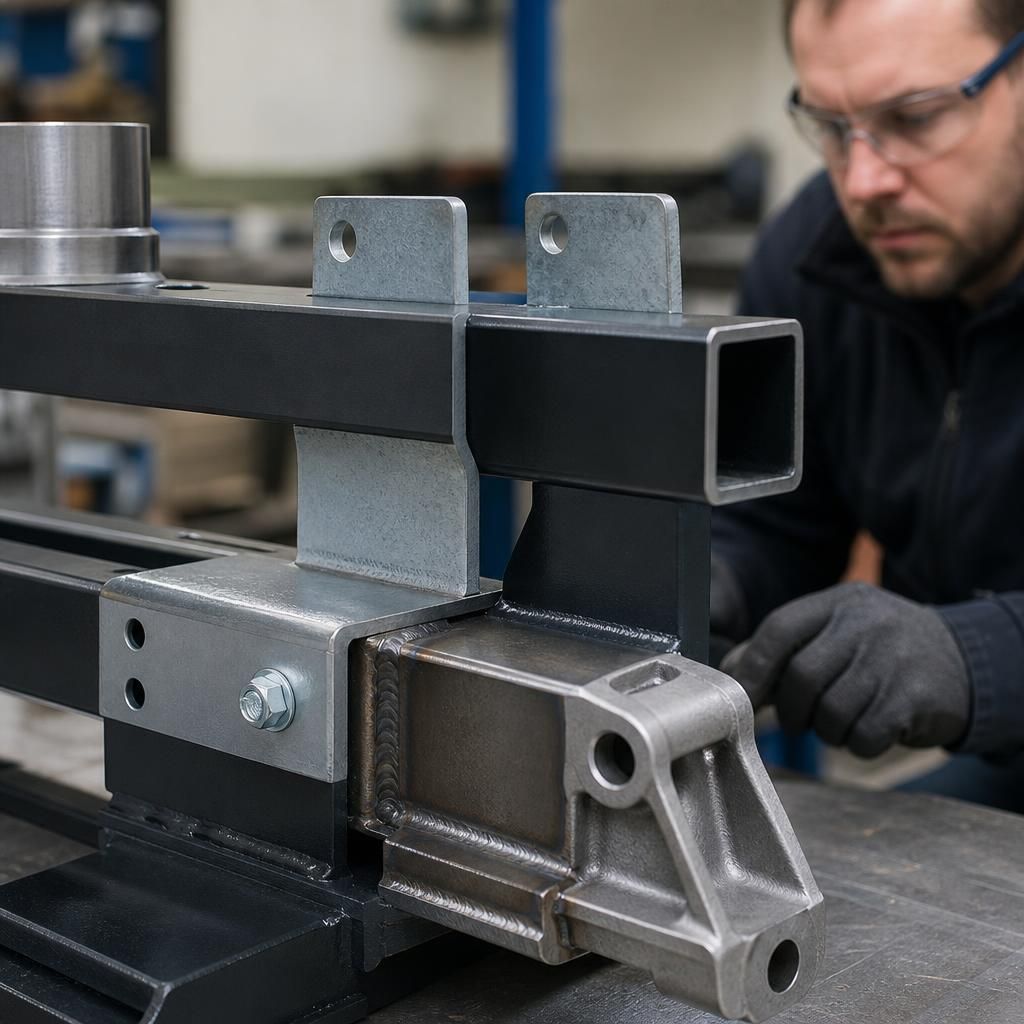
Mixed-metal components require particular care because each substrate may respond differently to the same pretreatment. Steel, galvanised sections and aluminium can need separate preparation requirements, even when they form one assembled part. If treatment is selected only for the dominant metal, another area may remain insufficiently prepared or carry residues that weaken the specialist powder coating.
The coating specification should therefore identify every exposed substrate, along with welded joints, fasteners and contact areas between dissimilar metals. Reviewing these details before production helps determine whether areas need masking, separate preparation or additional inspection. This prevents the finished coating from being judged solely by its appearance on the main metal surface while less visible interfaces remain vulnerable.