

What are the benefits of using specialist coatings in the pre treatment powder coating process?
Specialist coatings in the pre-treatment powder coating process are formulated to prepare the metal surface for a more reliable powder finish. They can improve coating adhesion, strengthen corrosion protection and support a more durable, consistent finish on components exposed to demanding service conditions.
Specialist coatings in the pre-treatment process are thin chemical or conversion layers applied to prepared metal before powder is sprayed and cured. Their main benefit is that they allow the treatment to be matched to the substrate, service environment and production requirements, rather than relying on one general-purpose process for every component. This improves process control, finish uniformity and the suitability of the finished part for its intended use.
They accommodate different metal substrates. Steel, galvanised steel, aluminium and mixed-metal assemblies do not respond identically to cleaning and pre-treatment chemicals. A specialist formulation can be selected to work with the surface chemistry of the particular substrate, helping to avoid unsuitable reactions, uneven treatment or variation between materials. This is especially important where a batch contains components with different grades, previous surface conditions or areas that require different preparation methods.
They provide a controlled surface for powder application. Specialist conversion coatings and sealers can regulate the condition of the metal after cleaning. Rather than leaving the substrate vulnerable to rapid recontamination or inconsistent preparation, they create a defined intermediate surface for the subsequent powder coating stages. Consistency at this point supports more predictable spraying and curing, which is valuable when components need to match across repeated production runs.
They help reduce coating defects. Inadequate or unsuitable pre-treatment may contribute to problems such as blistering, flaking, pinholing, uneven appearance or premature breakdown. The correct specialist coating cannot compensate for every issue, but it can reduce risks associated with poor surface chemistry, residual contamination and inconsistent reaction rates. The result is a more stable production process with fewer parts requiring investigation, rework or rejection.
They support appearance requirements. A powder-coated component may need more than basic protection. Visible panels, architectural items, enclosures and fabricated parts can require an even colour, consistent gloss and a clean surface without staining or patchiness. Specialist pre-treatment helps create more consistent conditions for the powder layer, particularly where the components have large surface areas, complex profiles or visible faces.
They can be selected for the exposure conditions. The correct treatment depends partly on where the component will be used. Indoor equipment, external structures, industrial machinery and parts exposed to moisture or contaminants may require different levels of preparation. A specialist coating system can be chosen with the intended environment, substrate and powder specification in mind. This avoids treating pre-treatment as a standard step that is separate from the finished product’s operating conditions.
They are useful for difficult or high-value components. Specialist treatments can be considered where the metal is intricate, has narrow recesses, includes folded sections or combines several surface types. Such parts may be harder to clean and rinse consistently than simple flat sections. The treatment process can therefore be designed around drainage, access, surface condition and the risk of solution carry-over, rather than applying the same assumptions used for uncomplicated components.
They improve process repeatability when properly controlled. A specialist coating system must be supported by suitable cleaning, concentration control, temperature, contact time, rinsing and drying. These variables affect how evenly the treatment develops across the component. Monitoring them helps identify drift before it creates widespread variation in the finished batch. For manufacturers and fabricators, this provides a more practical basis for maintaining repeatable quality than inspecting the powder layer alone.
Selection should therefore consider:
- the metal or combination of metals being treated;
- the existing condition of the surface, including scale, oil, oxidation or previous treatment;
- the required appearance and powder coating specification;
- the component’s expected exposure to moisture, chemicals, abrasion or outdoor conditions;
- the geometry of the parts and how easily all surfaces can be cleaned, rinsed and dried; and
- any technical, environmental or process-control requirements attached to the project.
It is also important to distinguish a specialist pre-treatment coating from a powder primer. A pre-treatment coating is normally a very thin chemical layer formed or deposited on the prepared metal before powder application. A primer is a separate coating layer with its own film thickness and application requirements. The appropriate option depends on the substrate, specification and performance demands of the component.
For larger or repeated production runs, the principal advantage is control: the treatment can be specified around the actual metal parts and the required end use. This helps establish a consistent foundation for powder coating, supports a uniform visual result and makes quality checks easier to relate to defined process conditions. Specialist pre-treatment is therefore most effective when selected as part of the complete coating system, rather than as an isolated chemical choice.
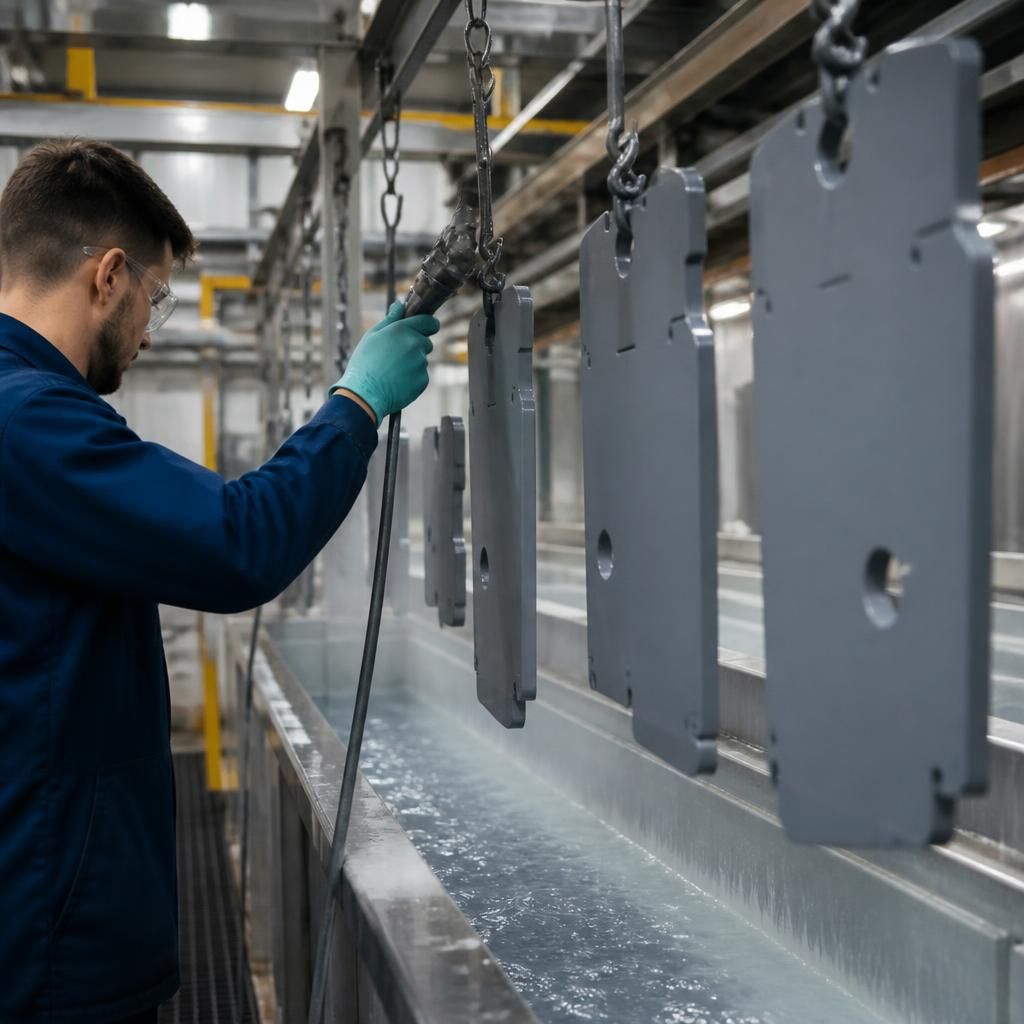
The benefit of a specialist pre-treatment coating is not that it is simply heavier or more aggressive than a standard treatment. Its value comes from being chemically suited to the substrate and compatible with the powder coating system that follows. This helps establish the correct interface between the metal and the powder film without introducing an unsuitable layer that could affect the final finish.
For this reason, selection should be based on the complete coating specification rather than the chemical name alone. The substrate, powder type, required appearance and service environment all need to be considered together. A correctly matched specialist treatment provides a more reliable technical foundation for the finished coating than choosing a formulation solely because it is described as high-performance or specialist.
Discuss specialist coatings for your powder coating process
If you are assessing specialist coatings for a pre-treatment powder coating process, discuss the substrate, component design, service environment and powder specification with Powder-coatings.co.uk. This helps establish which treatment approach is appropriate for your parts before production begins.