

What techniques can enhance the consistency of powder curing results?
Consistent powder curing results depend on controlling the full cure cycle: standardise part preparation and loading, use a verified oven temperature profile, and control powder application, airflow and conveyor speed. Monitoring the metal temperature rather than relying solely on oven air temperature helps confirm that each component receives the required heat exposure.
Consistent powder curing is achieved by combining a defined cure specification with controlled materials, repeatable thermal conditions and objective checks on the finished coating. The aim is not simply to make the oven reach a set air temperature, but to ensure that the powder system, metal substrate and equipment operate within a repeatable process window.
Use the powder manufacturer’s technical data as the process specification. Different powder chemistries and formulations can have different curing requirements, including minimum and maximum temperatures, required heat exposure and acceptable cure windows. The specification should identify the powder type, substrate, target finish, film thickness range and the test method used to confirm cure. Keeping this information with the job documentation prevents operators from applying a generic schedule to a coating that requires different conditions.
Control powder condition and batch traceability. Powder should be stored in the conditions specified for that product and protected from moisture, contamination and excessive heat. Poorly stored powder can form agglomerates, flow inconsistently or produce surface defects that may be mistaken for curing problems. Recording the powder batch, colour, product reference and application date makes it easier to distinguish a material-related variation from an oven or process issue. Different powder types should not be mixed unless the supplier has confirmed compatibility.
Manage thermal loads by component type. Parts with substantially different mass, wall thickness or geometry absorb heat at different rates. Processing a thin pressed component alongside a heavy fabricated assembly can therefore produce different cure results even when both pass through the same equipment. Grouping components with similar thermal characteristics, or establishing separate validated schedules for different product families, helps reduce this variation. Fixtures and hanging arrangements should also be assessed because they can act as heat sinks and alter the heat reaching a part.
Keep the oven mechanically consistent. Fans, ducting, burners, heating elements, filters, doors and seals all affect how reliably the equipment transfers heat. Build-up of powder or debris can obstruct circulation, while damaged seals and poor insulation can create heat loss. Planned inspection and cleaning should include checks for obstructions, fan operation and damaged components. Any alteration to the oven, such as replacing a fan or changing the heating system, should trigger a revalidation rather than being treated as routine maintenance with no process impact.
Use repeatable job identification and process records. A useful production record links the powder batch and specification to the component type, film thickness requirement, equipment settings, operator checks and cure verification result. Reviewing these records over time can reveal gradual drift, such as recurring defects on one product family or variation after maintenance. Basic trend analysis is often more informative than investigating each defective part in isolation, particularly where the process is used for repeated batches.
Verify cure with a suitable test method. Visual appearance alone cannot confirm that the coating has developed its intended properties. Depending on the powder system and customer specification, checks may include solvent resistance, adhesion, hardness, impact resistance or a combination of these. Tests must be carried out using the method appropriate to the coating; a result from one test cannot automatically be applied to every powder formulation. Destructive checks should be made on representative samples or approved test panels where examining production parts would be impractical.
Control film thickness as part of cure verification. An excessively thick or uneven film can affect appearance, flexibility and the way heat reaches the coating. Measuring thickness at defined locations helps identify whether a curing variation is actually being caused by inconsistent coating build. Measurements should account for the component’s geometry and should be compared with the powder specification and customer requirements, rather than judged against an arbitrary value.
Finally, define what happens when a check falls outside the agreed limits. Suspect work should be identified and segregated, the likely cause investigated, and any rework assessed against the powder supplier’s guidance. Repeating a cure cycle without understanding the cause can alter appearance or performance and does not necessarily correct an under-cured or over-cured coating. A documented corrective-action process, supported by regular equipment checks and product testing, provides a more reliable route to repeatable powder curing results.
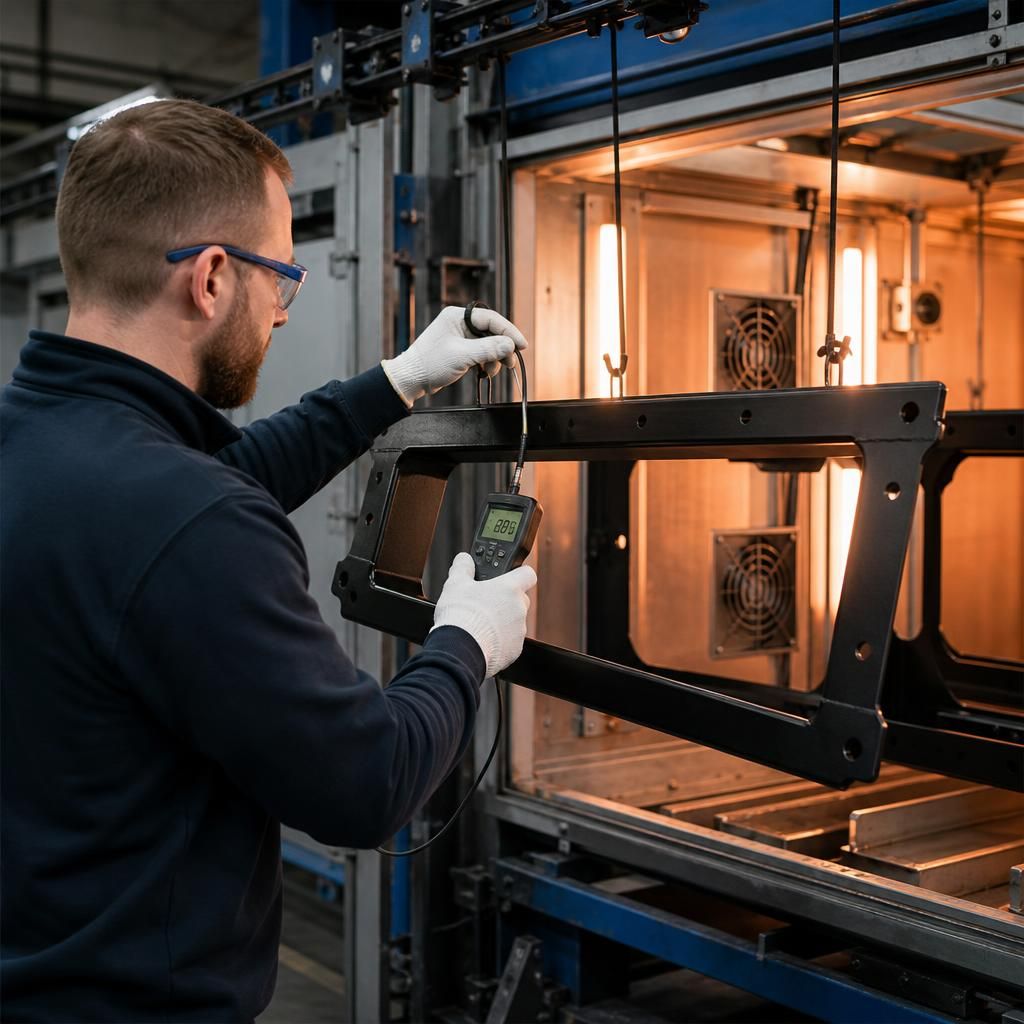
A practical way to improve repeatability is to validate the cure cycle using a representative production component rather than relying only on an empty-oven check. Select a part that reflects the heaviest section, most enclosed geometry or least accessible surface in the batch, then assess the coating after the defined cycle. This helps identify whether the component’s shape is creating a different curing response from a flat test piece.
Repeat the assessment when the product design, hanging method or powder system changes. Comparing results from the same type of representative component creates a consistent reference for operators and makes it easier to identify whether a change has affected curing performance.
Discuss techniques for consistent powder curing results
For practical guidance on applying consistent curing controls to your components, discuss your powder specification, part geometry and verification requirements with the powder-coating team. They can help identify the appropriate coating process for your batch or specialist application.