

What methods can be utilised to ensure uniform temperature distribution within curing ovens for consistent powder coating results?
Uniform temperature distribution in a powder curing oven is achieved through balanced airflow, correctly maintained heating elements, effective circulation and loading arrangements that avoid blocked or stagnant areas. Temperature mapping, regular calibration and monitoring at multiple points help identify hot and cold zones so adjustments can be made before they affect coating quality.
Uniform temperature distribution in a powder curing oven depends on controlling heat input, limiting heat loss and proving that the temperature received by the workpiece remains within the powder manufacturer’s curing requirements. The most dependable approach combines sound oven construction, independently controlled heating zones, correctly positioned sensors, well-tuned control software and regular process qualification using representative coated parts.
Use effective insulation and sealing. Sound insulation reduces heat transfer through the oven walls, roof and floor, helping the internal temperature remain stable. Damaged panels, compressed insulation, gaps around access doors and worn seals can create local cold areas and make the controls compensate unnecessarily. Inspection should include panel joints, door frames, inspection windows, cable entries and any other penetration through the oven enclosure. Repairs should restore the original thermal barrier rather than simply covering visible gaps.
Divide the oven into controllable heating zones. A long or high-capacity oven may experience different heat demands at its entrance, centre and exit. Independent zones allow each section to respond to its own thermal load instead of relying on one control point for the whole chamber. Zone control is particularly useful where workpieces vary in mass, where the oven has separate loading and unloading areas, or where doors and openings create different heat-loss characteristics.
The control system should also be configured to avoid excessive overshoot. Proportional–integral–derivative, or PID, settings determine how quickly the heating output responds to a temperature change. Poorly tuned settings can produce repeated rises and falls around the set point, even when the average oven temperature appears correct. Tuning should be carried out under normal operating conditions, with attention to start-up behaviour, recovery after an access door is opened and the additional heat absorbed by a typical production load.
Position sensors to represent the process rather than merely the air. A controller sensor placed too close to a heat source may indicate the target temperature while other areas remain cooler. Conversely, a sensor in a naturally cooler location may cause unnecessary heating elsewhere. Sensor positions should therefore be selected after considering the oven geometry, heat sources, workpiece path and areas most likely to influence coating cure. Sensor wiring and probes should be protected from mechanical damage and checked for drift or response problems.
Air temperature alone does not confirm that the coating has received the required cure. Powder cures as the metal reaches the required part metal temperature, so a heavy steel section may lag behind the surrounding air while a thin component heats more quickly. A temperature profiler attached to representative workpieces can show the actual thermal exposure of the coating. Profiling should include the lightest and heaviest relevant parts, as well as sections with different thicknesses, shapes or thermal mass.
For a useful profile:
- Attach probes firmly to clean, representative metal surfaces, using a method that gives good thermal contact without damaging the coating.
- Record the temperature through the complete oven passage, including the heating phase, time at the required metal temperature and cooling phase.
- Repeat the assessment after significant changes to the oven, coating system, conveyor speed, workpiece design or production load.
- Compare the result with the powder supplier’s specified cure schedule, recognising that the stated time normally applies after the part has reached the required temperature.
Control the thermal characteristics of the load. Parts with substantially different masses can absorb heat at different rates and alter the demand placed on each oven zone. Where mixed production is unavoidable, the process should be assessed using the combinations that create the greatest thermal challenge. Fixtures and racks should also be considered: thick steel supports can draw heat from parts, while contact points can reduce the exposed surface available for heating. The objective is not simply to make the oven air uniform, but to ensure that the coated metal receives a suitable and repeatable thermal history.
Temperature stability also depends on the condition of the oven interior. Accumulated powder, damaged liners, distorted panels or changes to internal surfaces can alter heat transfer and create local differences. Planned inspection should look for physical changes that could affect the chamber’s thermal behaviour, rather than focusing only on whether the displayed set point is being reached.
Uniformity checks are most meaningful when performed at normal operating temperature and with a representative production load. An empty-oven assessment can reveal inherent differences within the chamber, but it cannot show how a particular part behaves during curing. Results should be documented by oven zone, product type, load arrangement and process settings so that later changes can be compared with a known baseline.
Finally, use documented acceptance criteria and investigate trends rather than waiting for visible coating defects. Blistering, poor adhesion, inconsistent gloss, colour variation and under-cured areas may result from uneven thermal exposure, although pretreatment, powder application and contamination must also be considered. Reviewing temperature profiles alongside coating inspection records helps distinguish an oven problem from another stage of the finishing process and supports corrective action based on evidence.
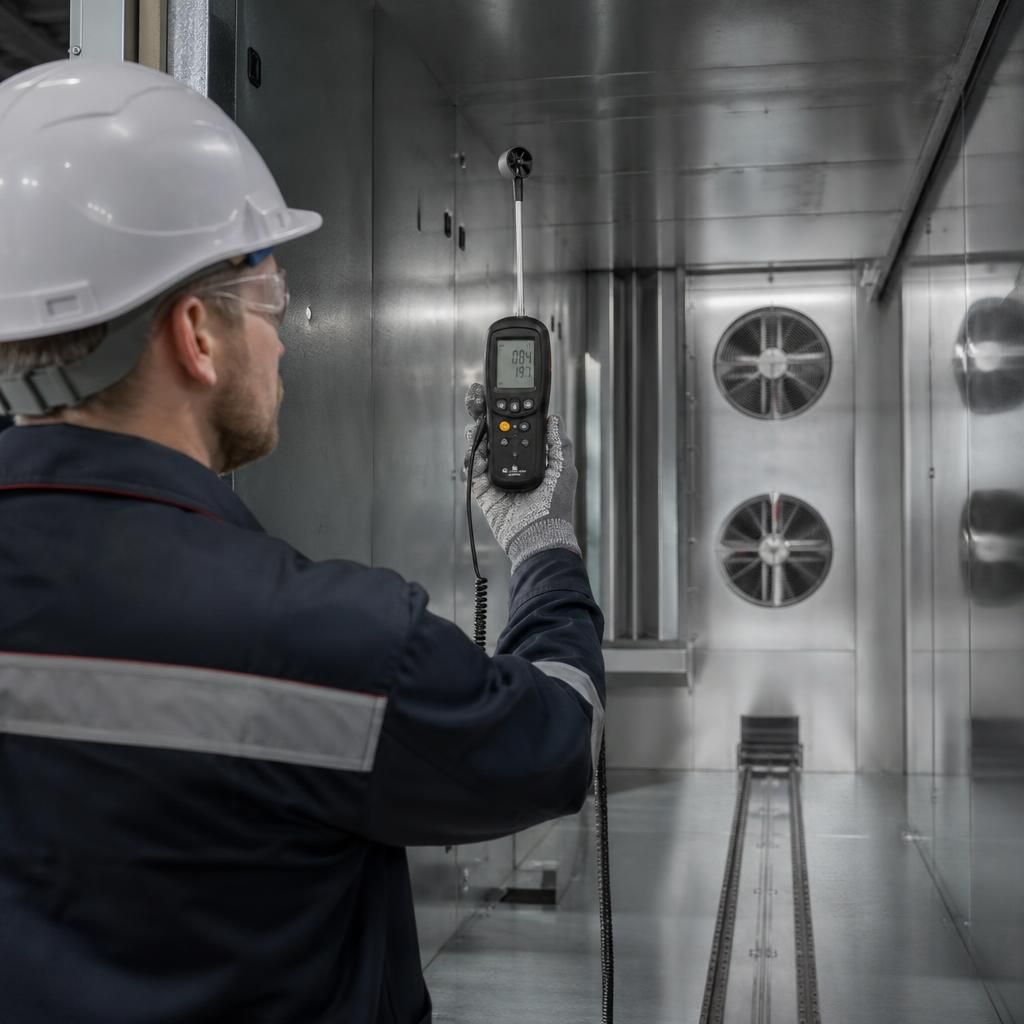
Airflow balancing provides a practical way to correct temperature differences within a curing oven. Measure air movement at several points across the chamber while the oven is operating at its normal process conditions. Uneven readings can indicate restricted ducting, incorrect damper positions, fan performance issues or obstructions around the recirculation path.
Adjustable dampers, turning vanes and internal baffles can then be set to direct more air towards cooler areas without creating excessive turbulence near the heating source. Recheck the oven after each adjustment, using temperature readings from the same locations, and document the final settings. Any change to fan speed, ductwork, baffles or loading arrangements should trigger a further uniformity check because it can alter the established heat pattern.