

What are the recommended ceramic powder coating cure temperatures to ensure optimal adhesion and durability?
Ceramic powder coating should be cured according to the powder manufacturer’s technical data sheet, using the specified part-metal temperature and dwell time rather than relying solely on the oven’s air-temperature reading. The correct cure schedule varies by formulation and component thickness, so a measured temperature profile is essential for achieving reliable adhesion and durable performance.
The recommended cure temperature for a ceramic powder coating is the part-metal temperature and dwell time specified in that coating’s technical data sheet. There is no single temperature suitable for every ceramic formulation, because resin chemistry, ceramic content, film thickness and component mass all affect the heat required to complete the cure.
A technical data sheet may provide more than one acceptable cure schedule. These schedules normally pair a particular metal temperature with a corresponding dwell period, allowing the coater to select a suitable combination for the component and production process. The oven air setting is only a means of bringing the metal to the required condition; it is not, by itself, proof that the coating has reached its recommended cure.
Why the part-metal temperature matters
Air inside the oven can reach its indicated setting before the workpiece has absorbed enough heat. This is especially significant with thick steel sections, assemblies containing different material thicknesses, and densely loaded racks. If the coating film reaches its required cure condition for too little time, the result may include poor adhesion, reduced hardness, incomplete chemical cross-linking and weaker resistance to abrasion, chemicals or weathering.
Excessive heat or an unnecessarily long dwell is not a reliable way to compensate for uncertainty. Over-curing can affect colour, gloss and coating appearance, while some substrates, inserts or assembled components may be sensitive to elevated temperatures. A ceramic finish should therefore be processed within the limits set for that specific product rather than treated as interchangeable with a standard powder coating.
Factors that affect the selected oven setting
- Component thickness: heavy sections take longer to reach the target metal temperature than thin brackets or sheet components.
- Part geometry: enclosed areas, deep recesses and closely packed assemblies can heat differently from exposed surfaces.
- Load configuration: the number, spacing and orientation of parts influence air circulation and heat transfer.
- Coating thickness: an unusually heavy film may alter appearance and performance, even when the nominal cure schedule has been followed.
- Substrate and assembly materials: aluminium, steel and mixed-material assemblies can respond differently in the oven.
- Oven performance: the displayed setpoint may not represent the temperature experienced at every position in the working zone.
How to apply the recommended schedule
- Confirm the ceramic powder coating’s current technical data sheet and identify the required metal-temperature and dwell-time combination.
- Choose representative parts, including the heaviest or most thermally demanding items in the batch.
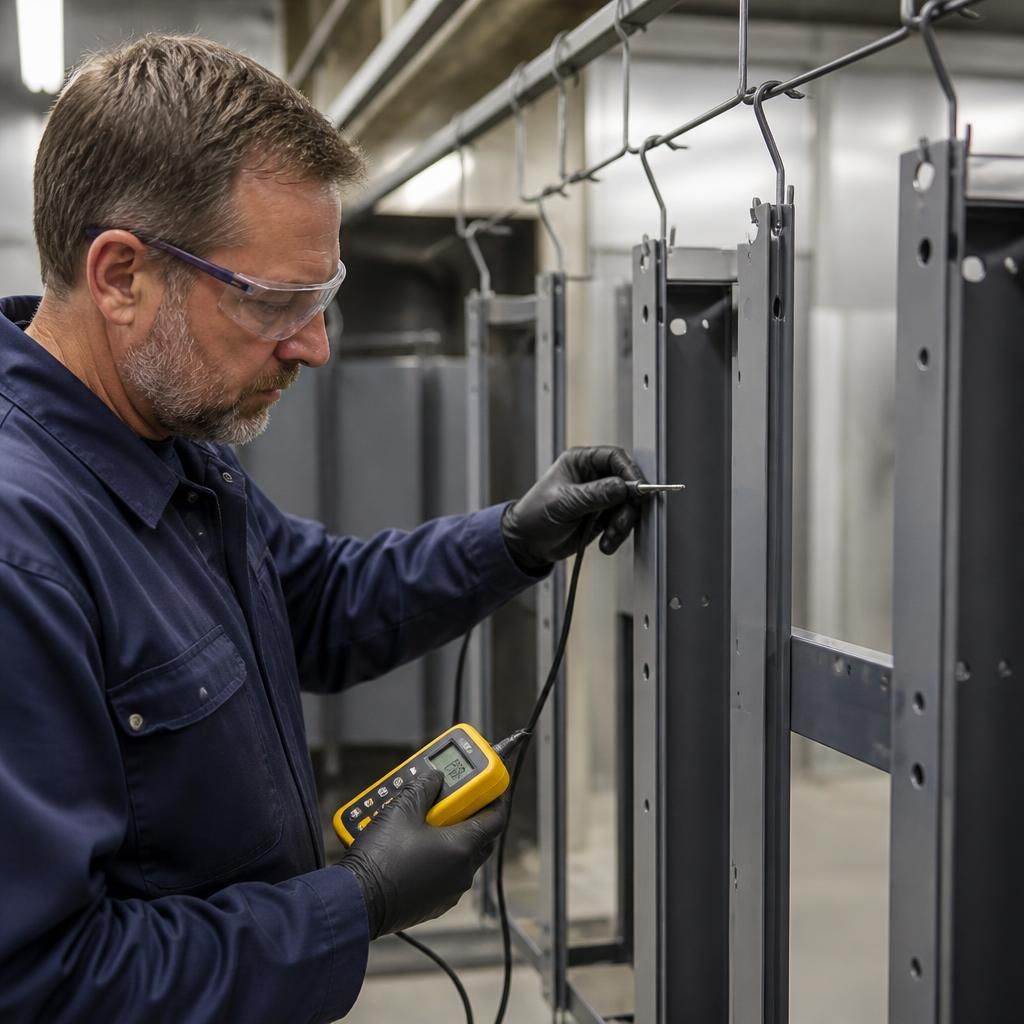
- Attach temperature sensors securely to relevant areas of the workpiece, particularly thick sections and locations that may heat slowly.
- Record the complete heating and holding profile rather than checking only the oven display.
- Compare the measured profile with the product specification and adjust the oven process where necessary.
- Repeat the check when the load, rack arrangement, component design or coating system changes.
The sensor position matters. A probe fixed to a thin exposed edge may reach the target before a heavy central section, producing a misleading result. Profiling should therefore reflect the areas most likely to receive insufficient heat, as well as any areas where overheating could cause a problem.
Temperature is only one part of adhesion and durability
A correct cure cannot compensate for inadequate pretreatment. Oil, oxide, moisture, fabrication residue or unsuitable conversion treatment can prevent the powder from bonding properly to the metal. Surface preparation, rinsing, drying and handling before application must all be controlled alongside the oven process.
Coating thickness also needs to remain within the product’s stated limits. Excessive thickness can affect appearance, edge coverage and the way heat passes through the film. Conversely, insufficient coverage may leave the substrate vulnerable even if the powder has been fully cured. Where corrosion resistance or chemical resistance is important, the complete coating system should be assessed rather than temperature considered in isolation.
How to confirm that the chosen temperature is suitable
Visual inspection can identify defects such as poor flow, blistering, discolouration or uneven gloss, but appearance alone cannot confirm that the coating has achieved its specified performance. Process records should be supported by suitable checks for adhesion and, where relevant, hardness, flexibility, impact resistance or resistance to the chemicals and conditions expected in service.
For production work, keep a record of the powder product, batch conditions, oven settings, part-metal profile and any inspection results. This creates a traceable basis for deciding whether the cure schedule is repeatable. If a measured profile falls outside the product specification, the affected parts should be assessed before release rather than assumed to be adequately cured.
For specialist or batch work, a coating provider should obtain the ceramic powder manufacturer’s cure requirements before processing and validate the profile against the actual component. This approach is more dependable than selecting a generic oven temperature and helps protect the adhesion, appearance and long-term durability expected from the finished coating.
The word ceramic does not, by itself, define a powder coating’s cure temperature. Ceramic powder coatings can contain different binder systems and levels of ceramic filler, so the temperature needed to develop adhesion and service properties is determined by the complete formulation rather than by the ceramic content alone.
This distinction is important when comparing products or replacing one ceramic powder with another. A schedule suitable for one formulation may not produce the same result with a different product, even on identical components. The coating’s technical data should therefore be treated as the controlling reference, with any proposed change assessed as a new cure system rather than assumed to be an equivalent material.