

What specific contaminants does the surface clean pretreatment remove to ensure perfect metal finishing?
Surface clean pretreatment removes oil, grease, dirt, dust, salts, rust, mill scale, oxidation and residues from fabrication or handling. Removing these contaminants gives the powder coating a clean, stable metal surface for consistent adhesion and an even finish.
Surface clean pretreatment targets both visible and microscopic contamination that could interfere with powder coating. In addition to general workshop soil, the process may need to address machining fluids, drawing compounds, polishing residues, adhesive traces, paint-marker ink, fingerprints, moisture and remnants of abrasive media. These substances can remain on a component even when the metal looks visually clean.
Machining and fabrication residues include cutting fluid, coolant, stamping lubricant, forming oil, drawing compound and wax used during manufacture. These materials can spread across a part during handling or become lodged in seams, drilled holes and folded sections. Alkaline or solvent-based cleaning systems are selected according to the contaminant and the metal substrate, with thorough rinsing needed to prevent cleaner residues remaining on the surface.
Polishing and preparation compounds can be particularly persistent. Buffing compounds, abrasive pastes and fine polishing residues may contain waxes, fats or other binders that are not removed by a light wash. If they remain, they can cause localised adhesion failure, cratering, fisheyes or areas of uneven gloss. Components that have been polished therefore require a cleaning process capable of breaking down the specific compound used.
Handling and assembly contamination includes fingerprints, skin oils, rubber traces, protective-film adhesive and sealant smears. These contaminants are often concentrated around edges, contact points and areas touched during inspection or assembly. They may not be obvious after drying, but can produce small defects or prevent the coating from forming a continuous bond. Protective films and temporary labels should be removed without spreading their adhesive across the metal.
Marking and maintenance residues may include permanent-marker ink, layout dye, anti-seize compound, grease-pencil marks and remnants of temporary corrosion protection. Their composition varies, so the correct removal method depends on whether the material is water-based, solvent-based, waxy or resinous. A treatment suitable for one residue may only dilute another and spread it over a larger area.
Embedded or loose preparation media can also require attention. Abrasive blasting may leave fine particles in recesses, threaded holes or joints, while wire brushing can leave loose metallic fragments. These particles can become trapped in the coating or create rough, raised defects. Cleaning, air removal and inspection are used where appropriate, while threaded and enclosed areas need particular care.
Contamination is not limited to organic material. Residual cleaning chemicals, concentrated rinse water, process salts and traces of previous treatment can alter the surface chemistry. A component may appear clean but still carry an invisible film capable of causing staining, poor powder flow or inconsistent adhesion. For this reason, rinsing and drying are part of pretreatment rather than optional finishing steps.
The required approach is determined by the contaminant, the metal, the component’s geometry and the intended coating system. Flat, accessible steel may tolerate a different preparation sequence from aluminium with enclosed sections or a fabricated component containing welds and crevices. Some contamination is removed chemically; other contamination requires mechanical preparation, controlled rinsing or repeat treatment. Trying to use one universal cleaner for every part can leave residues or attack the substrate unnecessarily.
Effective verification combines visual inspection with process checks. Operators look for remaining films, discolouration, streaking, water-break behaviour, trapped particles and contamination around joints or apertures. Where a part has a known manufacturing history, information about oils, release agents, polishing products or temporary protection helps identify the appropriate cleaning method. The aim is not simply to make the metal look clean, but to leave a chemically suitable and consistently prepared surface for the subsequent powder coating stages.
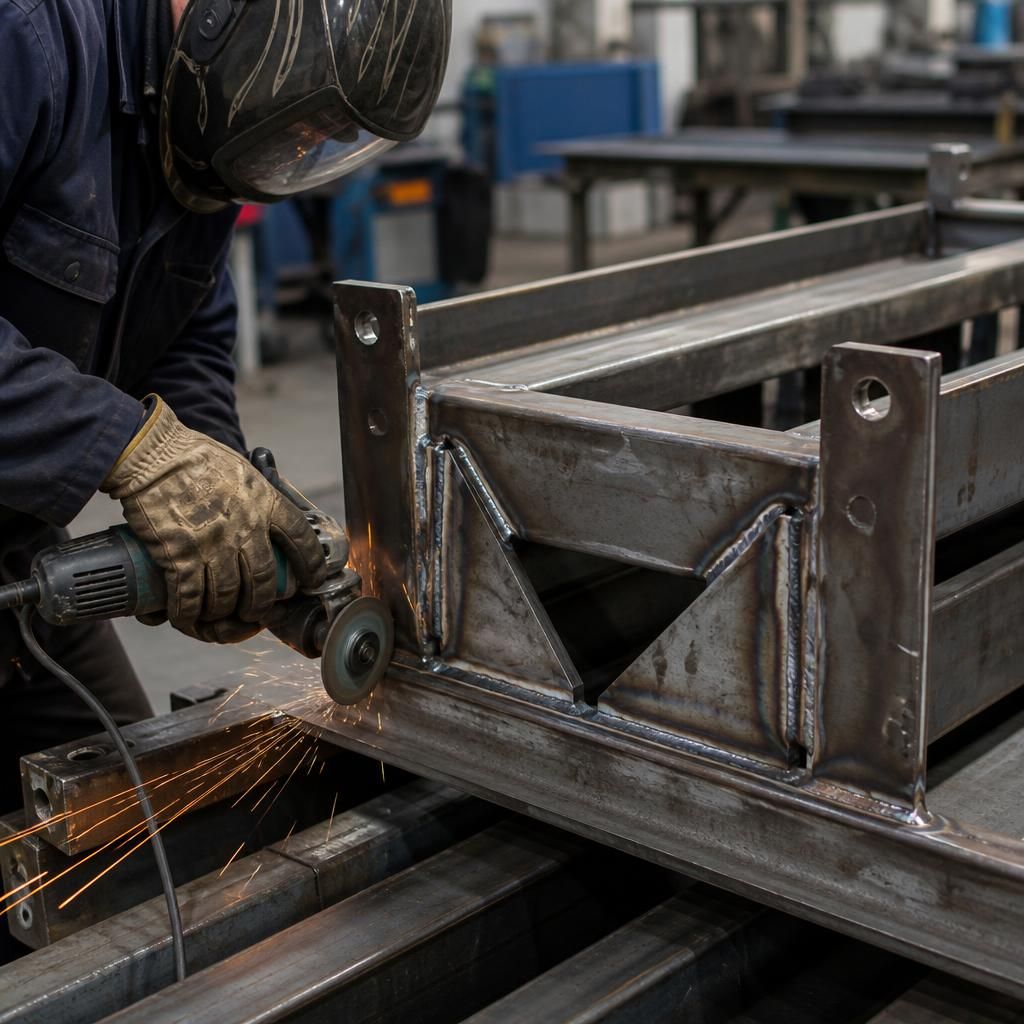
Welded components may carry contaminants that are specific to fabrication, including weld-smoke deposits, spatter, heat tint and flux residues. These can create chemically different areas on the same part, so a coating may adhere unevenly if the weld zone is treated in exactly the same way as untouched sheet or tube.
Surface clean pretreatment therefore gives particular attention to welds, heat-affected areas and spatter-prone edges. Loose spatter may need mechanical removal, while heat tint and tenacious welding residues can require a more targeted chemical or abrasive treatment. The objective is to expose sound, consistent metal without leaving residues that could create localised coating defects.
Discuss Your Surface Clean Pretreatment Requirements
Discuss your component’s substrate, manufacturing history and known contaminants with the powder-coating.co.uk team to identify a suitable surface clean pretreatment approach. This helps establish the preparation requirements before your parts proceed to powder coating.