

What preparation steps are necessary before applying metal protective coating spray?
Before applying metal protective coating spray, the component must be clean, dry and free from oil, grease, rust, mill scale, dust and loose existing coating. Prepare the surface using suitable cleaning and abrasive methods, then inspect it for defects, remove contaminants, mask areas that must remain uncoated and confirm it is ready for application.
Necessary preparation for metal protective coating spray extends beyond removing visible dirt. The component, substrate, coating specification and application method must all be assessed so the coating can form a sound bond and achieve the required protection. Preparation normally includes defining the service conditions, checking the component’s condition and material, carrying out the correct pre-treatment, protecting uncoated areas, and confirming that the part can be handled and cured correctly.
1. Confirm the coating and service requirements
Before work begins, establish what the finished component will encounter. Outdoor exposure, moisture, chemicals, abrasion, heat and contact with other materials may require different coating systems and pre-treatment. The required appearance, film build, edge coverage, colour, gloss level and performance should also be recorded. This prevents an unsuitable preparation method from being selected for the substrate or end use.
Technical information for the selected coating should be checked for substrate limitations, recommended pre-treatment, application conditions and curing requirements. Where the coating forms part of a wider corrosion-protection system, its compatibility with primers, sealants or existing sound layers must be confirmed before preparation starts.
2. Identify the substrate and its condition
Steel, galvanised steel, aluminium, stainless steel and cast metals do not respond identically to preparation. The substrate determines whether a particular chemical pre-treatment, blast medium or primer is appropriate. Galvanised and zinc-coated parts may need preparation that removes surface residues without unnecessarily damaging the protective zinc layer. Aluminium requires controlled abrasion or chemical treatment because an unsuitable process can affect its surface or introduce contamination.
Previously coated components need additional assessment. A coating that is poorly bonded, chemically incompatible or too damaged to provide a stable base should not simply be covered. The existing finish may need to be removed or treated according to the coating specification. Areas affected by welding, fabrication, heat or repairs should be considered separately because they can have different surface characteristics from the original metal.
3. Deal with fabrication details before coating
Preparation should take place after fabrication is complete wherever possible. Drilling, cutting, welding and grinding after coating can expose bare metal and damage the finished film. Welds should be suitably finished, and sharp projections, burrs and abrupt edges should be addressed because they can reduce local coverage and create points where damage or corrosion begins.
Blind holes, crevices, overlapping sections and partially closed joints require particular attention. They can retain moisture or pre-treatment chemicals and may release trapped gases during curing. The design and fabrication should therefore allow drainage, inspection and effective coating access. Any necessary drainage holes or access changes should be agreed before processing rather than introduced after coating.
4. Select an appropriate pre-treatment process
The pre-treatment sequence should be matched to the metal and the selected coating system. It may include a suitable degreasing stage, mechanical preparation, abrasive blasting, chemical conversion treatment or a combination of these processes. The purpose is not merely to alter the appearance of the metal; it is to create a stable, suitably keyed and chemically compatible surface for the coating.
For blast preparation, the abrasive type, cleanliness and intensity need to suit the substrate. Excessive treatment can distort thin sections, remove protective layers or leave an unsuitable profile, while insufficient treatment may leave weakly bonded areas. Chemical treatment must also be properly controlled. Residues, poorly rinsed surfaces or incomplete drying can interfere with adhesion and contribute to premature coating failure.
5. Prepare areas that must not be coated
Masking should be planned around the component’s functional requirements, not just its appearance. Threads, bearing seats, machined faces, electrical contact points, hinge surfaces, locating holes and close-tolerance dimensions may need protection. The masking material and method must withstand the preparation and curing stages without transferring residue or allowing unwanted coating onto the protected area.
Where a component has specified earthing or assembly contact points, these should be identified before processing. Masking dimensions and locations should be documented for repeat batches so that the same functional surfaces remain available after coating.
6. Consider moisture, outgassing and trapped contamination
Porous castings, weld seams, folded sections and hollow fabrications can retain oil, moisture or gases even after the accessible surface appears prepared. These parts may require additional conditioning or a preparation approach suited to porous metal. If trapped material is released during curing, it can cause pinholes, blistering or other surface defects.
Components should be kept protected after pre-treatment and handled in a way that avoids recontamination. Clean gloves or suitable handling methods may be necessary for prepared surfaces, particularly where fingerprints, workshop dust or contact with unclean supports could affect the final bond.
7. Check racking, electrical contact and handling arrangements
Before spraying, determine how the part will be supported, rotated and transported through the process. The contact points must provide stable handling and, where relevant, a reliable electrical path for electrostatic application. They should be positioned where any small uncoated area will not affect the component’s function or corrosion protection.
Large, heavy or irregular parts may need additional support to prevent movement, collision or distortion. The preparation plan should also account for lifting points and contact marks so that these do not force avoidable handling damage after coating.
8. Complete a final pre-application release check
Before the component is released for spraying, confirm that the approved preparation process has been completed, the intended areas are protected, the part is dry and the substrate is suitable for the specified coating system. For repeat production, records can include the substrate, pre-treatment route, masking arrangement, batch identification and any agreed acceptance criteria.
This final check is particularly important for fabricated assemblies and mixed-metal components, where different areas may require different preparation controls. Resolving compatibility, access or dimensional issues before spraying is generally more effective than attempting to correct them after the protective coating has been applied.
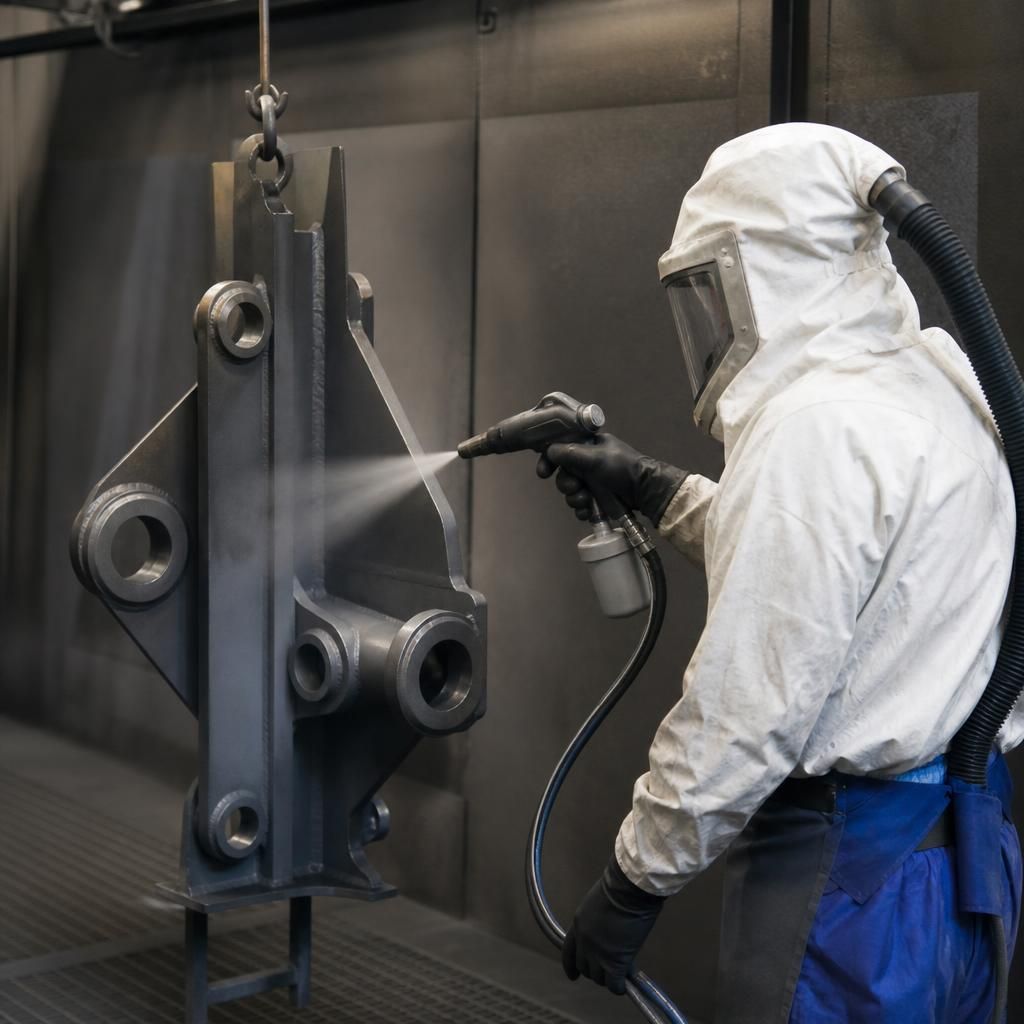
The order of preparation stages is important. Oil and grease should be removed before abrasive or mechanical treatment, otherwise contaminants can be worked into the surface or spread across previously clean areas. After preparation, any required rinsing must be followed by thorough drying before the coating is applied. Each stage should leave the surface in a condition that will not compromise the next one.
This sequence is particularly relevant to fabricated parts with weld areas, machined sections or mixed surface conditions. Treating the component as a series of controlled preparation stages helps prevent residue, uneven adhesion and defects that may not be visible until after curing.