

How do pretreatment chemicals in powder coating processes affect the cure temperature and overall finish quality?
Pretreatment chemicals usually influence powder coating cure indirectly: the correct cleaning and conversion coating leave a consistent, uncontaminated surface, while residues or excessive moisture can disrupt film formation and finish quality. The powder formulation and the coated part’s metal temperature determine the cure schedule, but effective pretreatment supports consistent adhesion, appearance and corrosion resistance at that schedule.
Pretreatment chemicals do not normally change the powder’s specified cure chemistry or make a coating cure at a fundamentally different temperature. Their main influence is on the condition of the metal before coating: the chemical stages must remove contamination, create a suitable conversion layer and leave the surface clean and dry. If that condition is not achieved, the applicator may see apparent curing problems such as poor flow, pinholes, blistering, craters, weak adhesion or inconsistent gloss, even when the oven temperature is correct.
How pretreatment can affect the cure process
Cleaning chemicals remove oils, grease, workshop soil and other substances that can interfere with powder wetting and film formation. Alkaline cleaners are common for general degreasing, while acidic products may be used to remove oxides or scale from particular substrates. The concentration, contact time, temperature and rinsing requirements must suit the metal. An unsuitable cleaner can attack the surface, leave a film behind or fail to remove the contamination that later becomes visible during heating.
Conversion chemicals, including phosphate and chromate-based systems where appropriate, react with the metal to form a thin protective layer. This layer is not intended to replace the powder coating. It provides a more stable surface for the powder film and can improve resistance to underfilm corrosion when the complete process is correctly controlled. The conversion coating itself generally does not require a separate high-temperature cure, but it must be properly rinsed or sealed and thoroughly dried before powder application.
Moisture is particularly important when considering the oven stage. Water retained in seams, folds, hollow sections, threaded holes or porous residues can turn to vapour as the component heats. This may produce pinholes, bubbles, blistering or local loss of adhesion. A line may then appear to need a different cure temperature, when the underlying issue is inadequate drainage, drying or rinsing. Drying conditions should therefore be assessed before changing the powder manufacturer’s recommended schedule.
Effects on finish quality
- Adhesion: residues from cleaners, excessive conversion coating or incomplete rinsing can form a weak boundary between the metal and the powder film.
- Appearance: contamination or uneven chemical treatment can contribute to craters, fisheyes, pinholes, uneven gloss and variations in colour or texture.
- Corrosion performance: insufficient cleaning or conversion treatment can allow corrosion to develop beneath damaged areas or at edges, while an aggressive or poorly controlled process may damage the substrate.
- Powder flow: trapped moisture or volatile residues can disturb the film as it melts, preventing a smooth, continuous finish.
- Consistency: variation in bath strength, temperature, spray coverage, rinse quality or drying can produce different results across a batch, even when the same powder and oven settings are used.
The correct chemical route depends on the substrate. Steel, galvanised steel and aluminium have different oxide layers and react differently to cleaning and conversion products. A treatment suitable for one metal may be ineffective or unnecessarily aggressive on another. Mixed-metal assemblies therefore require particular care, as a process that cleans one component effectively may affect the appearance or surface condition of another.
Over-treatment can be as problematic as under-treatment. Excessive chemical concentration, prolonged contact or poor rinsing may leave a heavy or uneven conversion layer, attack sharp edges and affect the appearance of the finished coating. The objective is not to build the thickest possible chemical layer, but to produce a uniform, compatible surface within the process supplier’s control range.
Choosing and controlling the cure schedule
The powder’s technical data normally specifies a time and temperature relationship based on the temperature of the metal, rather than simply the air temperature inside the oven. Pretreatment should not be used as a reason to alter that relationship without evidence. If a coating fails to flow or harden correctly, checks should include part-metal temperature, oven uniformity, film thickness, powder storage and application settings, as well as the pretreatment stages.
Where a new chemical system, substrate or powder is introduced, representative test pieces can help separate pretreatment defects from curing defects. Examine the surface after each relevant stage, confirm that rinses are clean, check that the component is dry before coating and assess the cured film for adhesion, appearance and corrosion-related performance. A controlled trial is more reliable than increasing the oven temperature, because excessive heat can cause yellowing, loss of gloss, over-bake effects or changes in colour on some powder systems.
For production work, pretreatment control should include documented chemical concentrations, bath condition, spray coverage, rinse quality, drying and handling between stages. Parts should be protected from recontamination after cleaning and before powder application. These controls allow a finish problem to be traced to a particular stage instead of being attributed incorrectly to the cure temperature.
In practical terms, the best pretreatment chemicals are those that match the metal, remove the relevant contaminants, form a uniform compatible surface and can be rinsed and dried consistently. When those conditions are met, the powder can be cured to its specified schedule with more predictable adhesion, appearance and protective performance.
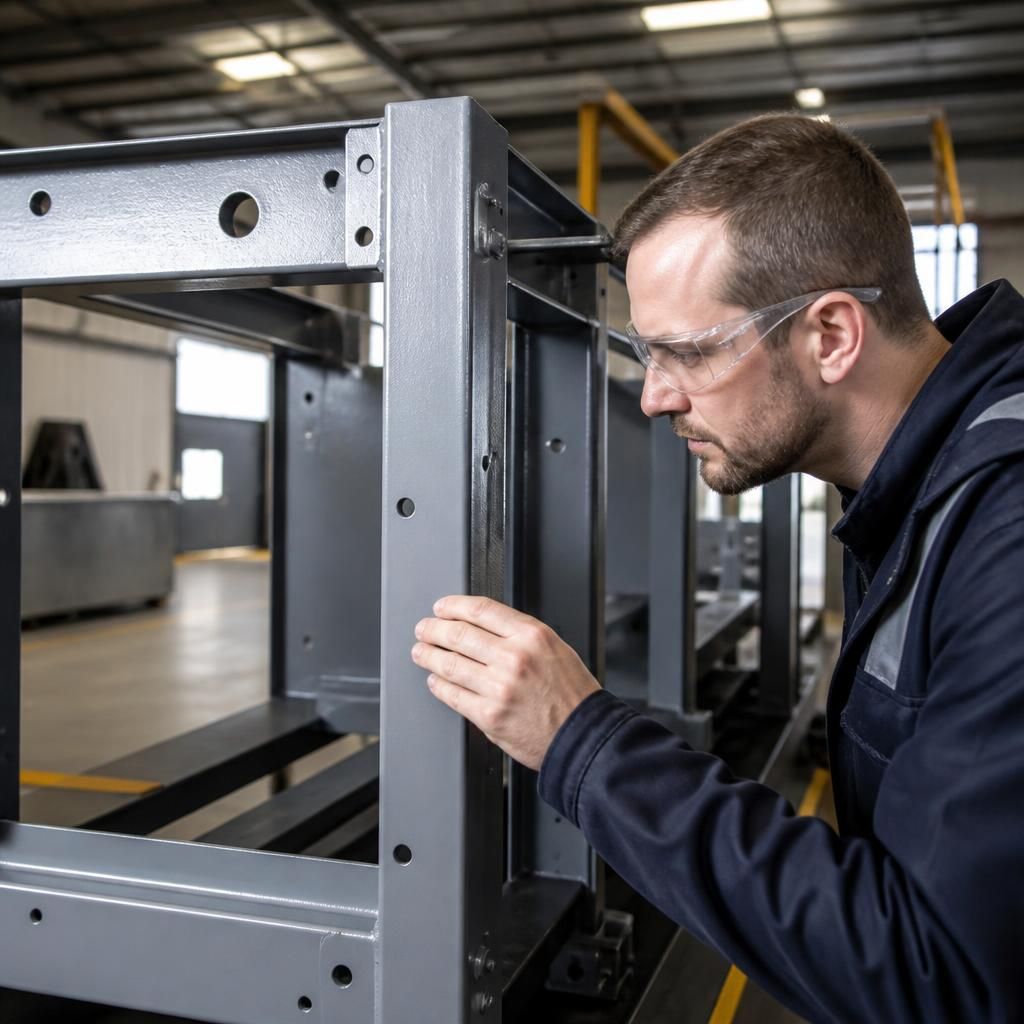
Before powder is applied, the treated metal should be inspected for a uniform, visually consistent surface. Staining, patchy colour, powdery deposits or water marks can indicate uneven chemical contact, inadequate rinsing or drying problems. These signs may later appear as local differences in gloss, colour or texture after curing, even when the powder and oven settings are unchanged.
A useful quality check is to compare representative areas across the component rather than inspecting only one accessible face. Edges, recesses, weld zones and joints may receive different chemical exposure from broad flat surfaces. Identifying variation at this stage helps distinguish a pretreatment distribution problem from a powder application or curing problem, and allows the process to be corrected before a full batch is coated.