

What industries benefit most from using chromate powder coating pretreatment?
Chromate powder coating pretreatment is particularly valuable in automotive, manufacturing, construction and other industrial applications where metal components need dependable adhesion and protection before powder coating. It is best suited to projects involving aluminium or other metal parts exposed to demanding operating conditions, provided the treatment is appropriate for the specification and compliance requirements.
The industries that benefit most from chromate powder coating pretreatment are those using aluminium or other susceptible metal components where powder coating must adhere reliably and resist corrosion. This includes aerospace, automotive, rail, marine, electrical equipment, architectural fabrication, agricultural machinery and general engineering, although the correct treatment depends on the metal alloy, service environment, coating specification and applicable compliance requirements.
Aerospace and defence: Aircraft, ground-support equipment and defence assemblies can contain lightweight aluminium components that require protection without adding substantial weight. Pretreatment can provide a chemically receptive surface for the powder coating and help reduce the risk of corrosion developing beneath the finish. These sectors generally have tightly controlled material, process and traceability requirements, so the selected chromate system must be approved for the relevant application rather than chosen solely for its corrosion performance.
Automotive and transport: Vehicle components, trailer parts, brackets, housings and fabricated assemblies may experience moisture, road contamination, temperature changes and mechanical handling. A suitable pretreatment can improve the bond between the metal and powder coating, helping the finish remain intact when components are exposed to vibration, abrasion or outdoor conditions. It is particularly relevant where aluminium is used to reduce weight, but the full coating system still needs to be matched to the component’s location and operating environment.
Rail and public transport: Rail vehicles, station equipment, barriers and associated fabricated parts often combine large metal surfaces with demanding durability requirements. Pretreatment is valuable where a failure in adhesion could expose the substrate to moisture and accelerate deterioration. Specification work should consider whether the component is indoors, outdoors, beneath a vehicle or exposed to cleaning chemicals, as these conditions influence the required preparation and powder coating system.
Marine and coastal equipment: Marine fittings, enclosures, frames and fabricated aluminium parts face persistent humidity and, in some locations, salt contamination. Chromate pretreatment may form part of a wider protective system by supporting coating adhesion and helping protect the substrate at the interface. It should not be treated as a substitute for correct cleaning, suitable powder selection, adequate film coverage or design details that prevent water traps.
Electrical and control equipment: Control cabinets, switchgear enclosures, housings and equipment panels can benefit when a durable, uniform finish is required on metal surfaces. Good pretreatment helps the powder coat remain attached around edges and handled areas, while the final specification can be selected for indoor, outdoor, chemical or industrial exposure. Electrical performance requirements must also be considered separately; a decorative or protective coating does not automatically provide insulation or shielding properties.
Architectural and building products: Aluminium doors, frames, panels, street furniture and other fabricated items may be exposed to rainfall, condensation, ultraviolet light and pollutants over extended periods. Pretreatment can support adhesion and corrosion protection beneath the powder coating, particularly where cut edges, joints and fixing points could otherwise become vulnerable. The coating specification should reflect the building location and the required appearance, as visual uniformity and long-term weathering performance are both relevant.
Agricultural machinery and general engineering: Machinery guards, brackets, frames, housings and engineered components often encounter mud, water, oils, fertilisers, dust and repeated handling. Pretreatment is useful when the component requires a robust finish, but the preparation must be suitable for the particular substrate and contaminants present. Areas subject to impact, wear or trapped moisture may also need a different design or coating approach rather than relying on pretreatment alone.
Chromate pretreatment is not automatically the best option for every industry or component. The decision should account for:
- the substrate, alloy and condition of the metal;
- the required corrosion resistance, adhesion and appearance;
- exposure to salt, humidity, chemicals, abrasion, heat and ultraviolet light;
- component geometry, including joints, recesses, edges and drainage points;
- the intended powder coating and curing requirements; and
- sector-specific restrictions, documentation and environmental controls associated with chromate chemistry.
Chromate compounds require controlled handling because some forms present significant health and environmental hazards. For that reason, an industrial specification should identify the exact chemistry, confirm that its use is permitted for the application and provide the necessary control measures and records. Where chromate is restricted or unsuitable, a non-chromate pretreatment may be considered, but its performance must be assessed as part of the complete coating system.
For Midlands manufacturers, fabricators, construction firms and automotive businesses, the practical question is therefore not simply which industry uses chromate pretreatment. It is whether the component’s metal type, exposure and compliance obligations justify that treatment and whether it can be integrated correctly with the powder coating process. A coating specialist can assess those factors before production so that the pretreatment is selected for the component’s actual service conditions.
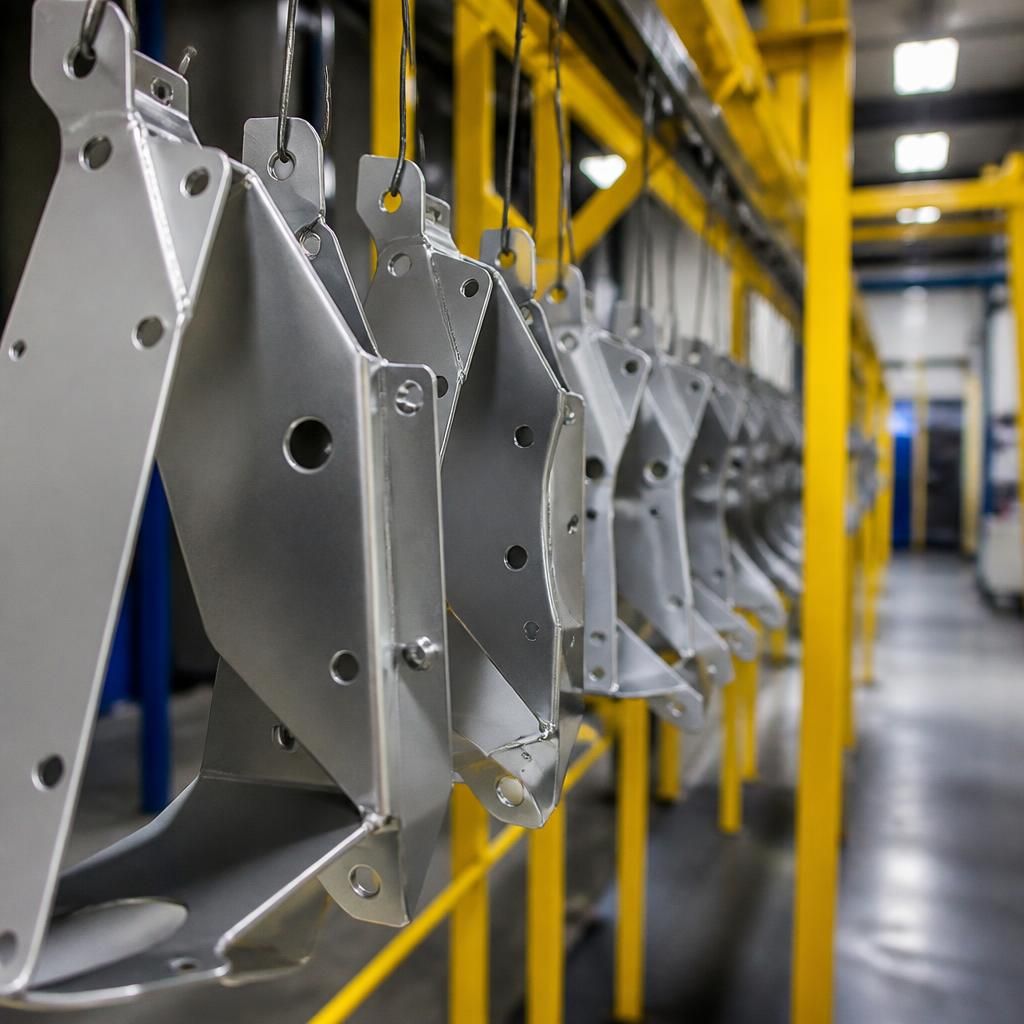
Industries using formed profiles, folded sections and assembled metal parts can benefit from chromate powder coating pretreatment because these components contain edges, joints and less accessible surfaces where coating adhesion is especially important. This is relevant to fabricated transport parts, equipment housings, architectural sections and engineered assemblies, where the finished item may combine several shapes or connection points.
The pretreatment should be assessed alongside the component design rather than selected solely by industry. Cleaning quality, access for preparation, drainage, masking and curing all affect the performance of the finished powder coating. Where these factors are controlled, chromate pretreatment can form a consistent part of a specification for complex metal components, subject to the applicable chemical and environmental requirements.