

How does chromate powder coating pretreatment influence the longevity and performance of metal components in industrial applications?
Chromate powder coating pretreatment forms a conversion layer on the metal that helps inhibit corrosion and provides a more stable surface for powder coating adhesion. By reducing the risk of underfilm corrosion, blistering and premature coating failure, it can extend component service life and preserve performance in demanding industrial applications.
Chromate powder coating pretreatment influences longevity by controlling the condition of the metal immediately beneath the powder coating. It creates a chemically active conversion layer that helps the coating system remain stable during exposure to moisture, salts, industrial contaminants, abrasion and temperature changes. Its effect on performance is therefore determined not only by the chromate stage itself, but also by substrate selection, cleaning, coating specification, curing and the conditions in which the component will operate.
Its main contribution is interfacial stability. Bare metal can contain oils, oxides, residues from fabrication and embedded contaminants that interfere with a coating system. Proper pretreatment removes or modifies these contaminants and leaves a controlled surface for the powder layer. The resulting interface is less likely to contain weak points that can develop into lifting, edge breakdown or localised coating defects when the component is handled or exposed to moisture.
The conversion layer can also help maintain coating performance after minor damage. A scratch or impact that exposes a small area of substrate creates a potential starting point for local deterioration. Chromate-based chemistry can reduce the tendency for corrosion activity to spread from that point beneath the surrounding coating, although it does not make a component immune to damage or eliminate the need for suitable coating thickness and edge coverage.
Longevity is also affected by how consistently the pretreatment is applied. Important process controls include:
- Cleaning: grease, drawing compounds, dust and fabrication residues must be removed before conversion treatment. Incomplete cleaning can leave isolated weak areas even when the rest of the component is correctly processed.
- Rinsing: rinse stages help prevent carry-over between chemical baths and reduce the risk of residues remaining beneath the powder coating.
- Surface preparation: oxide condition, scale, weld contamination and sharp fabrication residues may need to be addressed before chemical treatment.
- Conversion treatment: concentration, contact time, temperature and coverage must be controlled in accordance with the specified process.
- Drying and handling: the treated surface should be protected from recontamination before powder application.
- Powder curing: the coating must reach the required cure profile. Under-cured powder may have reduced hardness and chemical resistance, while excessive heat can affect the coating or substrate.
These controls influence practical performance such as resistance to handling damage, retention of appearance and stability at joints, folds, holes and edges. They are particularly important for fabricated components with welds, variable section thicknesses or areas that are difficult for pretreatment chemicals and powder to reach evenly.
Chromate pretreatment can be used as part of a system for several metal substrates, but the correct chemistry depends on the material and its surface condition. Aluminium, galvanised steel and other zinc-bearing surfaces do not respond identically to cleaning or conversion treatment. A process suitable for one substrate may produce inconsistent results on another. Mixed-metal assemblies may therefore require a defined treatment sequence and careful consideration of contact areas, masking and drainage.
The operating environment should determine the required coating system. Components exposed to condensation, road salt, processing chemicals, fertiliser, marine air, ultraviolet radiation or repeated temperature changes place different demands on the pretreatment and powder finish. For severe service, the specification may need to address substrate preparation, pretreatment chemistry, powder type, film thickness, edge design, curing and verification rather than relying on pretreatment alone.
Performance assessment should include more than a visual check after coating. Depending on the component and specification, checks may include coating coverage, film thickness, cure, adhesion, surface cleanliness and resistance testing appropriate to the intended environment. Inspection of cut edges, recesses, weld zones and fastener interfaces can reveal weaknesses that are not visible on broad, flat faces.
Design details also affect the service life achieved. Water traps, narrow crevices, inaccessible internal faces and dissimilar-metal contact can create exposure conditions that overwhelm an otherwise well-controlled coating system. Providing drainage, avoiding unnecessary crevices and allowing adequate access for cleaning and coating helps the pretreatment deliver its intended benefit.
In practical terms, chromate powder coating pretreatment is most effective when it is specified as one part of a complete corrosion-control system. It can support consistent coating performance and help components retain their protective and decorative properties for longer, but the outcome depends on compatibility between the metal, pretreatment, powder coating, curing process, component design and service environment. For a project specification, these factors should be reviewed together before selecting the treatment sequence.
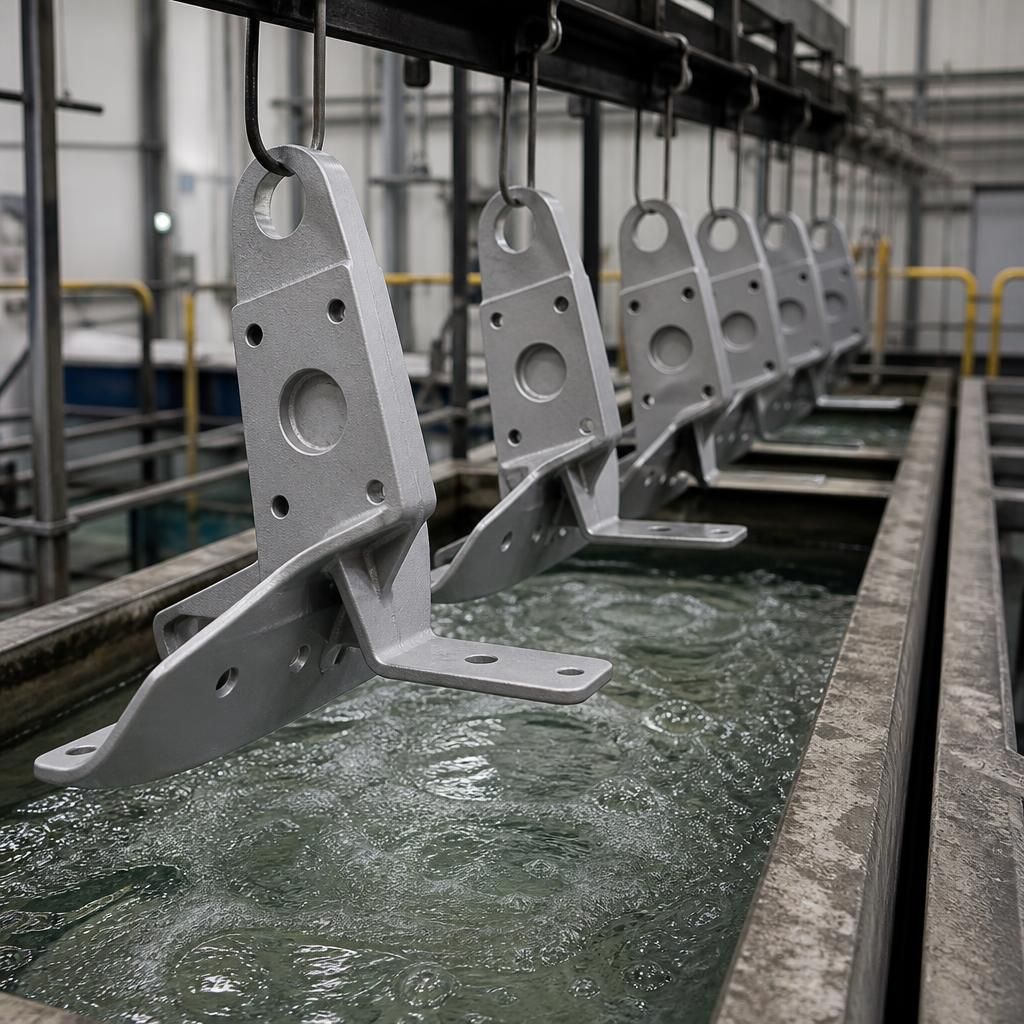
Chromate powder coating pretreatment can improve performance during repeated heating and cooling by helping the powder coating remain bonded to the substrate as the metal expands and contracts. This is important where components experience process heat, outdoor temperature variation or intermittent thermal exposure. A well-controlled conversion layer supports a more stable interface, reducing the likelihood that thermal movement will initiate local lifting or delamination. The benefit depends on using a compatible powder system and applying the coating to the specified thickness and cure profile; pretreatment cannot compensate for an unsuitable coating specification or excessive thermal stress.
Discuss Your Chromate Pretreatment Requirements
Discuss your component material, operating environment and coating specification with our team to assess whether chromate powder coating pretreatment is appropriate for your application. We can help identify the relevant preparation and finishing requirements before treatment is specified.