

What factors should be considered when choosing between a mini powder coating machine and a complete equipment package for my business needs?
Choose a mini powder coating machine when your business needs a compact setup for smaller batches, limited component sizes or lower production volumes; choose a complete equipment package when you need integrated preparation, application and curing capacity for a wider range of work. Compare the purchase and installation requirements with your part dimensions, throughput, finish requirements, available space, operator input and scope for future expansion.
The choice between a mini powder coating machine and a complete equipment package should be based on the coating process you need to control, rather than on the equipment name alone. Assess the pretreatment method, spray booth arrangement, curing method, powder handling, extraction, electrical supply, safety requirements, maintenance needs and quality checks before deciding which configuration is appropriate.
Define exactly what the mini machine includes. “Mini powder coating machine” can describe a compact powder gun and control unit, but it may not include the booth, oven, recovery equipment, air preparation or handling equipment needed to operate a complete coating process. A package normally brings several stages together, although the contents vary between suppliers. Request a detailed equipment schedule and check whether each item is included, optional or expected to be provided separately.
- Powder spray gun, control unit and powder feed arrangement
- Spray booth, extraction and filtration
- Curing oven and temperature controls
- Compressed-air treatment, regulators and connection requirements
- Workpiece supports, racks or handling equipment
- Powder recovery or reclaim provisions
- Electrical connections, guarding and control panels
This distinction is important because a low-cost machine can become part of a much larger project once supporting equipment, installation work and process controls are added.
Consider the coating specification. The required finish may determine the equipment configuration more strongly than the size of the machine. Establish the powder types to be used, the required film thickness, acceptable appearance, corrosion protection requirements and curing schedule. Some applications require careful control of oven temperature and dwell time, while others place greater emphasis on consistent powder deposition or the ability to clean the system thoroughly between materials.
Ask whether the proposed equipment can maintain the required spray voltage, powder flow and air settings consistently. A control unit with repeatable settings can help operators reproduce an approved process. It is also worth checking how easily the gun, hose, hopper and other powder-contact components can be cleaned when changing colour or formulation.
Review pretreatment and contamination control. Powder coating performance depends on the condition of the metal before spraying. If components need degreasing, abrasive preparation, chemical pretreatment or drying, those stages must be considered alongside the application equipment. A mini machine may be suitable for spraying while the business continues to use an existing preparation method; a complete package may be more appropriate where preparation, application and curing need to be designed as one controlled workflow.
Pay particular attention to dust, oil, moisture and residues from earlier colours. The layout should prevent prepared parts from becoming contaminated before coating, and should provide suitable separation between cleaning, spraying and curing activities.
Check site services and building constraints. Equipment selection should be matched to the available electrical supply, compressed air, ventilation, extraction route and floor loading. An oven may have different utility requirements from a compact spray unit, and extraction arrangements must account for the booth design and the powders being used. Confirm access for delivery, assembly and future servicing, including door widths, ceiling height and safe clearance around heated equipment.
Do not assess floor area by equipment footprint alone. Allow room for loading and unloading, powder storage, racks, operator movement, cleaning and the temporary holding of coated parts. A compact system can still create an inefficient workflow if parts, powder and tools have to cross the same working area.
Examine safety and compliance requirements. The system should include appropriate guarding, interlocks, extraction and earthing arrangements, with controls that prevent unsafe operation. Powder handling can create combustible dust risks, while curing equipment introduces heat and potentially hot surfaces. The business should identify the relevant risk assessments, inspection procedures and operator controls before equipment is commissioned.
Consider how overspray, used filters, contaminated cleaning materials and unused powder will be handled. These arrangements affect running practice and should not be left until after the equipment has been selected.
Compare workflow and changeover demands. If the business applies several colours or powder types, changeover time and cleaning effort become practical selection criteria. Look for accessible powder paths, removable components and a design that limits powder retention in hoses and feed systems. A reclaim system may reduce waste in suitable production conditions, but it also adds cleaning, segregation and quality-control responsibilities. Recovered powder should only be reused where its condition and mixing requirements are understood.
Consider whether one operator can safely load, spray, transfer and unload parts, or whether the proposed arrangement creates unnecessary handling. The best equipment choice is one that supports a controlled sequence without forcing operators to bypass extraction, guarding or cleaning procedures.
Assess maintenance and technical support. Compare the accessibility of filters, pumps, hoses, guns, hopper components, oven controls and temperature sensors. A system that is difficult to inspect may be neglected, affecting application consistency and energy use. Ask for recommended inspection tasks, consumable parts, troubleshooting information and guidance on calibration or verification of controls.
A complete package can simplify responsibility because related equipment is specified together, but it also means that faults in one stage can affect the whole process. A mini machine may be easier to isolate or replace, particularly where the business already has suitable booth, oven or preparation facilities. In either case, establish who will commission the equipment, train operators and support fault diagnosis.
Calculate the long-term cost of ownership. Compare more than the quoted equipment price. Include extraction and filtration consumables, compressed-air treatment, oven energy, powder losses, maintenance parts, cleaning time, service arrangements and any changes to the building or utilities. Also consider whether the chosen controls can record or reproduce process settings, since poor repeatability can lead to rework and additional powder consumption.
A sensible assessment can be completed in four stages:
- Document the parts, powders, finish standards and preparation method.
- List the equipment and services already available on site.
- Identify every missing process stage and the safety controls required.
- Compare the complete operating cost and workflow of each configuration, not just the initial quotation.
Choose a mini machine when it integrates safely with suitable equipment already in place and its controls match the required coating process. Choose a complete package when separate components would leave gaps in preparation, extraction, curing, powder handling or process control. For a business still evaluating its options, a written process specification and equipment schedule provide a more reliable basis for comparison than machine size or headline price.
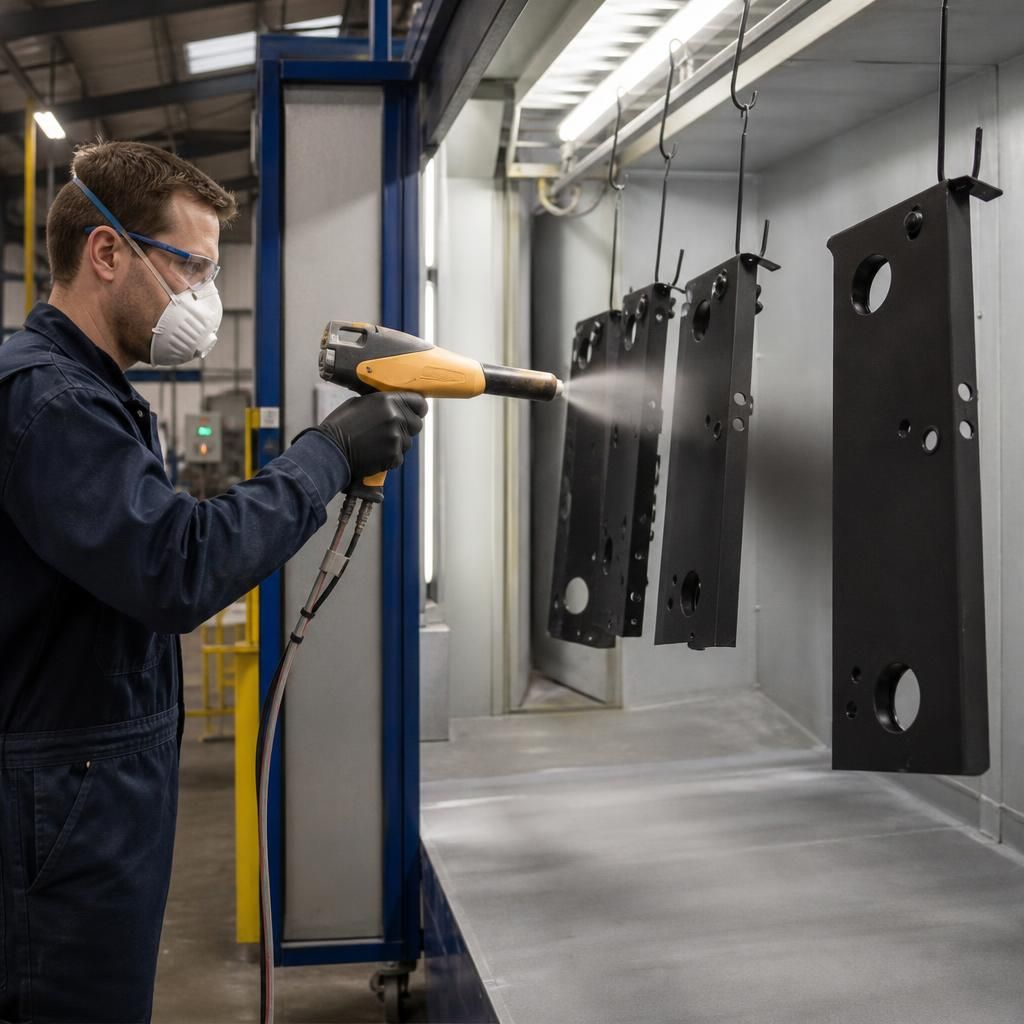
Compare equipment against the production bottleneck rather than judging capacity from the spray unit alone. A mini powder coating machine may apply powder effectively, but output can still be restricted by part loading, curing space, cooling time or manual handling between stages.
Map a typical batch from preparation through to unloading and identify where work is likely to accumulate. If the existing oven and handling arrangements can support the required batch rhythm, a mini machine may be a practical choice. If spraying, curing and movement between stages need to operate as a coordinated sequence, a complete equipment package may provide the more suitable configuration.
Compare Your Mini Powder Coating Machine and Complete Equipment Package Options
Discuss your parts, batch requirements and finish specification with a powder-coating specialist before committing to a mini machine or complete equipment package. This can help establish whether an in-house setup or outsourced powder coating is the more suitable approach for your business.