

What are the key maintenance practices to ensure powder coating equipment performs optimally over time?
Maintain powder coating equipment through routine cleaning, inspection and calibration, with particular attention to guns, hoses, filters, pumps, fluidising systems and electrical connections. Follow the equipment manufacturer’s maintenance schedule, replace worn components promptly and record servicing to help preserve reliable powder flow, application control and finish consistency.
Powder coating equipment performs optimally when maintenance covers the complete coating line rather than the spray gun alone. In addition to routine cleaning, inspection and calibration, operators should control powder storage, compressed-air quality, booth airflow, oven temperature, conveyor movement, earthing and safety systems. A planned approach helps identify gradual performance changes before they affect coating quality or cause unplanned stoppages.
- Protect powder quality: Store powder in its original, sealed packaging in a clean, dry area at the conditions specified by the powder supplier. Keep different colours, chemistries and batch references separate, and prevent moisture, dust or other powders from entering opened containers. Powder that has absorbed moisture or become contaminated can affect fluidisation, charging and the finished appearance.
- Control reclaimed powder: If the system recovers overspray, establish clear rules for collecting, identifying and reusing it. Do not mix incompatible powders or return contaminated material to virgin powder without confirming that the proposed blend is suitable. Reclaim equipment should maintain a consistent feed and should not be allowed to accumulate material that could obstruct transfer or alter the coating mix.
- Maintain compressed-air quality: Powder application equipment depends on clean, dry and suitably regulated air. Moisture, oil and pressure fluctuations can disturb powder transport and produce an unstable spray pattern. Check the air-treatment equipment, drains, regulators and supply lines in accordance with the installation requirements, and investigate any sudden change in air pressure rather than compensating by repeatedly altering gun settings.
- Check booth airflow and extraction: Extraction performance affects overspray control, operator safety and the movement of powder through the booth. Airflow that is too weak may allow overspray to escape, while excessive or uneven airflow can interfere with powder deposition. Keep extraction paths unobstructed, check that collection stages are not becoming restricted and verify that booth doors, panels and access points close correctly.
- Verify the oven as a process system: The oven should be assessed for stable temperature distribution, effective air circulation and correct curing conditions for the coating being used. A displayed temperature is not necessarily the same as the temperature reached by the workpiece. Where coating performance is critical, use suitable temperature-monitoring methods to confirm the part reaches the required curing profile. Also check door seals, burner or heating elements, circulation fans and exhaust paths for deterioration.
- Look after the conveyor and handling equipment: Lubricate moving components only with products suitable for the environment and coating process, since unsuitable lubricants can contaminate parts or powder. Check chain movement, hooks, fixtures, bearings and drive components for stiffness, damage or inconsistent speed. Poor movement can produce uneven exposure in the booth or oven and may cause parts to contact equipment before the coating has cured.
- Preserve reliable earthing: Parts, hooks, racks and the conveyor path need a dependable route to earth for electrostatic application to work consistently. Coating build-up, corrosion and loose mechanical contact can increase resistance. Ensure contact points remain suitable for the process and replace damaged hooks or fixtures rather than relying on intermittent contact.
- Test safety functions: Guards, emergency stops, access switches, booth extraction interlocks and oven protection systems should be tested under the site’s safe system of work. These devices should not be bypassed to keep production moving. Any fault affecting isolation, guarding or temperature protection requires corrective action before the equipment is returned to normal use.
- Use controlled settings: Keep approved operating parameters for powder delivery, atomising air, electrostatic output, conveyor speed and curing conditions. When a setting is changed, alter one factor at a time and assess the result on a representative component. This makes it easier to distinguish an equipment fault from a process-setting issue and reduces the risk of masking a developing problem.
Maintenance should be carried out with the equipment isolated according to the manufacturer’s instructions and the site’s risk assessment. Components such as seals, bearings, air-treatment elements, hoses, hooks and filters are consumable or wear items; keeping appropriate replacements available can prevent a minor defect from affecting the whole coating line. Any recurring blockage, unstable powder feed, uneven finish or curing variation should be treated as evidence of an underlying process or equipment issue, not simply corrected by increasing powder output.
For larger or specialist powder coating systems, maintenance responsibilities should be assigned clearly between operators, engineering staff and qualified service personnel. The equipment manual remains the reference for replacement parts, permissible adjustments and service intervals, while the coating supplier’s technical information defines suitable curing and powder-handling conditions. This combination of equipment care and process control is the most reliable way to preserve consistent operation over the working life of the system.
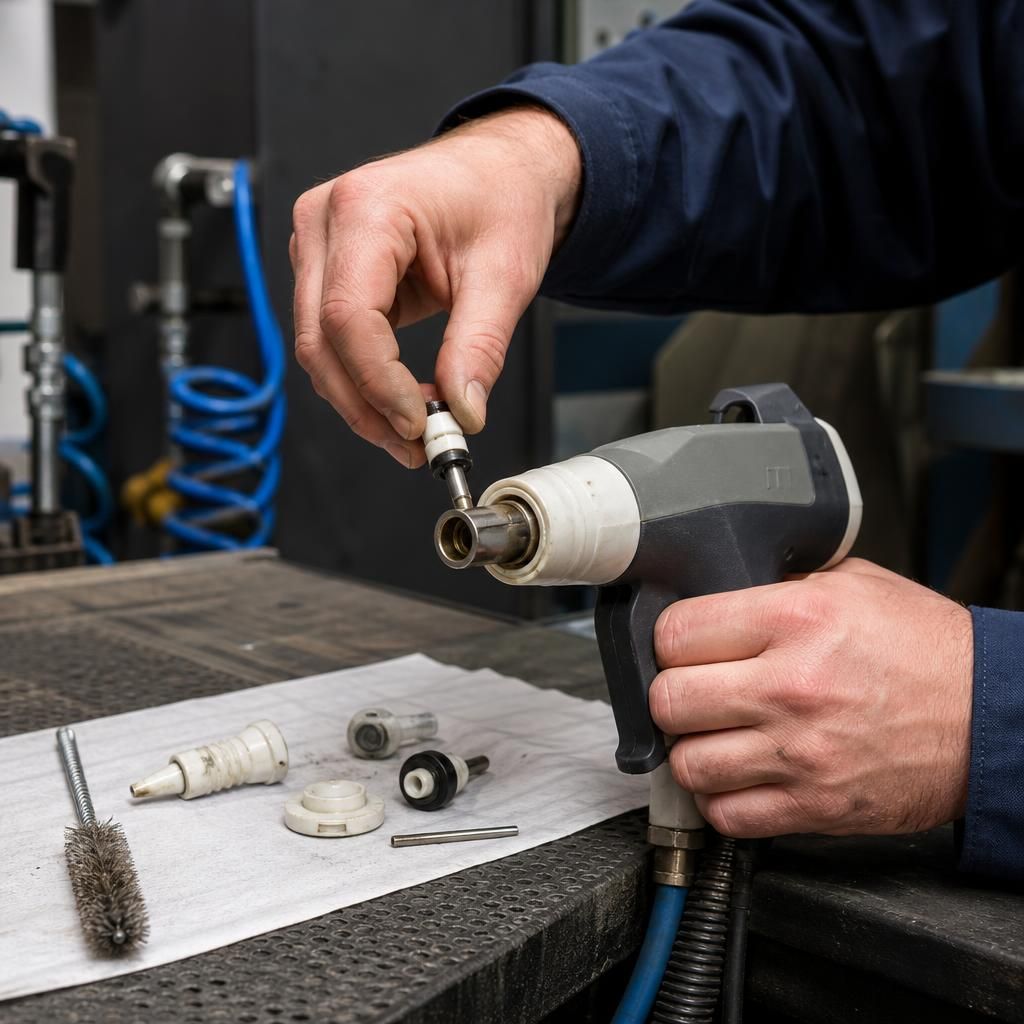
Spray-gun maintenance is essential because wear or contamination at the nozzle and electrode can alter the charged powder cloud without causing an obvious equipment failure. Inspect these parts during planned servicing, looking for powder build-up, erosion, cracks, distortion and damaged seals.
- Remove deposits using methods approved for the equipment; avoid tools or solvents that could damage insulating components.
- Check that the electrode is correctly positioned and secure, since misalignment can affect transfer and coating coverage.
- Examine nozzles, diffusers and seals for wear, replacing components that no longer maintain the intended spray pattern.
- After reassembly, verify powder delivery and electrostatic settings on a representative component before returning the gun to production.
Keeping a record of replaced gun components can help identify recurring wear, unsuitable cleaning methods or powder-handling problems before they create inconsistent finishes across a batch.
Discuss Your Powder Coating Equipment Maintenance Needs
If you are reviewing the maintenance requirements of an existing powder coating system, discuss your equipment, process and recurring issues with our team. We can help identify practical maintenance considerations for your application and coating requirements.