

What are the maintenance requirements for small powder coating machines to ensure longevity and optimal performance?
Small powder coating machines require routine cleaning, inspection and adjustment to keep powder delivery, electrostatic charging and curing consistent. Follow the manufacturer’s maintenance schedule, remove powder build-up from key components, check wear and electrical connections, and arrange qualified servicing when calibration or repairs are needed.
Small powder coating machines need a documented preventive-maintenance programme covering powder handling, compressed air, electrostatic performance, curing equipment where fitted, safety controls and operating records. The aim is to prevent contamination, unstable application conditions and avoidable component failure rather than waiting for finish defects or a breakdown to appear.
Use the manufacturer’s maintenance instructions as the controlling document. The correct service intervals depend on the machine design, powder chemistry, workload and operating environment. Keep the manual, parts information and electrical documentation accessible to operators and maintenance staff. Any task involving internal electrical components, high-voltage circuits or recalibration should be carried out by a suitably qualified person, with the equipment isolated according to the site’s safety procedure.
Maintain a clear maintenance schedule. Divide tasks into operator checks, planned maintenance and specialist servicing. An operator checklist can record the machine condition before use, unusual noises, air-pressure stability, powder flow, display readings and visible damage. Planned maintenance should cover components that gradually deteriorate, while specialist servicing should address faults, electrical testing, calibration and parts replacement outside the operator’s competence.
- Before operation: confirm that the machine is correctly assembled, guards and interlocks are in place, powder containers and hoses are secure, and the work area is free from contamination or loose material.
- During use: watch for surging powder flow, inconsistent coverage, excessive overspray, unusual vibration, air leaks or changes in the control readings. These symptoms should be recorded rather than repeatedly corrected without identifying the cause.
- After use: leave the equipment in the condition specified by the operating procedure, with powder residues managed correctly and removable parts protected from damage or contamination.
- At planned intervals: review hoses, seals, filters, regulators, nozzles, powder pumps and other consumable or wear-prone parts against the machine’s service instructions.
Control the compressed-air supply. Powder application depends on clean, dry and stable air. Moisture or oil contamination can affect powder transport, clog small passages and contribute to an uneven finish. Check the air preparation equipment, drain points, filters and regulators in line with the manufacturer’s instructions. Investigate pressure fluctuations and leaks promptly, since compensating by changing application settings can hide an air-supply problem.
Protect powder quality and prevent cross-contamination. Powder should be stored and handled in accordance with its technical information, with containers kept closed when not in use. Different colours, formulations or coating types should not be allowed to mix in shared parts unless the equipment and process are specifically designed for that use. Where a colour or material change is required, use the approved changeover procedure and pay particular attention to powder paths, collection areas and removable application components.
Check the grounding path as part of the process, not only after a defect appears. A sound connection between the workpiece, fixture and designated earth point is essential for predictable electrostatic attraction. Fixtures can become coated or lose effective contact through wear, so their condition and contact surfaces should be assessed regularly. The workpiece should also be positioned so that the intended contact is maintained throughout application.
Inspect fixtures and handling equipment. Hooks, racks, masking tools and supports influence both finish quality and machine reliability. Remove accumulated coating where it interferes with electrical contact, movement or correct positioning, and replace items that are bent, damaged or no longer hold components securely. Consistent fixture condition helps distinguish a machine fault from a workpiece-support problem.
Include curing equipment where the installation has an oven. Maintenance should cover the condition of the chamber, door seals, ventilation or extraction arrangements, temperature sensing and control functions. Keep the chamber free from accumulated powder and inspect the conveyor or handling system where applicable. A displayed temperature is not necessarily the same as the metal temperature, so any required temperature verification should follow the equipment and coating process instructions and be undertaken with suitable instrumentation.
Keep consumable replacement controlled. Nozzles, hoses, seals, filters and other contact parts should be replaced when their condition falls outside the manufacturer’s guidance, not simply when the machine stops working. Use the correct replacement specification and record the change. A part that is slightly distorted, blocked or worn can alter powder delivery even when the control unit appears to operate normally.
Use maintenance records to identify recurring causes. Record the date, equipment condition, work carried out, parts changed, test results and the person completing the task. Link the record to recurring finish problems such as poor transfer, uneven film build, contamination or incomplete cure. Patterns in these records can show whether the underlying issue is powder storage, air quality, grounding, fixtures, operator settings or equipment wear.
Stop using the machine and escalate the issue if there is damage to insulation, repeated electrical faults, unexplained high-voltage behaviour, persistent air contamination, overheating, failed interlocks or a defect that remains after the approved checks. Continuing to operate while bypassing a safety device or repeatedly adjusting settings can damage components and create an unsafe condition. Planned maintenance, accurate records and qualified intervention provide the most reliable basis for extending equipment life and maintaining consistent coating performance.
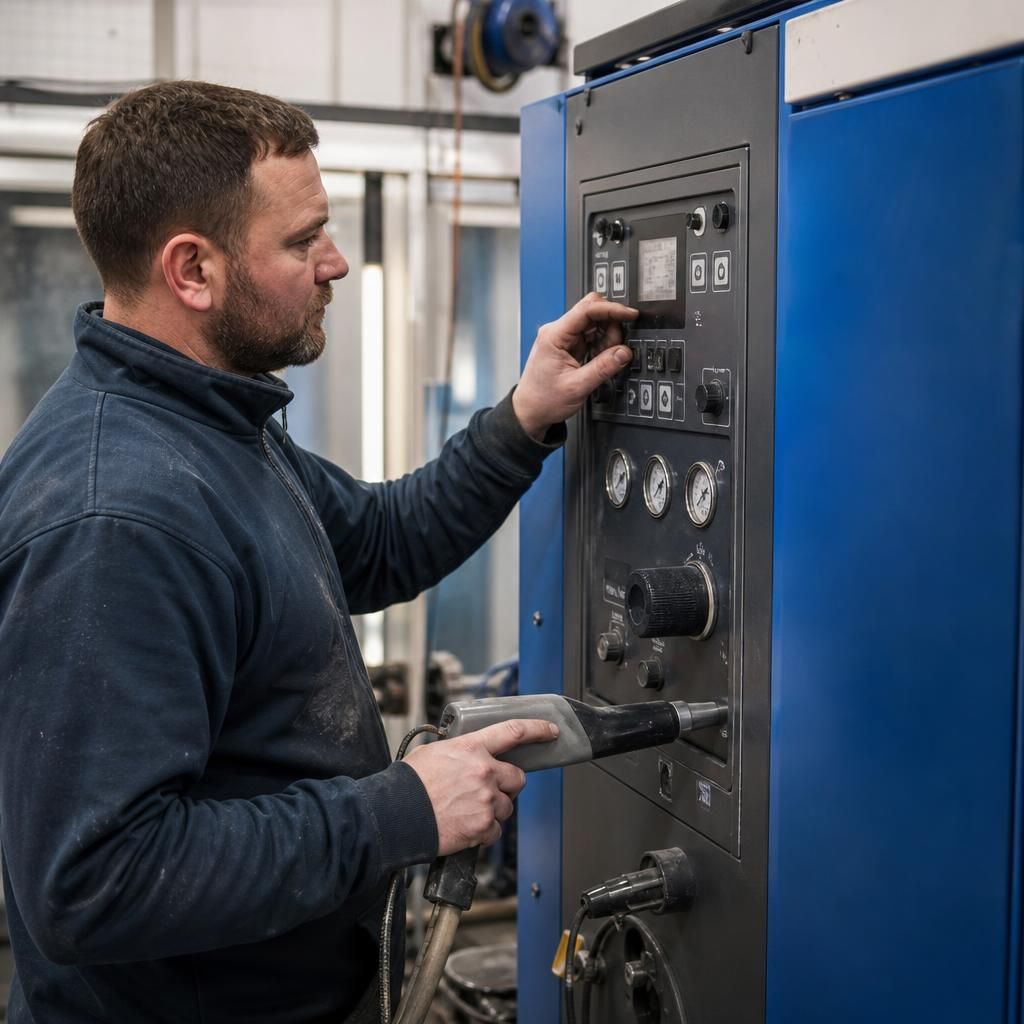
Small powder coating machine maintenance should also include checking the condition of the machine’s control and monitoring devices. Inspect switches, displays, indicators, foot controls and alarm functions for damage, sticking or unclear readings, and compare displayed settings with the approved operating instructions. A control that appears to work but gives unreliable information can lead to incorrect powder delivery or curing decisions.
Keep control panels, sensors and connection points protected from powder ingress and report damaged housings, loose cables or unreadable displays for assessment. Do not continue operating on the assumption that a process setting is correct if the relevant indication is missing or inconsistent. A qualified technician should test, repair or recalibrate affected control equipment in accordance with the machine documentation.
Need Advice on Small Powder Coating Machine Maintenance?
If you need help assessing the maintenance requirements for a small powder coating machine, contact powder-coatings.co.uk to discuss your equipment and coating process. The team can help you identify the checks and servicing considerations relevant to your application.