

How do small powder coating machines integrate with existing production lines to enhance workflow efficiency?
Small powder coating machines integrate with existing production lines by fitting coating, curing and cooling stages around established preparation, loading and inspection processes. Their compact format supports controlled batch handling, repeatable transfer between stages and targeted coating of components without requiring a complete line redesign.
Small powder coating machines enhance production-line efficiency when they are configured as a controlled coating cell within the existing process, rather than treated as a standalone replacement for every production stage. The most effective arrangement links part identification, preparation, masking, coating, curing, inspection and dispatch through a defined material flow, with the machine positioned at the point where it adds the most value.
Integration should begin with a review of the existing line. This includes the component dimensions and weights, batch sizes, substrate types, coating specifications, current handling equipment and the time taken at each stage. The review identifies whether the machine should operate as an in-line station, an adjacent batch cell or a flexible unit shared between several product routes. For varied production, an adjacent cell can be more practical because operators can divert suitable components to coating without disrupting the main line.
Material handling is central to maintaining flow. Parts need a consistent route from preparation to coating and then to curing and inspection. Suitable racks, hooks, trays or hanging fixtures can keep components organised, maintain the required spacing and reduce unnecessary handling. Fixtures should also provide reliable electrical contact where electrostatic application is used. A defined loading and unloading method helps prevent coated parts from being mixed with untreated components or damaged during transfer.
The coating machine can be connected operationally to upstream preparation processes even where there is no automated physical link. For example, prepared parts may arrive with an agreed batch reference, coating specification and inspection requirement. Operators can then confirm that the correct powder and application settings are being used before spraying. This type of standardised hand-off is particularly useful when one production line supplies several component variants.
Downstream curing must be matched to the coating process and the component design. A small coating system may feed a dedicated compact oven, an existing curing oven or a separate oven used for selected batches. The important considerations are the part’s metal thickness, geometry, mass and heat sensitivity, as well as the coating manufacturer’s specified curing conditions. Components should not be released to final inspection until the curing cycle has been completed and the finish has had sufficient time to stabilise for handling.
Workflow efficiency also depends on reducing avoidable changeovers. Grouping parts by coating colour, finish, substrate or curing requirement can limit powder changes and cleaning between batches. Where frequent changes are unavoidable, the process should define how the spray equipment, recovery areas, hooks and work surfaces are cleaned. Clear separation of powder types helps reduce contamination and protects finish consistency.
Small machines are particularly useful where production includes short runs, prototypes, replacement parts or components that do not justify occupying a larger automated line. They can act as:
- a dedicated cell for repeat batches of smaller components;
- a supplementary station for overflow or specialist work;
- a development unit for validating coating processes before wider production use; or
- a flexible route for parts with unusual shapes, masking requirements or limited batch quantities.
This flexibility can improve overall line utilisation because less suitable work is removed from the main route instead of forcing every component through the same equipment. It also allows production planners to separate standard, high-volume work from variable or specialist batches, provided that the coating specifications and inspection standards remain controlled.
Process controls should be aligned with the wider production system. Useful records include the component or batch reference, powder identification, operator checks, application settings, curing information and inspection result. These records support traceability and make it easier to investigate defects such as uneven coverage, poor adhesion, pinholing or inconsistent colour. Inspection points should be placed after coating and curing, not solely at the end of the complete manufacturing process, so that problems are detected before additional value is added.
Physical integration also requires attention to services and safety. The proposed position must accommodate electrical supply, compressed air where required, ventilation, extraction, powder storage, cleaning and safe operator access. The surrounding layout should leave enough room to load parts, move racks and separate coated items from unfinished work. Operators should be protected from powder exposure, ignition risks and contact with moving or heated equipment through suitable guarding, extraction, housekeeping procedures and training.
A practical implementation normally starts with a trial using representative components. The trial should assess loading time, coating access, masking, powder usage, curing compatibility, transfer between stages and inspection requirements. The results can then be used to refine fixtures, batch sizes, work instructions and the machine’s position in the line. Integration is successful when the coating stage has a predictable input and output, does not create a handling bottleneck and provides the required finish quality without unnecessary disruption to the rest of production.
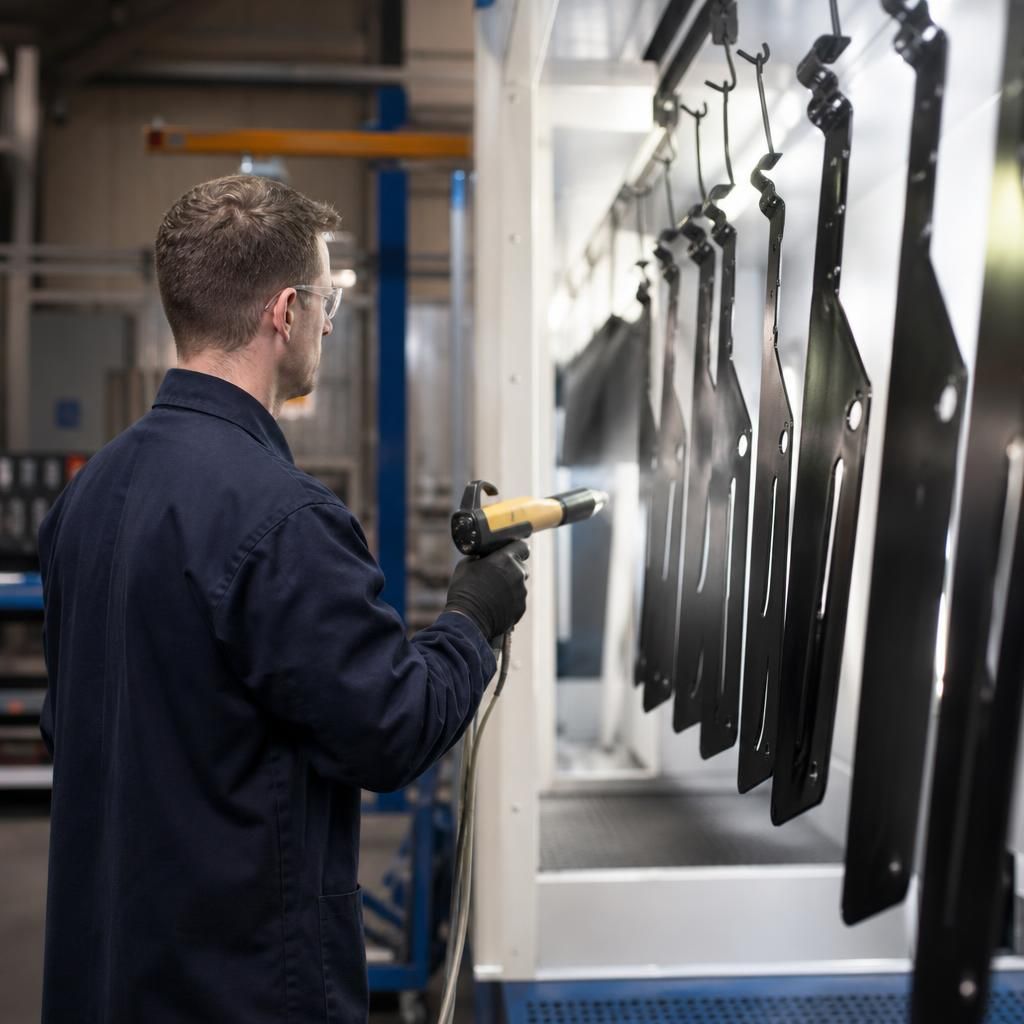
Workflow efficiency in a small powder coating cell depends on synchronised hand-offs between production stages, not simply on the spraying speed of the machine. Each batch should have a clear status, destination and release condition so operators can see whether parts are awaiting preparation, coating, curing, inspection or dispatch.
A practical system can use labelled work-in-progress locations, batch paperwork or production software to distinguish unfinished parts from coated items. Release rules should define when a batch can move forward, such as completion of preparation checks, confirmation of the powder specification and acceptance of the cured finish. This reduces searching, prevents batches from being processed out of sequence and makes responsibility at each hand-off clear.
The same information can support production planning. If a batch is held because of incomplete masking, a curing requirement or an inspection issue, the next suitable job can be selected without mixing components or interrupting the coating sequence. This makes the small machine easier to incorporate into varied manufacturing workflows while keeping its output aligned with the requirements of the wider production line.
Discuss integrating a small powder coating machine into your production line
Discuss your component mix, batch requirements and existing production setup with the powder-coating.co.uk team to assess whether a small powder coating machine is suitable for your workflow. They can help you consider an appropriate coating approach and practical collection or delivery arrangements.