

What are the maintenance requirements for ensuring the powder coating setup remains in optimal working condition?
Maintaining a powder coating setup requires planned inspection, cleaning and servicing of the spray equipment, recovery system, extraction, curing oven and electrical connections. Regularly check powder delivery and gun performance, replace or clean filters, verify oven temperature and airflow, inspect earthing and keep maintenance records so faults can be identified before they affect finish quality or cause unplanned downtime.
Maintaining a powder coating setup in optimal working condition requires a documented preventive maintenance programme covering process controls, compressed air, mechanical handling equipment, heating and control systems, safety devices and consumable wear. The frequency of each task should reflect the equipment manufacturer’s instructions, production hours, powder types used and the consequences of a component failure.
Use a planned maintenance schedule
Separate maintenance tasks into operator checks, planned technical inspections and periodic specialist servicing. This prevents minor wear from developing into a process interruption and makes it easier to identify recurring faults. The schedule should define:
- Which component is being checked and the condition that is acceptable
- Who is competent to carry out the task
- What measurement, test or replacement is required
- Which parts and consumables should be held as spares
- When the equipment must be isolated before work begins
Manufacturer instructions should take precedence over generic intervals. High-throughput lines, abrasive powders and frequent colour changes can place greater demands on wear parts than occasional-use equipment.
Control compressed-air quality
Compressed air is used in several powder coating processes, so its quality directly affects consistency and equipment reliability. Water, oil or excessive pressure variation can interfere with powder transport and contaminate the finish. The air preparation system should therefore be checked for:
- Moisture accumulation in receivers, filters and water separators
- Oil carryover from the compressor or lubricated components
- Blocked filter elements and deteriorated seals
- Regulator operation and stable working pressure
- Leaks in hoses, couplings and connection points
Drainage arrangements must be suitable for the installation, and any air-quality specification supplied with the equipment should be followed rather than relying only on visual checks.
Maintain the mechanical handling system
Conveyors, hooks, trolleys, turntables and lifting fixtures need attention because movement problems can cause uneven coating, impact damage or unsafe loading. Check for stretched chains, worn bearings, loose fasteners, damaged hooks and misalignment. Lubricate only with products suitable for the location; excess lubricant can migrate onto metal parts and create coating defects.
Fixtures should also be assessed for accumulated coating, distortion and loss of effective contact. Replace or refurbish them when their condition affects part positioning, electrical continuity or repeatable loading. A consistent loading pattern helps the setup operate within its intended capacity and reduces unnecessary mechanical stress.
Monitor wear parts and process hardware
Items exposed to powder flow, heat or repeated movement can deteriorate gradually. Nozzles, hoses, seals, pump components, door gaskets, bearings and protective linings should be replaced when wear reaches the manufacturer’s limit, not only after a visible failure. Cracks, brittleness, deformation and changes in dimensions are useful warning signs.
Keeping compatible replacement parts available reduces the risk of extending the use of a component beyond its serviceable condition. Parts should be stored in a clean, dry area and identified clearly so that similar-looking items are not fitted incorrectly.
Verify curing performance rather than relying solely on control settings
A curing oven can display the selected set point while the workpiece experiences a different thermal cycle. Periodic temperature profiling with suitable calibrated instruments can confirm that the required cure conditions are being achieved at representative product positions. Profiling should be repeated when the load pattern, product geometry, conveyor speed or powder specification changes materially.
Additional checks should cover door seals, insulation panels, burner or heating-element condition, combustion safeguards where fitted, and safety interlocks. Any unusual heat loss, slow recovery or uneven result should be investigated before production continues at the same settings.
Keep control and safety systems dependable
Control panels, sensors, emergency stops, access switches and interlocks should be tested according to the equipment documentation. A safety device that has been bypassed, adjusted incorrectly or allowed to deteriorate can expose personnel to mechanical, electrical or thermal hazards. Isolation procedures must be used before maintenance, with stored pneumatic, electrical and thermal energy made safe.
Control-system settings and approved operating parameters should be protected from unauthorised changes. Where the equipment permits it, retain a controlled backup of configuration data so that a failed controller or accidental alteration does not require the setup to be recommissioned from memory.
Use calibration and verification appropriately
Gauges, temperature instruments, pressure regulators and other devices used to make process decisions should be checked against a known reference at intervals appropriate to their importance. Calibration is particularly relevant where a small measurement error could produce under-cured coating, excessive heat exposure or unstable powder application. Instruments that fail verification should be identified, removed from service or corrected, and any affected production assessed.
Review the system after changes
Maintenance is also required after equipment modifications, relocation, changes in powder chemistry or the introduction of larger or more complex components. Confirm that utilities, load handling, curing conditions, control settings and safety functions remain suitable after the change. A commissioning-style check is preferable to assuming that an existing setup will perform identically with a new operating arrangement.
For an industrial powder coating setup, the most reliable approach is to combine operator awareness with planned technical servicing and objective process verification. This maintains equipment condition while also confirming that the line continues to produce a repeatable coating, rather than treating maintenance as a response to visible faults alone.
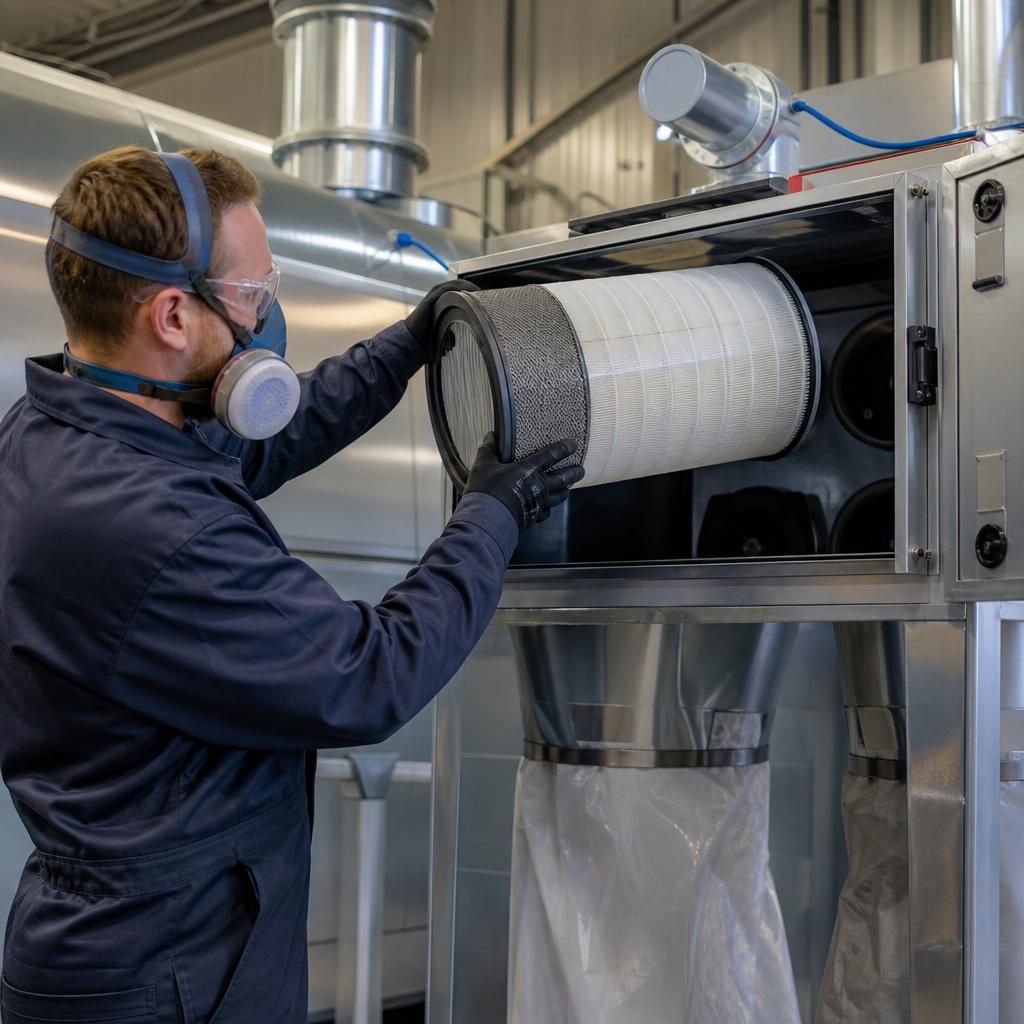
Extraction maintenance is a distinct part of keeping a powder coating setup reliable because restricted or uneven airflow can affect powder containment, filter loading and the working conditions around the booth. Check airflow against the installation’s specified operating condition rather than relying on fan noise or visible powder movement alone.
Inspect booth openings, ductwork, access panels, fan components and filter housings for powder build-up, damage or air leaks. A gradual change in airflow can indicate a loaded filter, obstructed duct or deteriorating seal. Isolate the equipment before accessing these areas, and clean or replace components in line with the manufacturer’s instructions and the installation’s operating requirements.
Discuss Your Powder Coating Setup Maintenance Requirements
Discuss your powder coating setup maintenance requirements with powder-coatings.co.uk to identify suitable inspection, servicing and process-verification arrangements for your equipment. This can help establish a practical maintenance plan before avoidable faults affect production.