

How does a powder coating setup enhance operational efficiency in an industrial setting?
A powder coating setup enhances industrial efficiency by creating a controlled, repeatable process for preparing, coating and curing metal components. It can reduce handling, overspray and rework while supporting consistent finishes across batch production.
A powder coating setup enhances operational efficiency by aligning equipment capacity, workplace layout, labour, material flow and production controls. The main benefit is a more coordinated operation in which components move through each stage with fewer avoidable interruptions, unnecessary movements and scheduling conflicts.
Better material flow: The position and sequence of preparation areas, coating equipment, curing equipment, cooling space and inspection points affect how efficiently work moves through the facility. A suitable layout keeps components travelling in a logical direction and separates incoming, in-process and completed work. This can reduce congestion, double handling and the risk of finished parts being mixed with untreated items.
More productive use of labour: An appropriately specified setup helps operators spend more time on value-adding tasks rather than moving components, correcting application problems or waiting for equipment. Lifting aids, accessible controls, suitable racking and well-planned loading points can also reduce physical effort and make operator responsibilities clearer. These details are particularly relevant where components vary in size, weight or geometry.
Improved production planning: Equipment capacity should be considered alongside the volume, dimensions and coating requirements of the work. When the available booth, oven, conveyor or batch-handling arrangements match the production profile, jobs can be grouped more logically. Similar colours, coating types or component formats may be scheduled together where appropriate, reducing avoidable changeovers and making labour and material requirements easier to plan.
Shorter and more controlled changeovers: Changeovers can affect output even when the coating equipment itself is operating correctly. Accessible cleaning points, practical powder storage, organised tooling and a clear procedure for changing colours or product types help limit downtime between jobs. The setup should also provide enough space for cleaning and inspection without obstructing other production activities.
Reduced resource loss: Powder coating efficiency depends on using powder, compressed air, electricity and heat appropriately. Recovery arrangements can help manage suitable unused powder, while correctly selected application equipment supports efficient transfer to the component. Oven insulation, accurate temperature control and sensible loading practices can help avoid unnecessary energy use, although actual performance depends on the equipment specification, workload and operating method.
Fewer quality-related interruptions: Operational efficiency is not simply a measure of how quickly parts pass through the facility. Parts that require stripping, recoating or additional inspection consume labour, materials and production capacity. A setup that supports stable gun positioning, suitable earthing, consistent component presentation and reliable oven control can make the process easier to monitor and reduce the operational disruption associated with finish defects.
Useful process controls: Standard operating procedures should define key settings, loading methods, cleaning tasks, coating identification and inspection requirements. Recording relevant information for each job can help operators identify recurring issues and compare results between production runs. Where equipment allows, alarms, temperature records and maintenance logs provide evidence that operating conditions remain within the required limits.
Planned maintenance rather than avoidable stoppage: Access to filters, extraction components, guns, pumps, recovery equipment, heaters and control panels should be considered when selecting and installing a setup. If routine checks and cleaning can be completed safely and without dismantling major equipment, maintenance is easier to incorporate into production planning. A maintenance schedule should cover:
- inspection and cleaning of application and recovery equipment;
- checking extraction, filtration and air supplies;
- verification of oven temperature controls and sensors;
- inspection of electrical connections, earthing and moving parts;
- replacement of wear items in line with the equipment manufacturer’s requirements.
Greater flexibility for different work: Industrial workloads often include a mixture of small components, larger fabrications, repeat batches and irregular jobs. A setup with suitable loading options, adjustable handling equipment and enough working space can accommodate this variation more effectively than a system designed around only one product. Flexibility should be balanced against the need to maintain a clear process, since excessive adjustment or complicated tooling can introduce its own delays.
Before investing in or modifying a setup, the business should map the complete workflow and identify where time is currently lost. Relevant points include component arrival, storage, preparation, loading, colour changes, curing capacity, inspection, packing and dispatch. Comparing these requirements with the proposed equipment layout will show whether the setup removes a genuine constraint or simply adds capacity at another stage. The most efficient arrangement is therefore the one that supports the entire production flow, not just the application equipment in isolation.
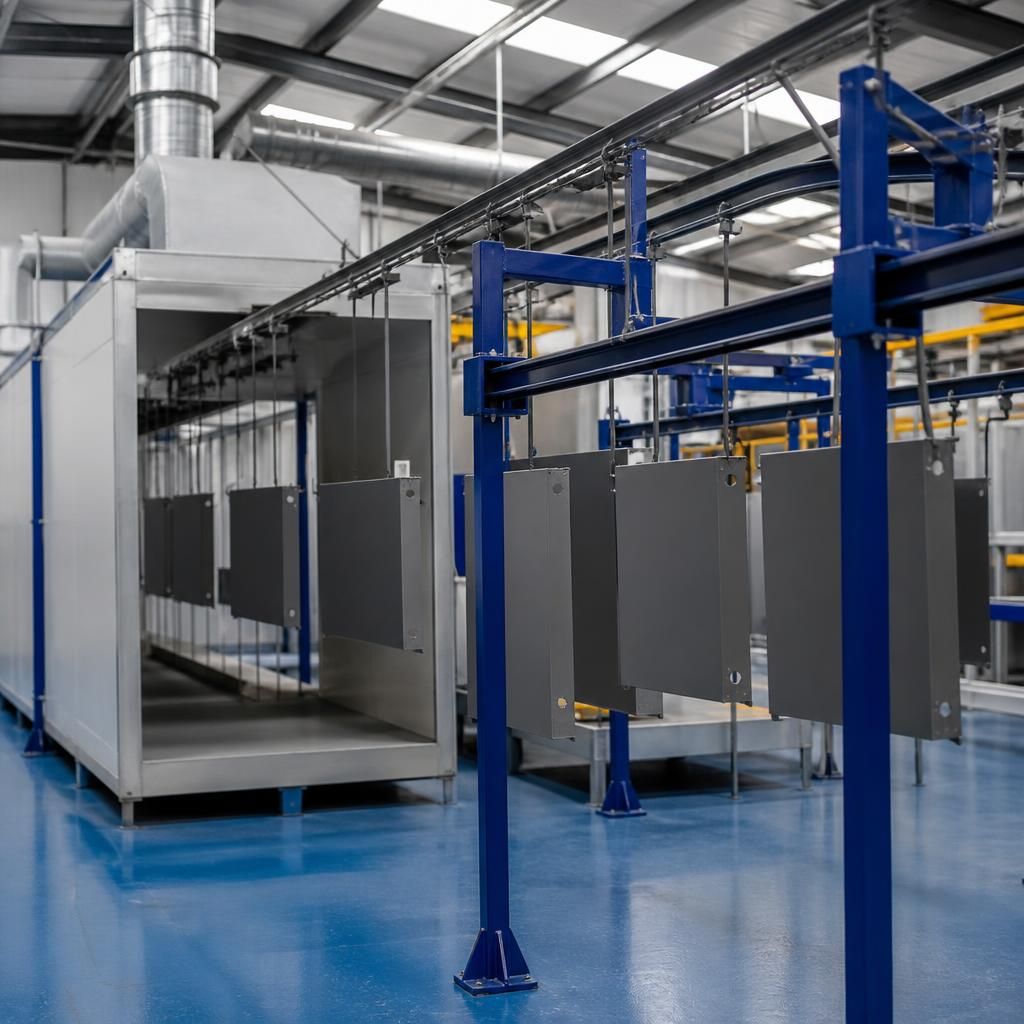
A modular powder coating setup can improve operational efficiency by allowing individual components to be upgraded, replaced or extended without redesigning the entire process. For example, additional handling capacity, a larger curing arrangement or revised application equipment can be introduced as production requirements change, provided the supporting services and available space have been considered from the outset.
This approach can reduce disruption associated with major equipment changes and help a business retain established loading, inspection and operating procedures. The key is to assess interfaces between each module, including electrical supply, extraction, compressed air, temperature control and component handling, so that future changes do not create a new constraint elsewhere in the process.