

What safety precautions should be taken when operating mini powder coating machines?
Operating a mini powder coating machine safely requires suitable PPE, effective ventilation, correct electrical grounding and careful control of ignition sources, particularly because powder particles can become airborne and combustible. Follow the equipment and powder manufacturer’s instructions, keep the work area clean, inspect cables and hoses before use, and isolate the machine before cleaning, adjustment or maintenance.
Safe operation of a mini powder coating machine depends on controlling the risks associated with powder handling, electrostatic equipment, compressed air, heated components and moving parts. A documented risk assessment, suitable training and clear operating procedures should be in place before the machine is used, with controls reviewed whenever the powder, workpiece, equipment or process changes.
- Read the relevant safety information. Keep the machine instructions and each powder’s safety data sheet available to operators. These documents identify handling requirements, hazardous ingredients, first-aid measures, storage conditions and precautions for accidental release. Do not assume that all coating powders have identical properties.
- Restrict operation to trained users. Operators should understand the spray controls, powder recovery or collection arrangements, curing equipment and emergency stop procedure. Visitors and untrained personnel should be kept away from the spraying and curing area.
- Check guards and interlocks. Before starting, confirm that covers, booth panels, access doors and other protective devices are correctly fitted. Never bypass an interlock, remove a guard while equipment is operating or reach into a moving mechanism. Report damaged switches, exposed components or failed emergency stops before use.
- Control compressed air safely. Use the pressure and air quality specified for the equipment. Secure hoses and connections, check for damage and release pressure before disconnecting a line or removing a blocked component. Never direct compressed air at skin, clothing or another person, as it can drive powder into the body or eyes.
- Handle powder to minimise disturbance. Open containers carefully, avoid dropping or tipping them and transfer powder using the approved method for the machine. Keep containers closed when not in use, separate different powders to prevent contamination and label any retained material clearly. Deal with spills using equipment suitable for fine powder; dry sweeping or uncontrolled blowing can disperse particles.
- Use suitable personal protection. The risk assessment should specify respiratory, eye, skin, hearing and foot protection for the particular process. Protective clothing should be kept separate from everyday clothing and removed carefully to avoid spreading residual powder. Wash hands and exposed skin after handling powder and before eating, drinking or smoking.
- Keep food and ignition sources out of the work area. Smoking, naked flames, hot work and unauthorised electrical equipment should be prohibited where powder may be present. Static-control measures should be checked as part of the machine’s pre-use inspection rather than assumed to be effective.
- Separate spraying from curing hazards. Allow coated parts, racks and the oven or curing unit to reach a safe condition before handling them. Use heat-resistant handling equipment where necessary, maintain clearances around heated equipment and do not place combustible materials near hot surfaces. An oven should not be used to cure a powder unless the powder and process are suitable for that equipment.
- Prepare for fire or equipment failure. Keep access routes and emergency controls unobstructed. Provide the type of fire-fighting equipment identified by the site risk assessment, and ensure operators know when to stop work, raise the alarm, evacuate and call the emergency services. Do not attempt to fight a developing powder, electrical or oven fire unless trained and it is safe to do so.
- Dispose of residues correctly. Collect overspray, used filters, contaminated wipes and empty powder packaging in suitable containers. Store waste away from heat and incompatible materials, and follow the site’s waste procedures and the powder supplier’s instructions rather than mixing unknown residues.
At the end of a run, follow the specified shutdown sequence, secure the powder supply, release stored air pressure where required and leave heated parts to cool. Cleaning and maintenance should only be carried out under the machine’s isolation procedure, with stored electrical, pneumatic and thermal energy made safe. Record defects and corrective actions so that equipment is not returned to service with an unresolved safety fault.
Businesses using mini powder coating machines should also consider exposure monitoring, health surveillance and periodic review of their control measures where the risk assessment indicates that these are appropriate. In the UK, workplace procedures should align with applicable duties for hazardous substances, workplace equipment, electrical safety, fire precautions and waste handling. A competent person should review the complete installation, particularly where a small machine is integrated into a larger production line.
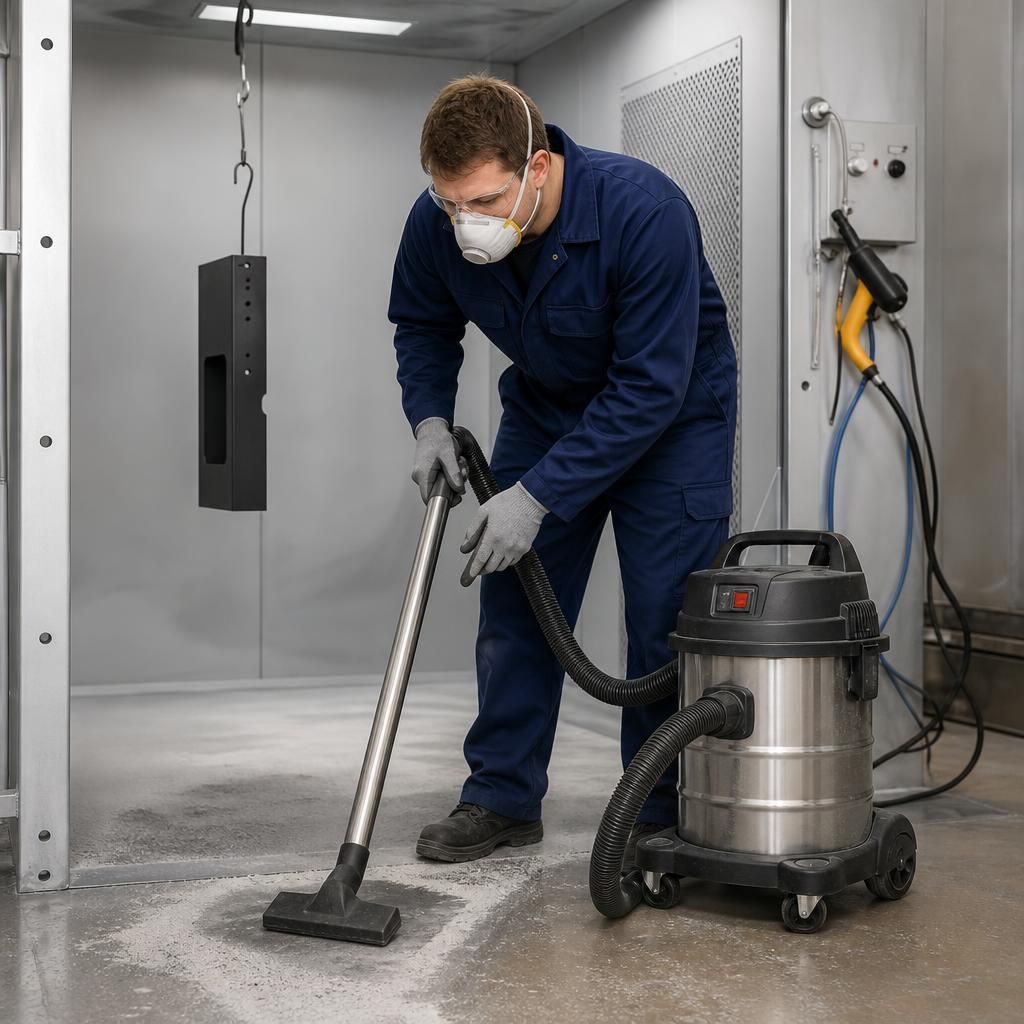
Powder residues should be removed with cleaning equipment suitable for fine, potentially combustible dust. Do not use a household vacuum cleaner or other unapproved electrical appliance in an area where powder may be present, as unsuitable equipment can create ignition or static hazards. Follow the machine and powder supplier’s instructions when selecting extraction or vacuum equipment.
Before cleaning, stop the spraying process and make the equipment safe in line with the site isolation procedure. Clean deposits from accessible surfaces without creating a visible dust cloud, and place collected residue in a suitable, closed container. If powder has entered an enclosed part of the machine or extraction system, use the approved cleaning method rather than improvising with compressed air.
Discuss safe mini powder coating machine operation
Before putting a mini powder coating machine into production, ask a competent person to review the risk assessment, equipment layout and operating procedures. If outsourcing may be more suitable, contact powder-coatings.co.uk to discuss your metal component coating requirements.