

What maintenance practices are essential for prolonging the lifespan and performance of mini powder coating machines?
Prolong the lifespan and performance of a mini powder coating machine by cleaning the powder path after each coating change, inspecting guns, hoses, filters and electrical connections regularly, and following the manufacturer’s servicing instructions. Keep moving parts and ventilation systems free from powder build-up, replace worn components promptly, and record maintenance to identify recurring faults before they affect coating quality.
Essential maintenance for a mini powder coating machine is a planned combination of cleaning, calibration, condition checks and controlled servicing. The aim is not only to keep the equipment operating, but also to maintain a stable powder flow, consistent electrostatic application, accurate settings and repeatable coating quality.
Set maintenance intervals according to use. A machine used for frequent production batches will need more frequent attention than one used occasionally for development work. Base the schedule on operating hours, powder throughput, coating type and the number of colour changes. Separate routine operator checks from periodic technical servicing so that simple care is completed consistently without replacing specialist inspection.
- Before use: confirm that the machine is clean, correctly assembled and free from obstructions. Check that the powder container or hopper is dry and that hoses, seals and fittings are seated correctly.
- During use: monitor changes in powder delivery, gun response, air pressure and coating appearance. A pulsing spray, intermittent output or unusual accumulation can indicate a developing fault.
- After use: remove remaining powder in accordance with the equipment instructions, protect exposed openings from dust and leave components dry before storage or reassembly.
- At planned service intervals: assess wear, verify operating settings and inspect parts that are not practical to evaluate during routine production.
Maintain the compressed-air supply. Powder application depends on clean, dry and suitably regulated air. Moisture or oil contamination can affect fluidisation, block narrow passages and alter the consistency of the spray. Drain air-line water traps where fitted, check the condition of filtration equipment and investigate pressure fluctuations rather than compensating for them by continually changing machine settings. The air supply should be checked against the machine’s specified requirements, with regulators and gauges assessed for reliable operation.
Check powder conditioning and storage. Powder should be kept sealed and protected from humidity, contamination and excessive heat. Before loading a machine, check for hard lumps, foreign material or signs that the powder has absorbed moisture. Do not mix reclaimed and virgin powder, or different coating types, unless the coating process has been assessed and the equipment is intended for that practice. Consistent powder condition makes it easier to distinguish a material problem from an equipment fault.
Verify calibration and repeatability. Periodically compare the machine’s displayed settings with its actual behaviour. Check powder output over a controlled test period, confirm that pressure and voltage controls respond predictably, and use a test panel to assess coverage and film consistency. If the same setting produces noticeably different results, investigate calibration, air supply, powder condition and application technique before adjusting the production process. Calibration records should include the date, settings checked and any corrective action taken.
Assess the spray gun and application accessories. Nozzles, deflectors and other contact or wear parts gradually change shape as powder passes through them. This can alter the spray pattern and create uneven coverage, especially around edges and recessed areas. Replace components when their geometry, surface condition or fit is no longer suitable, using parts that match the machine’s specification. Check that interchangeable accessories are correctly installed and that seals have not become flattened or damaged.
Confirm electrostatic performance and earthing. Effective charging and a reliable earth path are important for powder transfer and operator safety. The workpiece, hanging equipment and relevant machine components should be checked using the procedure specified for the equipment. Remove overspray or contamination that could interrupt contact at suspension points, and investigate poor transfer, excessive back-ionisation or unstable coverage instead of increasing voltage without diagnosis. Electrical tests and repairs should be completed by a suitably competent person with the equipment isolated.
Protect the control system. Keep control panels, displays and switches free from powder and avoid directing compressed air into sensitive electronics. Inspect plugs, cables and control interfaces for damage during planned servicing, but do not open electrical enclosures unless the person carrying out the work is qualified to do so. Fault codes, intermittent controls or unexplained setting changes should be recorded and investigated promptly rather than repeatedly reset.
Use correct isolation and cleaning methods. Before dismantling parts, isolate the electrical supply and release stored air pressure in line with the equipment’s safety procedure. Use approved, non-damaging cleaning tools and avoid methods that drive powder deeper into bearings, seals, electrical components or control equipment. Abrasive tools and unsuitable solvents can damage surfaces and create additional contamination, so cleaning materials should be compatible with the machine’s construction.
Keep a useful maintenance history. Record operating hours or batch use where practical, powder types processed, calibration results, replaced parts, recurring alarms and any changes in coating quality. This information helps identify whether a problem is linked to a particular material, accessory or operating condition. It also gives a service engineer a clearer starting point when a fault cannot be resolved through routine checks.
Maintenance should be reviewed whenever the machine is moved, its powder system is reconfigured or a different coating material is introduced. If a fault affects electrical safety, compressed-air integrity, powder containment or the repeatability of the finish, stop using the equipment and arrange competent technical assessment rather than continuing with trial-and-error adjustments.
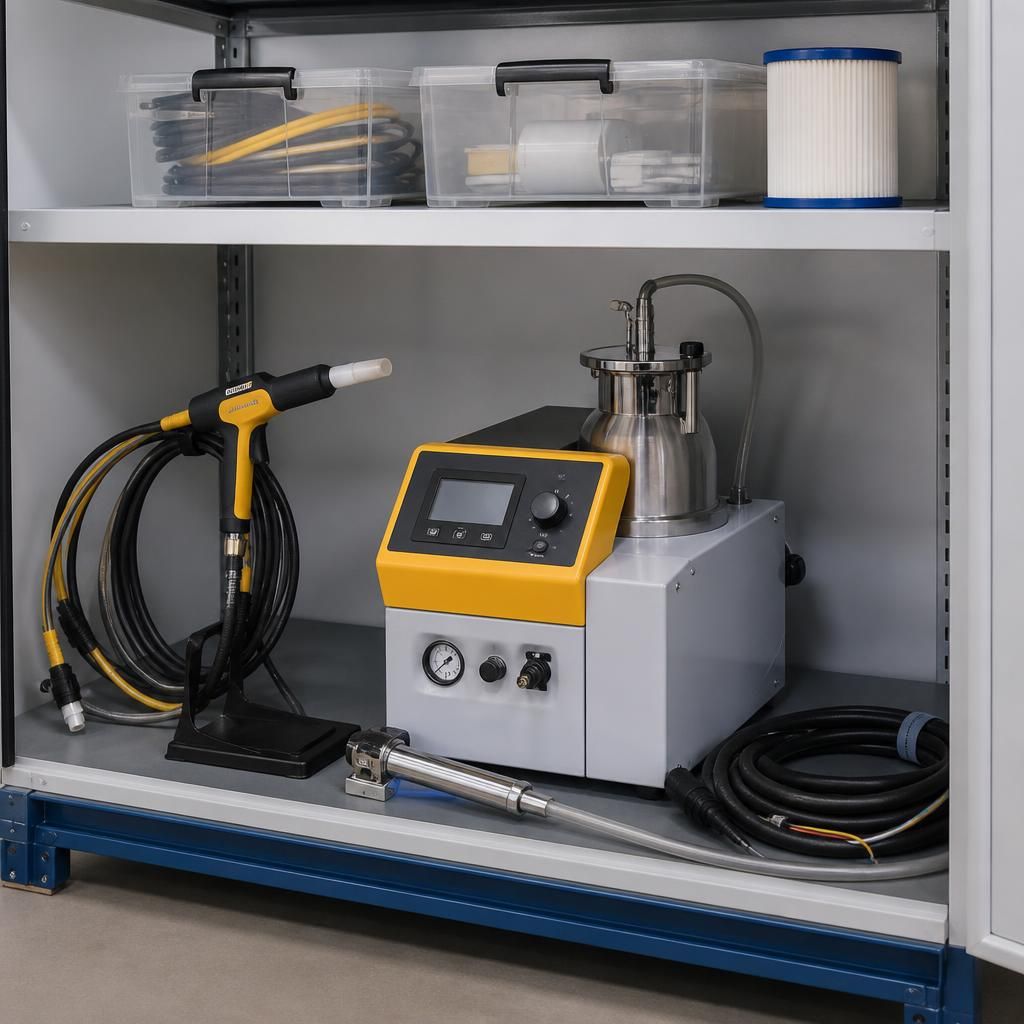
Storage conditions are part of maintaining a mini powder coating machine, particularly between production runs. Keep the equipment in a clean, dry area away from condensation, excessive dust and accidental impact. Position the gun, hoses and powder-feed components so they are not crushed, sharply bent or left under tension, as physical damage can affect powder delivery and electrical connections.
- Store removable components in a labelled, dry container.
- Keep cables and hoses supported without tight coils or kinks.
- Check for damage, contamination or moisture before returning the machine to service.
Plan maintenance for your mini powder coating machine
If your mini powder coating machine is producing inconsistent results despite routine maintenance, arrange a competent technical inspection before continuing production. For guidance on maintaining coating quality or assessing your powder coating requirements, contact the Powder-coatings.co.uk team.