

What maintenance is required for mini powder coating machines to ensure longevity and optimal performance?
Mini powder coating machines require regular cleaning of the powder path, gun, hoses, filters and recovery areas, together with inspection of seals, electrical connections and spray components for wear or contamination. Follow the manufacturer’s maintenance schedule, replace worn parts promptly and keep records of cleaning, inspections and adjustments to maintain consistent application and extend service life.
Maintaining a mini powder coating machine involves more than removing residual powder. Longevity and consistent performance depend on verifying calibration, maintaining the compressed-air supply, checking powder delivery, protecting moving parts and following a planned servicing routine based on the machine’s design and workload.
Check the compressed-air system
Clean, dry and correctly regulated air is essential for stable powder transport and atomisation. Drain moisture from the air preparation equipment, check the condition of the regulator and inspect for pressure fluctuations, leaks or damaged tubing. Any water or oil entering the air circuit can affect powder flow, cause inconsistent application and contaminate internal components. The compressor, dryer and filtration arrangements should therefore be maintained in line with their own service requirements.
Verify powder delivery and fluidisation
Powder should feed smoothly rather than pulsing, bridging or settling in the hopper. Check that the fluidising system produces an even movement of powder and that the intake remains correctly positioned. Where the machine has an adjustable feed rate, confirm that its settings remain repeatable after changes between coating jobs. Hardened or moisture-affected powder should be isolated rather than forced through the equipment, as it can restrict the feed system and produce uneven coverage.
Check and calibrate the application controls
Voltage, current, powder output and air settings should be checked against the manufacturer’s specified operating range. A machine can continue to run while gradually drifting from its intended settings, so output should be verified using the appropriate test procedure rather than relying solely on the control display. Calibration is particularly important where the machine is used for repeat batches, fine finishes or different part geometries. If readings are unstable or cannot be adjusted correctly, the equipment should be assessed by a competent technician.
Maintain mechanical components
Inspect wheels, brackets, hinges, latches, moving arms and adjustment mechanisms for looseness, distortion or restricted movement. Tighten fixings to the correct specification and lubricate only those components for which the manufacturer permits lubrication. Grease or oil must not be allowed near powder-contact areas or the air path, since it can contaminate the finish and interfere with powder movement. Any cracked housing, damaged guard or distorted support should be repaired before the machine is returned to production.
Keep the operating environment suitable
Excessive dust, humidity and temperature variation can shorten component life and affect powder behaviour. Position the machine away from sources of water, oil mist and unnecessary vibration, and keep surrounding areas orderly so that ventilation and access to controls are not obstructed. Powder should be stored sealed and dry, with different materials clearly separated to reduce the risk of cross-contamination during changes between jobs.
Review earthing and protective functions
Reliable earthing is necessary for electrostatic transfer and should be checked as part of planned maintenance, particularly after the machine has been moved or altered. Confirm that the workpiece support and any required earth path remain suitable for the parts being coated. Interlocks, emergency-stop controls and protective devices should also be function-tested according to the manufacturer’s procedure. These checks should be completed by appropriately trained personnel and should never involve bypassing a safety device.
Use a maintenance plan based on workload
- Before use: check the air supply, powder feed, controls, earth path and general mechanical condition.
- At planned intervals: verify application settings, inspect moving parts and check pneumatic equipment for deterioration.
- After extended or demanding use: carry out a more detailed assessment of calibration, fluidisation, air quality and component condition.
- During scheduled servicing: replace consumable or life-limited components before failure where the manufacturer provides service intervals.
The correct interval depends on operating hours, powder type, production volume and the level of dust exposure. A machine used intermittently may need condition-based checks, while equipment used for frequent batch work benefits from fixed preventive-maintenance intervals. Manufacturer instructions take priority where they specify particular tests, lubricants, adjustment methods or replacement periods.
Maintenance findings should be linked to the machine’s operating history, including calibration results, faults and replaced components. This helps identify gradual changes such as declining powder output, unstable air pressure or increased adjustment requirements before they cause rejected parts. If a fault affects electrostatic performance, air delivery, control accuracy or protective functions, stop using the machine until the cause has been identified and corrected.
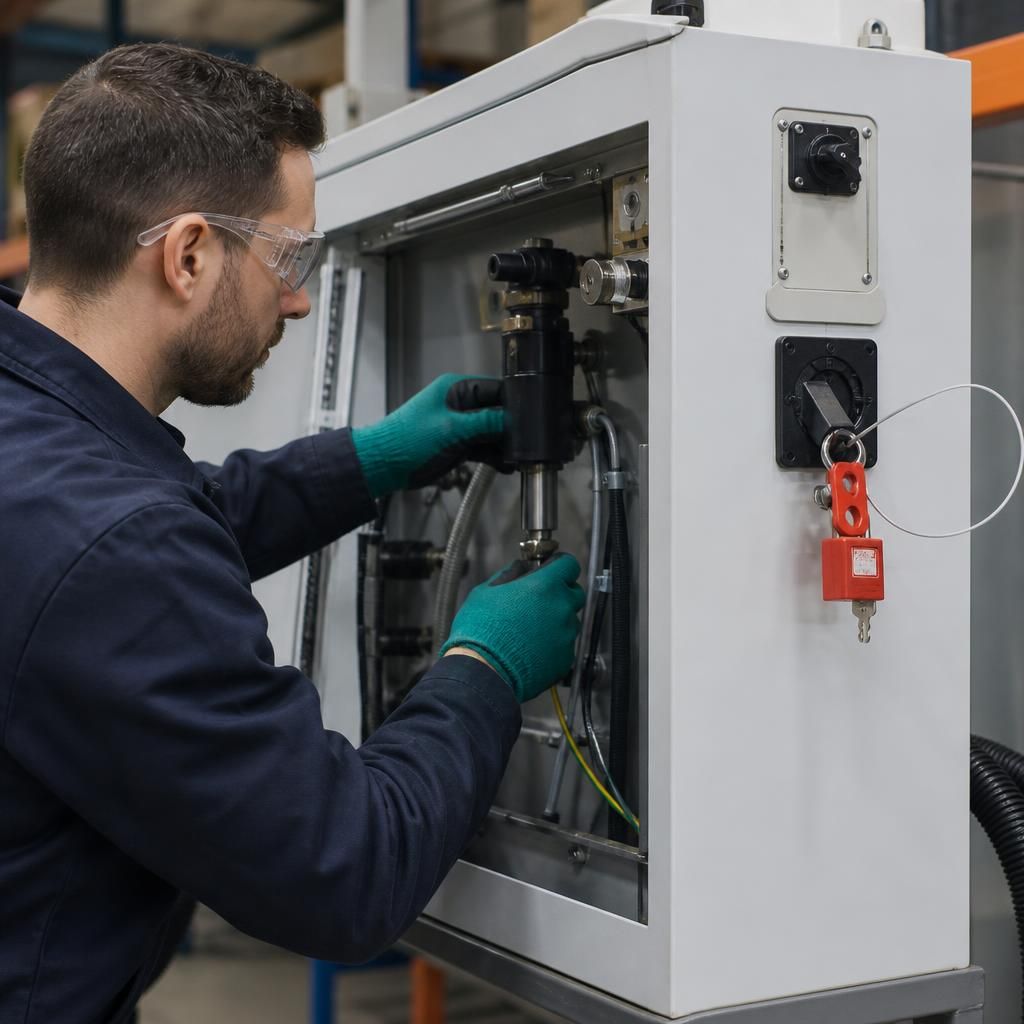
Safe isolation is an essential part of maintaining a mini powder coating machine. Before removing panels, disconnecting the gun or accessing the powder path, switch off the equipment, isolate the electrical supply and release stored compressed-air pressure. Allow any electrostatic charge to discharge in accordance with the machine’s instructions, and prevent accidental start-up while work is being carried out.
- Use suitable personal protective equipment and work in a clean, well-ventilated area.
- Use non-abrasive, lint-free materials that will not scratch surfaces or leave fibres in the powder circuit.
- Do not use unapproved solvents, lubricants or improvised tools, as these may damage seals, plastics or electrical insulation.
- Refit covers, guards and connections correctly before restoring power or air.
This approach reduces the risk of maintenance-related damage and helps ensure that the machine returns to service in its intended condition.