

How can a small powder coating machine enhance efficiency and quality in batch processing?
A small powder coating machine can improve batch processing by providing controlled powder application, repeatable settings and more consistent coverage across successive metal components. This helps reduce variation between parts while making smaller production runs easier to manage than manual application alone.
A small powder coating machine enhances batch processing by making preparation, application and quality checks easier to control at a manageable production scale. Its main value is not simply its physical size; it is the way the equipment can be matched to short runs, varied components and defined coating procedures without the complexity of a large automated line.
For batch work, efficiency depends on reducing avoidable handling and keeping each stage in a logical sequence. A suitable small machine can support a repeatable workflow in which parts are prepared, positioned, coated and transferred for curing using the same defined method each time. This makes it easier to identify where a defect has occurred and reduces the disruption caused by changing between different component types.
Small-scale equipment can be particularly useful where batches contain moderate quantities or several part designs. A large production line may require substantial setup for a short run, whereas a smaller system can be configured around the work being processed. Operators can adjust the work arrangement, coating method and powder selection between batches without treating every change as a major production changeover. This flexibility is valuable to fabricators and manufacturers handling made-to-order components, repair work or varied subcontract batches.
Quality benefits also depend on how parts are presented to the machine. Components should be cleaned thoroughly, free from oil, rust, moisture and residues, and supported so that the coating can reach the required faces. Suitable hanging or racking helps prevent contact marks and reduces the need to handle parts after coating. For batches with similar geometry, using the same rack positions and orientation can make the process easier to inspect and reproduce.
A small machine can improve powder usage by giving the operator better control over where the material is directed. Unnecessary overspray, excessive film build and missed areas are often linked to unsuitable gun settings, poor access or inconsistent operator technique rather than the machine alone. Establishing a job sheet for each component family can help record the powder specification, application settings, part orientation and curing requirements. The job sheet can then be reviewed when a batch is repeated, rather than relying entirely on memory.
Film thickness should be checked as part of batch quality control. Too little coating may leave areas with inadequate protection or appearance, while excessive build can affect finish, edge coverage and curing behaviour. Visual inspection remains useful for identifying runs, pinholes, contamination, roughness and uncoated sections, but it should be supported by appropriate measurement where the specification requires it. Results should be recorded against the batch so that variation can be investigated before parts move to the next stage.
Curing is equally important. The oven or curing arrangement must achieve the powder manufacturer’s specified metal temperature and dwell requirements; air temperature alone does not confirm that the component has cured correctly. Parts with different thicknesses may reach curing temperature at different rates, so batch planning should take the heaviest or most heat-retentive components into account. A small coating machine can improve application consistency, but it cannot compensate for inadequate pretreatment or an incorrectly controlled curing cycle.
Efficiency is also affected by powder and colour changes. Keeping components grouped by coating specification limits cleaning and setup interruptions. When a change is necessary, the gun, hose, hopper and surrounding work area should be cleaned according to the equipment procedure. This helps prevent colour contamination and reduces the risk of unwanted particles appearing in the next batch. Storing powders correctly and clearly identifying containers also prevents the wrong material being introduced into the process.
Before selecting a small machine, assess the largest and heaviest parts, the number of components in a typical batch, the required finish, the available extraction and curing facilities, and the range of powders to be used. Equipment that suits small brackets may be unsuitable for long fabrications or components requiring specialist protective coatings. The machine should also be practical for cleaning, inspection and maintenance, with consumable and wear components accessible enough to be checked regularly.
For a business processing metal parts in varied batches, the best result comes from treating the machine as one part of a controlled coating system. Good preparation, consistent part presentation, suitable powder storage, documented settings, reliable curing and recorded inspections work together to improve both productivity and finish quality. Where internal capacity is not suitable for the component size or batch requirement, a specialist powder coating provider with collection and delivery options can be considered for larger-scale or specialist work across the Midlands and surrounding areas.
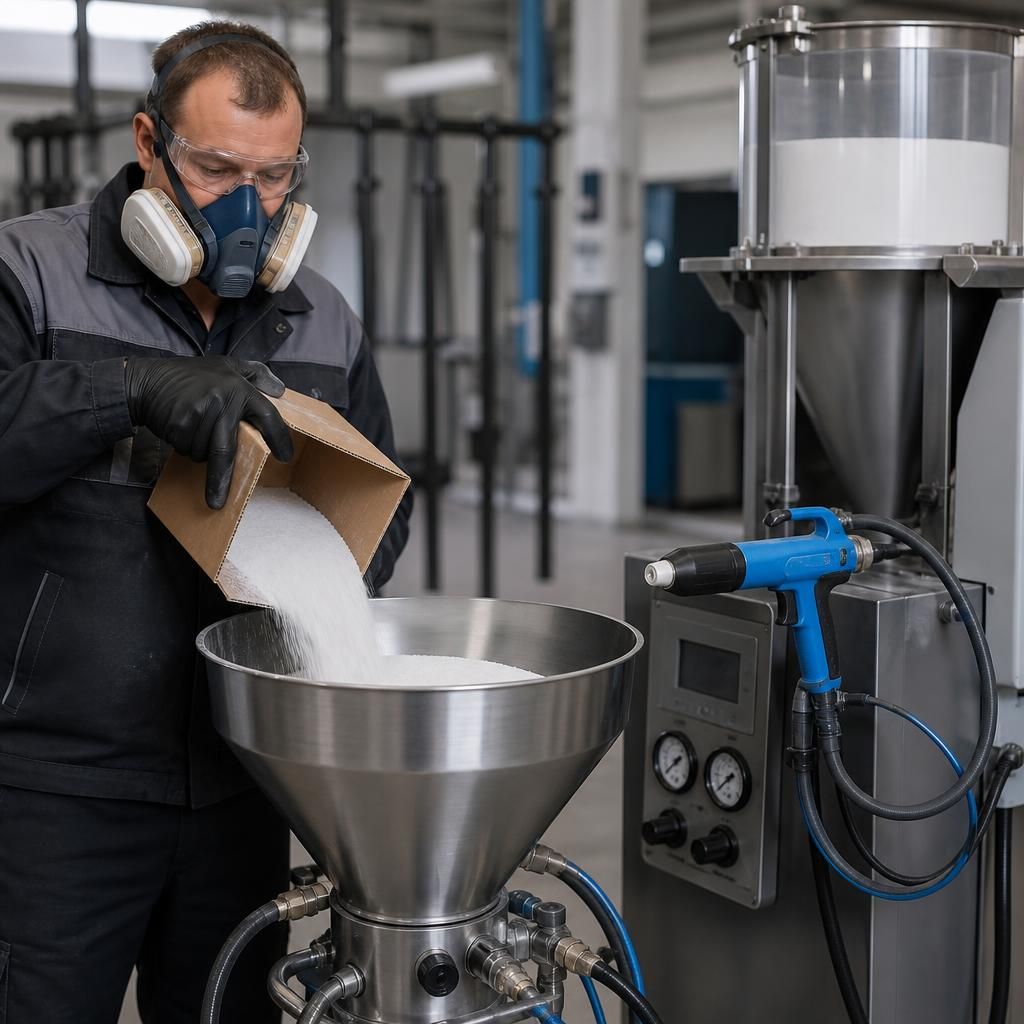
A fluidising hopper can improve a small powder coating machine’s batch performance by keeping powder in a suitable condition for consistent feeding. Gentle airflow helps loosen settled powder so it can move steadily towards the spray gun, reducing interruptions caused by compaction or uneven feed.
This is particularly useful when batches are processed intermittently or when the machine is used with different powder types. The hopper should be filled appropriately, kept clean between material changes and adjusted in line with the powder and equipment instructions. A stable feed gives the operator finer control over application, helping maintain a more even finish without repeatedly correcting the gun during a batch.