

What maintenance is required for a fluidising hopper to ensure consistent performance?
Consistent fluidising hopper performance requires scheduled cleaning, inspection of the fluidising membrane and seals, and checks on the compressed-air supply, valves and connections. Remove compacted or contaminated powder, identify wear or blockage promptly, and record maintenance findings so changes in powder flow can be traced to equipment condition.
Effective fluidising hopper maintenance combines planned mechanical inspection, safe powder changeover, control-system checks and condition-based servicing. The aim is to preserve the hopper’s internal condition and operating settings so powder remains evenly available to the coating equipment throughout a production run.
Set the maintenance frequency according to powder type, throughput, operating environment and the hopper manufacturer’s instructions. A hopper used for frequent colour changes may need attention more often than one dedicated to a single powder. Powders with a tendency to absorb moisture require particular care because damp material can alter flow behaviour and increase the risk of build-up. Nylon powders and some protective coating materials should be handled in accordance with their technical and safety data.
- Inspect the hopper body, lid, outlet and support structure for dents, distortion, corrosion, damaged welds or loose fasteners.
- Check that access covers, clamps and inspection points close correctly and do not allow powder to escape.
- Examine the internal finish for scratches, flaking or residue that could introduce contamination during a colour or material change.
- Confirm that earth bonding is intact between the hopper and the wider powder-coating equipment, particularly after modifications or repairs.
- Inspect level sensors, probes, weighing equipment and control interfaces for powder accumulation, damage or incorrect positioning.
Controls and instrumentation should be function-tested as part of planned servicing rather than only when a fault appears. Verify that level indications correspond with the actual powder quantity, that alarms operate correctly and that any interlocks prevent unsuitable operation. Where the hopper is connected to automatic conveying or dosing equipment, check that signals are being received and acted on correctly.
Powder changeover is a significant maintenance task. Empty the hopper using the approved procedure, then clean all product-contact areas without using tools or materials that could damage the internal surfaces. Pay attention to corners, outlet areas and joints where a small quantity of residual powder can contaminate the next batch. Before refilling, make sure the hopper is completely dry and that cleaning materials have not left fibres, oil or other residues.
Keep the hopper environment controlled as well. Store powder in suitable sealed packaging, protect it from moisture and avoid leaving unused material in the hopper longer than the process requires. Do not mix recovered powder with fresh powder unless the coating process and material supplier’s guidance permit it. Segregate powders during changeovers so that incompatible materials or colours are not introduced into the working supply.
Maintenance findings should be assessed against the hopper’s normal operating condition. A gradual change in powder level behaviour, feed response, sensor readings or surface condition can indicate deterioration before it causes a visible coating defect. Investigate repeated deviations rather than repeatedly adjusting operating settings, as excessive adjustment can hide an underlying mechanical or control problem.
All work should be carried out with the equipment isolated from electrical and pneumatic energy, and with the hopper depressurised where applicable. Use suitable personal protective equipment and follow the powder’s safety data sheet, especially when removing residues or working inside access areas. Any damaged structural component, faulty instrument or unsafe electrical connection should be repaired by a competent person before the hopper is returned to production.
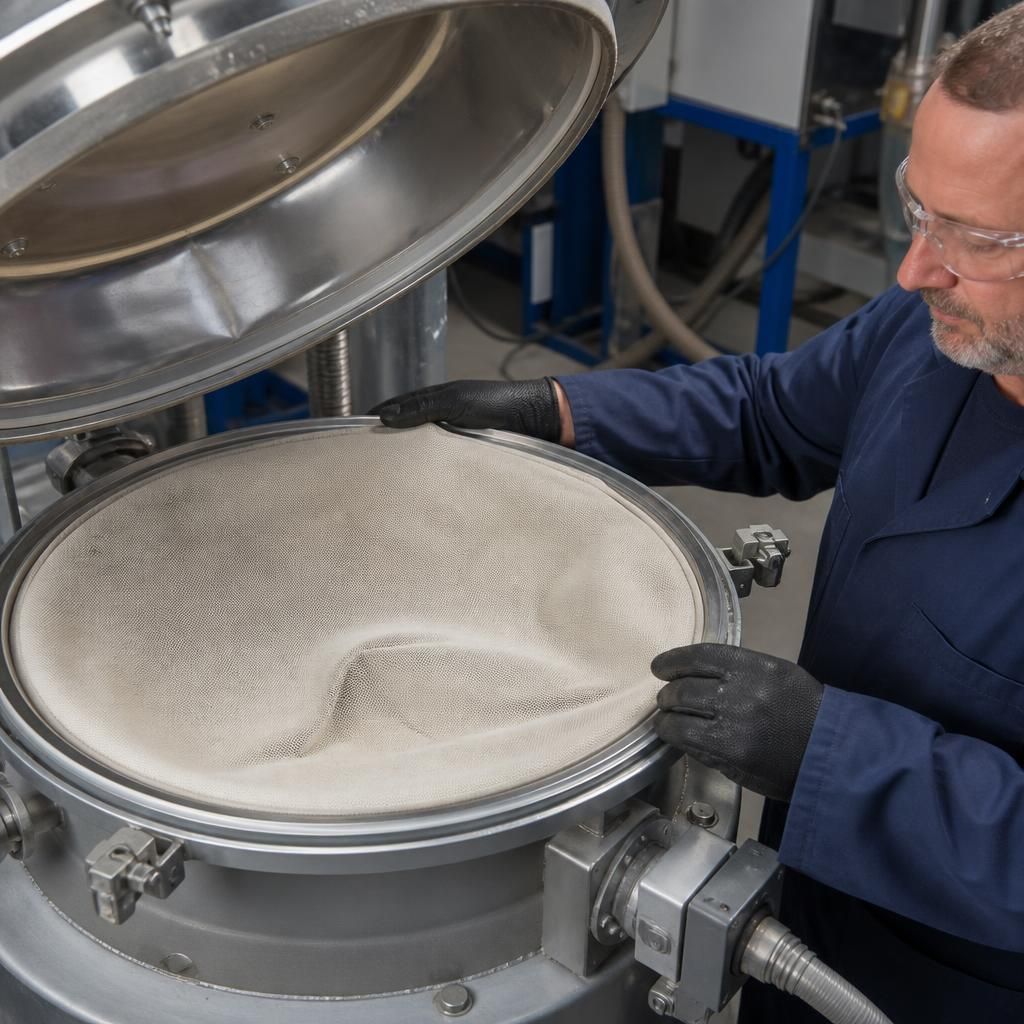
The fluidising membrane is central to consistent powder movement and should be maintained as a controlled wear component. Inspect it for hardening, tears, pinholes, distortion or areas where powder has become embedded. A membrane that has lost its permeability can create uneven aeration, causing stagnant zones, surging flow or inconsistent feed to the coating equipment.
Clean the membrane using the method approved for its material and construction. Avoid sharp tools, aggressive scraping and excessive pressure, as these can damage the surface or alter the pore structure. If cleaning does not restore even airflow, or if physical damage is present, replace the membrane rather than compensating by changing air settings. After refitting, check that it is seated evenly and that no powder can bypass its intended air path.