

What factors should be considered when integrating a fluidising hopper into an existing powder coating system?
Integrating a fluidising hopper into an existing powder coating system requires checking powder compatibility, hopper capacity, airflow and fluidising performance, along with connections to the powder feed and recovery equipment. Also assess available space, extraction, electrical and pneumatic requirements, control-system compatibility and cleaning access so the hopper operates consistently without disrupting the wider coating line.
Integrating a fluidising hopper successfully depends on more than connecting it to the existing powder coating line. The installation must fit the production method, powder-handling controls, safety arrangements and quality procedures already in place, while allowing the line to be commissioned without introducing contamination or unstable powder delivery.
Assess the powder and application process together. A hopper may behave differently with virgin powder, reclaimed powder or a blend of both. Particle size distribution, moisture sensitivity, storage conditions and the powder’s tendency to compact or agglomerate can affect how consistently it moves through the system. The proposed hopper should therefore be assessed using the powders and blend ratios that the line actually processes, rather than relying only on general equipment specifications.
Consider where the hopper sits within the complete powder route. The transfer path should avoid unnecessary changes in direction, dead areas and points where powder can settle. Connections should also support the required transfer method without creating excessive mechanical strain on hoses, pipes or surrounding equipment. If the hopper is mounted close to vibrating machinery, the effect of vibration on powder movement and connection integrity should be reviewed before installation.
Plan for segregation and colour changeovers. Residual powder from a previous job can affect the appearance and performance of the next coating, particularly when changing between contrasting colours, finishes or coating chemistries. Integration planning should identify which surfaces require access for inspection, which components need to be removable and how powder will be isolated during a changeover. Where a line handles nylon, protective coatings or other specialist powders, the cleaning and segregation procedure should reflect the characteristics of those materials.
Check structural and mechanical requirements. The supporting frame or platform must be suitable for the installed equipment and its operating load, including the weight of powder in the vessel and any movement transmitted through connected equipment. The installation should not place strain on the hopper, support structure or pipework. Allowance may also be needed for safe access to valves, inspection points and service components without requiring unnecessary dismantling of the coating line.
Include grounding and safety controls in the design review. Powder coating systems handle fine combustible dust, so the hopper and associated metalwork should be incorporated into the site’s grounding and dust-control arrangements. A competent person should review bonding, static control, guarding, isolation procedures and the relationship between the hopper and existing extraction or powder-handling equipment. The assessment should be specific to the site and equipment rather than treated as a generic installation step.
Decide how the hopper will be introduced into production. A staged installation can reduce disruption where the existing line must continue operating. Before physical work begins, record connection points, powder routes, isolation requirements and any changes to operating procedures. The installer and production team should agree how the old arrangement will be disconnected, how the new equipment will be tested and what conditions must be met before normal coating resumes.
Commissioning should examine the complete operating cycle rather than checking only whether the hopper starts. Useful checks include:
- stable powder movement during the intended production cycle;
- consistent supply to the application equipment at different operating conditions;
- absence of leaks, powder accumulation or abnormal vibration;
- correct operation of isolation devices and safety features;
- acceptable coating results on representative components; and
- repeatable performance after stopping, restarting and changing powder.
The coating results should be assessed against the process requirements, including finish consistency, coverage and the absence of defects associated with interrupted or uneven powder delivery. If reclaimed powder is used, its return route and proportion in the working mix should be included in the validation rather than tested separately from normal production practice.
Document the completed integration. Updated equipment drawings, connection information, operating instructions, cleaning methods, inspection points and fault-reporting procedures help operators use the hopper consistently. Staff should understand how powder condition, filling practice and changeovers affect performance, and which signs require the process to be stopped for investigation. This documentation is particularly important when the hopper is added to a line with several existing modifications.
For a specialist or high-volume coating operation, the most reliable approach is to review the hopper as one part of the entire powder-handling and application system. A site assessment, representative powder trial and structured commissioning check can identify integration issues before they affect production, while also showing whether the proposed arrangement is suitable for the range of metal components and coatings being processed.
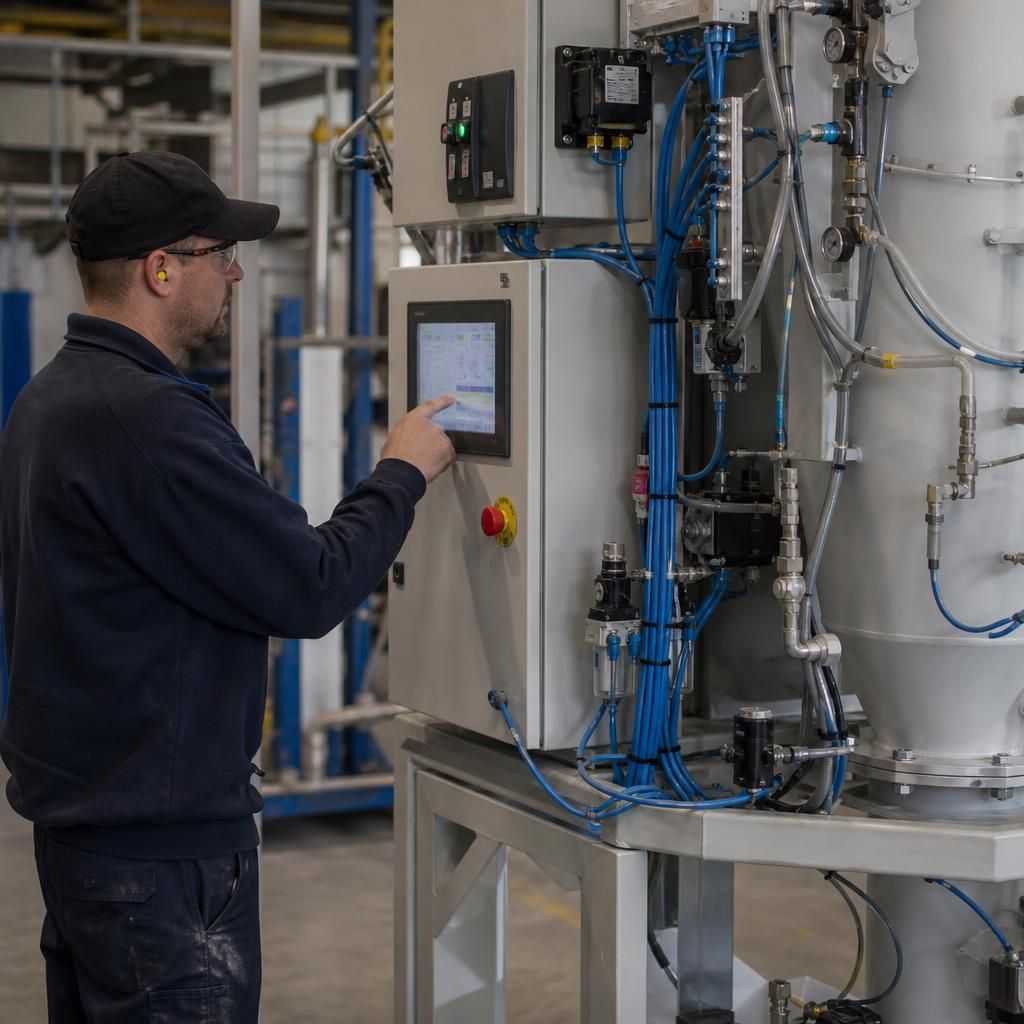
Control integration should define how the fluidising hopper communicates with the existing powder coating system. Map the required signals for powder level, air supply, feed demand, equipment status and faults before installation, then confirm how each signal affects the pump, spray equipment and line controls.
Interlocks should prevent powder transfer when the hopper is not ready or when a connected component is isolated. Consider what happens during a low-level condition, loss of compressed air, extraction failure or an emergency stop, including whether the system stops safely and how operators are notified. Sensor positions and calibration should also be checked against the actual powder type, as powder movement and surface level can vary during fluidisation.
Discuss Your Fluidising Hopper Integration Requirements
Discuss your fluidising hopper integration requirements with Powder-coatings.co.uk to review the proposed arrangement against your powder types, existing equipment and production process. Share your system details to identify the information needed for a suitable integration plan.