

How can I troubleshoot common issues in fluidising hoppers during the powder coating process?
Troubleshoot a fluidising hopper by checking the powder condition, air supply, fluidising plate and material flow in that order. Uneven fluidisation, poor powder flow or inconsistent coating usually indicates moisture or contamination, incorrect air pressure, a blocked or damaged plate, or powder that is unsuitable for the hopper settings.
Troubleshooting a fluidising hopper is a process of separating powder, equipment and application faults rather than changing several settings at once. Begin by identifying the exact symptom, record the hopper’s current condition and settings, then make one controlled adjustment before checking whether the powder feed has stabilised.
Start with safe isolation and a clear baseline. Stop powder feed and follow the equipment manufacturer’s isolation procedure before opening the hopper or removing any components. Release stored air pressure, wear the appropriate protective equipment and refer to the powder’s safety data sheet. Record the powder type, batch or reclaim content, fill level, recent cleaning work and any changes to the spray equipment. This information helps distinguish a developing hopper fault from a powder or process change.
If the powder feed surges or stops intermittently, check whether the problem is continuous or follows a repeating cycle. A rhythmic feed can indicate bridging, compacted powder or an uneven powder bed. An irregular feed may point to a restriction in the pickup tube, hose or venting route. Inspect connections for loose fittings, sharp bends and powder accumulation, and confirm that the pickup tube remains correctly positioned as the powder level changes. Do not compensate for an unstable feed by making large changes elsewhere in the coating system, as this can hide the original fault.
If powder appears to boil, spit or escape from the hopper, reduce the process to a stable, controlled condition and check the fill level. An overfilled hopper can restrict the powder bed’s movement, while a very low level can make pickup inconsistent. Look for powder escaping through the lid seal, inspection cover or hose connection. Fine powder around a joint may indicate a damaged seal or poor fit rather than a fluidisation fault. Replace worn seals and clean mating surfaces before reassembling the hopper.
If the powder forms lumps or a hard surface, remove the affected material and inspect it for moisture, cured particles, foreign matter or signs of prolonged storage. Lumps can obstruct the pickup route and may damage the finish even if the hopper appears to be operating correctly. Sieve or dispose of powder only in accordance with the powder supplier’s guidance. Avoid returning contaminated material to a clean hopper, and keep opened powder containers sealed when they are not being used.
If the hopper works with one powder but not another, compare the materials rather than assuming the equipment has failed. Particle size distribution, density, shape, surface treatment and the proportion of reclaimed powder all influence how a powder bed behaves. Nylon and other specialist powders may require different handling from a standard thermoset powder. Review the powder supplier’s recommendations and establish suitable operating settings for each material. Do not mix different powder types or colours unless the process has been specifically designed and approved for that use.
Check whether the fault is actually downstream of the hopper. A steady powder bed does not rule out restrictions in the pickup tube, conveying hose, injector or spray gun. Conversely, a poor coating may result from gun voltage, atomising conditions, part grounding, film thickness or curing rather than powder delivery. Compare the hopper’s behaviour with the powder flow at the gun, using a controlled collection test where the equipment manufacturer permits it. If the hopper feeds consistently but the gun output fluctuates, investigate the conveying and application equipment separately.
Inspect the fluidising assembly after cleaning or a prolonged fault. Check that the fluidising plate is seated correctly, that seals have not been displaced and that no powder has entered areas intended to remain clean. Look for warping, tears, blocked pores or damage caused by scraping. Use only the cleaning method recommended for the plate; aggressive brushing, sharp tools or unsuitable solvents can alter its surface and reduce even air distribution. Any damaged or contaminated component should be replaced rather than forced back into service.
Use a controlled restart. After cleaning or adjustment, refill with suitable powder, start the system gradually and allow the powder bed to settle before assessing the feed. Observe the powder surface, pickup consistency and spray output together. Change only one variable at a time and record the result. If the fault returns, the recorded sequence can show whether it follows a particular powder, fill level, cleaning cycle or equipment setting.
Persistent faults require technical investigation rather than repeated adjustment. Stop using the hopper if it leaks, will not hold pressure, shows electrical or mechanical damage, or produces unexplained contamination. The equipment manufacturer or a suitably competent powder-coating engineer can then check the regulator, valves, seals, plate, conveying route and control system as a complete assembly.
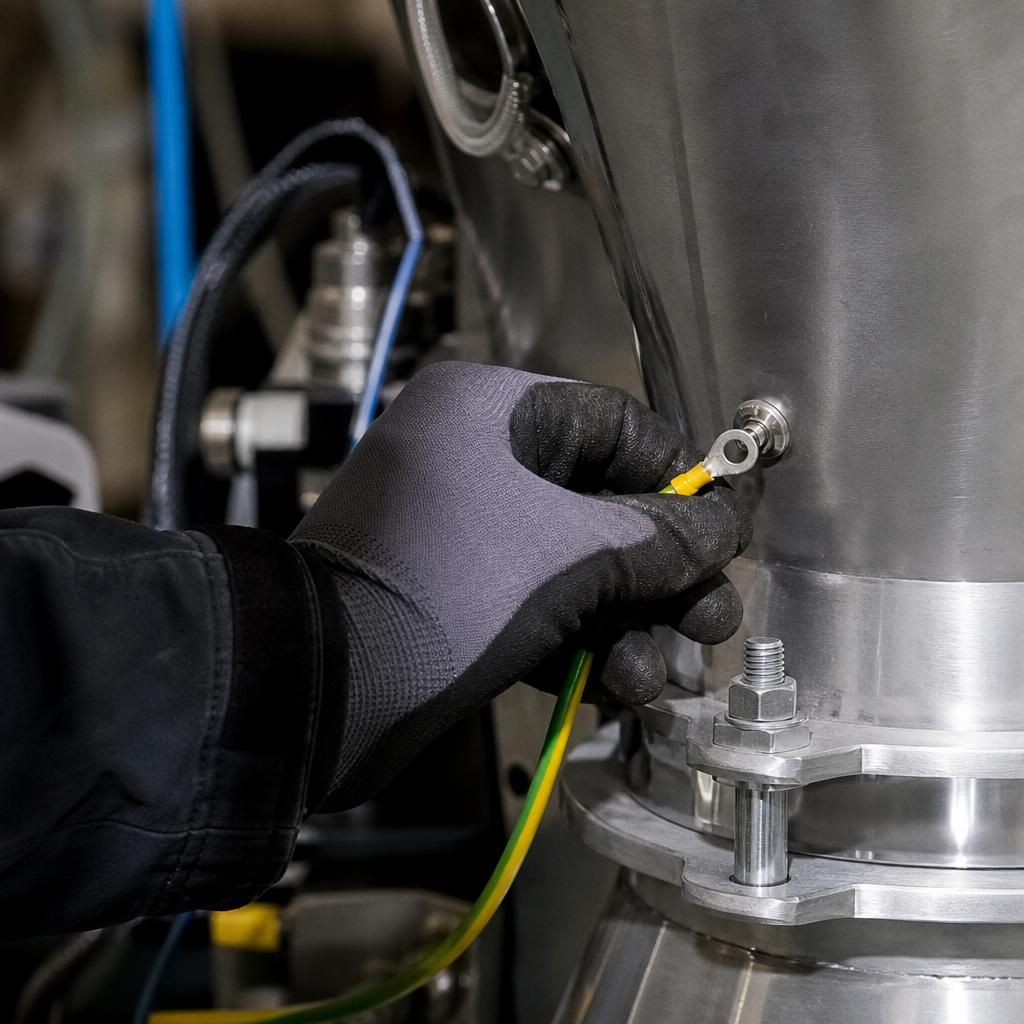
Static charge can make powder cling to the hopper walls, pickup tube or inspection surfaces, creating erratic flow even when the fluidising plate is clean. This is more likely with fine or specialist powders. After safely isolating the equipment, check that the hopper and other conductive components are correctly earthed, that contact points are clean and that no coating or powder build-up is interrupting continuity. Do not bypass protective controls; follow the equipment manufacturer’s procedure for testing earthing.
Static-related cling usually leaves a visible coating on surfaces that should remain relatively clear, whereas a blocked pickup route tends to restrict flow at a specific connection or tube. Recording where powder accumulates helps distinguish an earthing issue from bridging, contamination or a mechanical obstruction.
Need expert advice on your fluidising hopper?
If troubleshooting has not identified the cause, speak to Powder-coatings.co.uk for practical guidance on fluidising hopper faults within your powder coating process. Share the powder type, symptoms and recorded settings so the issue can be assessed more accurately.