

What should be considered when selecting an epoxy primer for different types of metal surfaces?
Selecting an epoxy primer depends on the metal substrate, its surface condition, the level of corrosion protection required and compatibility with the intended powder coating. Consider the primer’s adhesion, application and curing requirements, as well as the component’s service environment, before choosing a formulation for steel, aluminium, stainless steel or other metals.
The correct epoxy primer is selected by matching its chemistry and preparation requirements to the metal substrate, the intended powder topcoat and the component’s service conditions. A formulation suitable for carbon steel may not be the best choice for aluminium, stainless steel, galvanised steel or cast metal, because each surface presents different adhesion, contamination and corrosion-control challenges.
Start with the substrate. Identify the exact metal or alloy, including whether it has been welded, machined, galvanised, previously coated or repaired. Carbon and mild steel commonly require a primer that provides a reliable barrier against corrosion after rust, mill scale and other contaminants have been removed. Aluminium has a naturally occurring oxide layer that can interfere with bonding if it is not properly treated. Stainless steel is also protected by a passive oxide film, so the preparation and primer system must be suitable for that relatively non-reactive surface. Zinc-coated steel requires particular care because aggressive preparation can damage the zinc layer, while inadequate preparation can leave oils or passivation residues that affect coating performance.
Consider the condition of the metal before choosing the product. New steel may carry mill oil, fabrication residues or storage corrosion. Fabricated components can contain weld spatter, heat tint, sharp edges and ground areas with differing surface textures. Aluminium may have oxidation or embedded machining lubricant, and castings can retain mould-release materials or porous contaminants. The primer should be selected alongside a preparation method that removes these residues without creating excessive roughness, distortion or damage to the substrate.
Surface preparation is not interchangeable between metals. Degreasing is generally needed to remove oils and handling contamination, but it is only one part of the process. Mechanical preparation, abrasive cleaning or a suitable chemical pretreatment may also be required, depending on the metal and the coating specification. On stainless steel and aluminium, the method must produce a clean, suitably receptive surface without introducing iron contamination or unnecessarily damaging the substrate. On galvanised material, preparation should preserve the protective zinc coating wherever it remains part of the corrosion-control system.
Check the primer’s substrate approval and technical data. The product information should state which metals it is designed for, what preparation standard it requires, its recommended dry film thickness, recoat limits and curing conditions. Do not assume that a general-purpose epoxy primer is appropriate for every alloy. Some products are formulated for ferrous metals, whereas others are designed for non-ferrous substrates or have been tested as part of a specific multi-coat system. Where the substrate is unusual, mixed or difficult to identify, written confirmation from the coating manufacturer or a controlled trial is preferable to relying on a generic description.
Assess compatibility with the powder topcoat. The primer and powder finish form a system, not two independent coatings. They must be compatible in terms of chemistry, melt behaviour, curing temperature and overcoat interval. The primer must either retain enough surface receptiveness for the powder to bond or be applied within the specified window for recoating. If it is over-cured, contaminated or left outside the recommended interval, the final powder layer may not achieve the intended intercoat bond. The technical data for both products should therefore be reviewed together, particularly where a specialist powder, textured finish or unusual curing schedule is involved.
The component’s design also affects selection. Deep recesses, folded sections, perforations and closely positioned joints can restrict cleaning and powder coverage. Sharp external edges may receive less consistent film build, while internal corners can collect excess coating. A primer system should be capable of producing an even, controlled layer on the actual geometry rather than only on a flat test panel. Welded assemblies may need additional attention around heat-affected areas, weld seams and ground repairs.
Match the system to the exposure. The required level of protection depends on whether the finished component will remain indoors, be exposed to rain and condensation, encounter road salt or industrial pollutants, or come into contact with chemicals, moisture or abrasion. Epoxy primers are valued for barrier protection, but the complete system must be specified for the exposure rather than judged by the primer alone. In exterior applications, the powder topcoat normally provides the weathering and colour-retention properties, while the primer supports protection beneath it. The topcoat must therefore be suitable for the same environment and fully cover the primer.
For stainless steel and aluminium, corrosion protection may involve maintaining the substrate’s existing resistance as well as adding a coating barrier. For steel, preventing underfilm corrosion at scratches, edges and damaged areas may be the greater concern. For galvanised steel, the choice may depend on whether the zinc layer is intended to remain exposed beneath the coating system. These differences can affect whether a conventional epoxy, a substrate-specific epoxy or another primer technology is appropriate.
Look at curing and production requirements. The selected primer must cure correctly on the component at the available metal temperature, not merely at the oven air temperature. Large or heavy parts may heat more slowly than small sections, and mixed batches may contain components with different thermal masses. The process should allow sufficient time for the primer to form a stable film before the powder topcoat is applied. Excessive heat, insufficient cure or contamination between stages can all undermine the intended system performance.
Before processing a valuable or complex batch, a representative test piece can help confirm preparation, coverage, appearance, intercoat adhesion and cure compatibility. Testing should use the same substrate, pretreatment, primer, powder and curing cycle proposed for production. This is particularly useful when combining different metals in one assembly or coating a surface with a previous treatment whose composition is uncertain.
In practice, the best choice is the epoxy primer supported by documented suitability for the specific metal, a realistic preparation method, compatibility with the chosen powder and a curing process that can be controlled consistently. Comparing those factors before production is more reliable than selecting a primer solely by its general corrosion-resistance description.
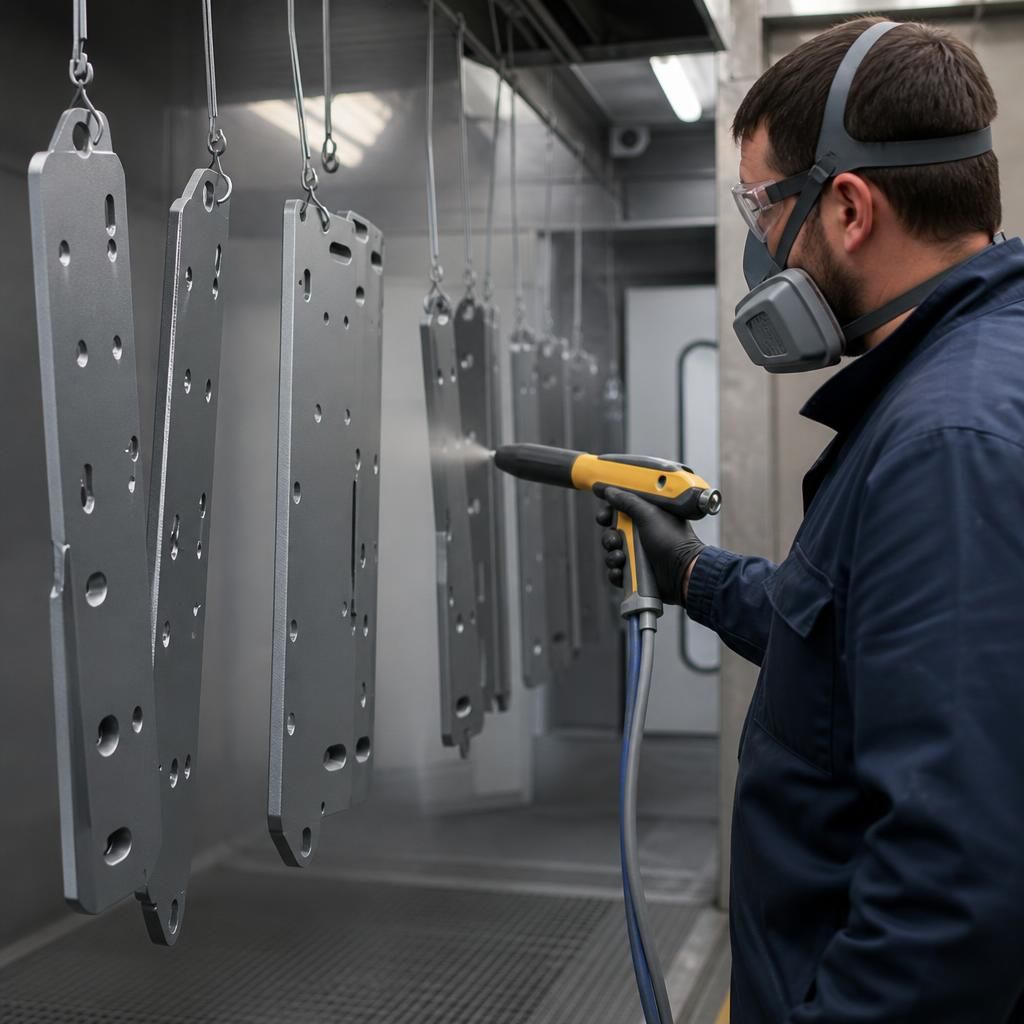
The application method is an important selection factor because liquid and powder epoxy primers place different demands on the coating process. A liquid primer may require controlled mixing, thinning, flash-off and handling before the powder topcoat is applied, while a powder primer must be suitable for electrostatic application, recovery arrangements and the intended curing sequence. The chosen product should therefore match the available equipment and process controls, not just the metal substrate.
Also consider how the primer will be handled between application stages. Components may need protection from dust, moisture, fingerprints and impact before the topcoat is applied. The product data should define any limits for overcoating, storage and rework, so the primer remains suitable when production involves separate preparation and finishing operations. A primer that fits the application method and workflow is more likely to produce consistent results across different component shapes and metal types.
Discuss Selecting the Right Epoxy Primer
Discuss the metal substrate, intended exposure and powder coating specification with a coating specialist before selecting an epoxy primer. A review of the component and proposed process can help identify a suitable primer system and any preparation or compatibility checks required.