

What precautions should be taken during the application of epoxy primer to ensure optimal results?
For optimal results, apply epoxy primer only to clean, dry, correctly prepared metal, following the product’s mixing, application and recoat instructions. Control contamination, coating thickness, temperature and humidity, and allow the primer to cure fully before applying the powder coat.
The main precautions when applying epoxy primer are to confirm that the primer is compatible with the complete coating system, control the application environment and equipment, protect areas that must remain uncoated, and verify the finished primer before the powder coat is applied. These controls reduce defects such as poor adhesion, pinholing, uneven coverage, overspray on mating surfaces and premature coating failure.
Confirm the coating system before starting
- Check that the epoxy primer is intended for use beneath the selected powder coating and is suitable for the metal substrate and service conditions.
- Review the technical data sheet and safety data sheet for application limits, equipment requirements, recoat conditions, curing requirements and handling precautions.
- Confirm that the primer and powder topcoat are within their stated shelf life and have been stored as instructed. Material that has thickened, separated, absorbed moisture or developed lumps should not be used without approval from the manufacturer.
- Where the coating specification is critical, carry out a trial panel or test component first. This can reveal incompatibility, colour or gloss changes, adhesion problems and curing issues before production parts are processed.
Prepare the work area and equipment safely
Application should take place in a designated, well-controlled area with suitable ventilation and appropriate separation from ignition sources. Operators should use the personal protective equipment specified by the safety data sheet, which may include protective clothing, gloves, eye protection and suitable respiratory protection. Ventilation should control vapour and airborne particles without creating turbulence that disturbs the wet film or draws dust across the component.
Spray equipment, hoses, extraction systems and the workpiece should be correctly earthed where electrostatic equipment is used. Inspect guns, leads, fluid lines and connections before use, and keep the equipment clean and in good condition. Remove accumulated overspray from the work area and equipment using approved methods; dry powder and solvent residues should never be allowed to build up around electrical equipment or other possible ignition sources.
Control masking and component handling
Mask threads, bores, bearing seats, electrical contact points, machined faces, drain holes and other areas that must remain free from coating. Use masking materials that can tolerate the relevant application and curing conditions. Poorly secured masking can allow primer beneath the mask, while unsuitable tape or plugs can leave residue or become difficult to remove.
Use clean gloves when handling prepared components, and support parts so that fingers, hooks and racks do not damage the applied primer. Plan the hanging position before spraying so that all required faces are accessible and the component does not need to be touched while the coating is still vulnerable. Avoid placing coated parts on contaminated or abrasive surfaces.
Apply the primer consistently
Use a controlled spray technique and maintain a consistent gun position, movement and overlap. Pay particular attention to corners, recesses, inside faces and complex joints, where electrostatic effects can reduce deposition. Excessive coating in corners can cause runs, solvent retention or cracking, while insufficient coverage can leave weak points exposed beneath the topcoat.
Do not try to correct a run, dry spray area or other defect by repeatedly adding material without checking the product instructions. Depending on the system, the affected area may need controlled removal and reapplication. Unauthorised thinning, mixing of different batches or adding solvents outside the specified procedure can alter flow, curing and adhesion.
Keep containers covered when they are not being used, and prevent dust, fibres, water and other foreign matter from entering the primer. If a two-component product is involved, use the stated mixing equipment and induction procedure, and do not return mixed material to the original container unless the product instructions specifically permit it.
Allow the primer to stabilise before further processing
Protect the coated component from contact, vibration, moisture and airborne debris while the primer develops its required properties. Observe the specified recoat window rather than relying only on whether the surface feels dry. A primer can appear dry while remaining chemically unsuitable for the next layer, whereas waiting beyond the permitted interval may require additional preparation for intercoat adhesion.
Before powder coating, inspect the primer under suitable lighting for runs, craters, pinholes, bare areas, excessive texture, trapped debris and damage from handling. Check masked areas and coating edges carefully. Where the specification requires it, verify film build, adhesion or cure using an agreed test method on a representative area or test panel. Any repair should be compatible with the original system and brought within the stated application limits.
Finally, retain the product and process records needed for traceability, including material identification, preparation details, application conditions, equipment settings and inspection results. This makes it easier to identify the cause of defects and maintain consistency across batches.
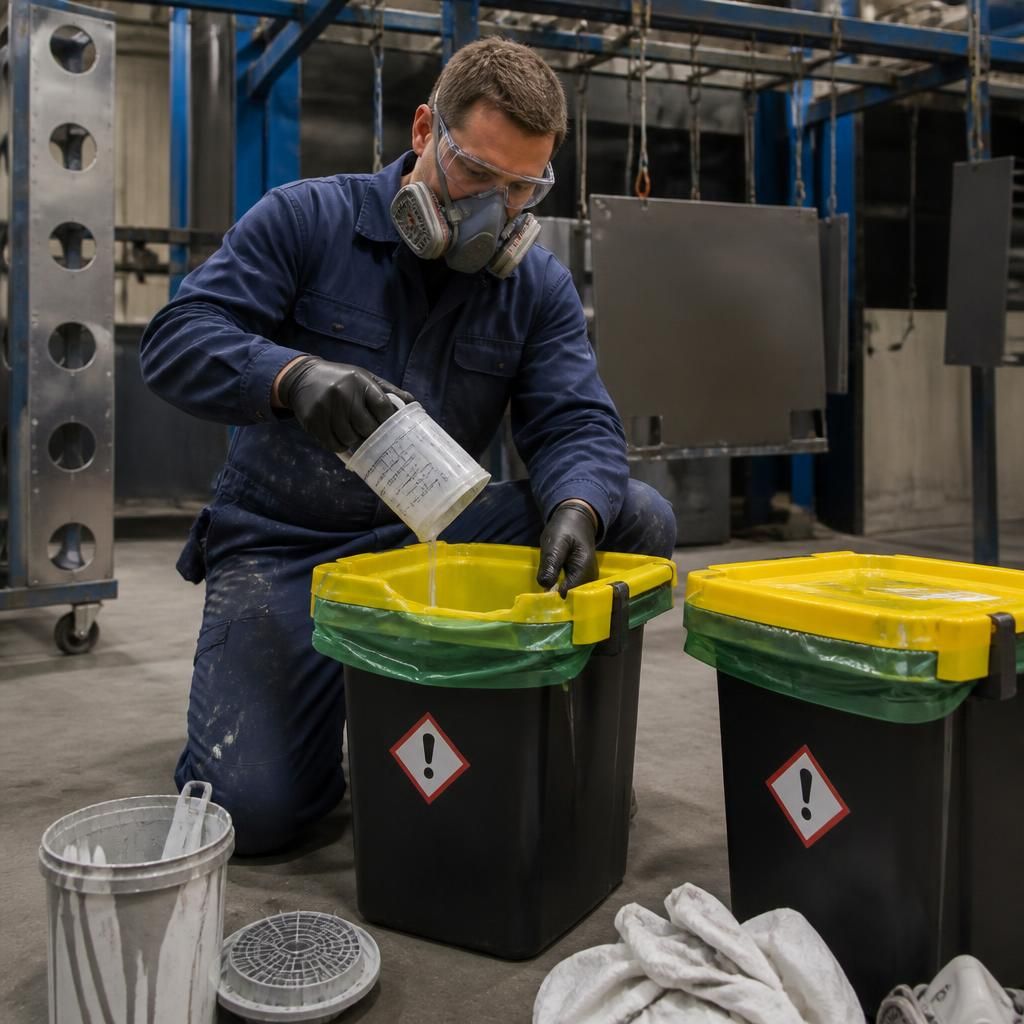
Manage epoxy primer waste as carefully as the coating itself. Keep unused mixed material, contaminated wipes, filters and disposable protective equipment in suitable closed containers, and prevent uncured resin, solvent or cleaning residues from entering drains or soil. Do not leave mixed primer in spray equipment beyond its permitted working time, as it can cure inside fluid lines and create both equipment damage and disposal problems.
Use the product safety data sheet and local waste requirements to determine how residues should be labelled, stored and disposed of. Any spill should be contained promptly with compatible absorbent material, rather than spread across the work area or washed away. Good waste control reduces exposure risks and helps prevent contamination of components, equipment and the surrounding application area.