

What environmental considerations should be taken into account when selecting thermoplastic powder coating for industrial applications?
When selecting thermoplastic powder coating for industrial applications, assess its material composition, application emissions, potential for overspray recovery, waste handling requirements, service life and end-of-life options. The coating should also be compatible with relevant environmental regulations and the operating conditions of the metal component, so durability does not come at the expense of avoidable replacement or waste.
Environmental selection of thermoplastic powder coating means assessing the complete coating system—from surface preparation and heating through to transport and component use—rather than judging the powder alone. The most suitable option is the one that meets the required technical specification while using appropriate energy, water, chemicals and auxiliary materials throughout the process.
Assess the energy needed for application. Thermoplastic powders are normally heated until they melt and form a continuous layer. The energy demand therefore depends on factors such as the coating method, melting range, oven design, part mass, component geometry and batch loading. When comparing products or processes, ask for the relevant processing temperature range and consider whether the equipment can heat the component efficiently without unnecessarily heating empty oven space or surrounding areas.
Energy assessment should include the whole line, not just the oven. Preheating, extraction, compressed air, fluidised-bed equipment and cooling can all contribute to the environmental impact. Efficient racking and suitable batch planning may reduce repeated heating of fixtures and improve the use of each production cycle. For a meaningful comparison, assess energy per coated component or per batch rather than relying only on a product description.
Examine surface preparation separately. The environmental profile of a coating can be affected significantly by the treatment needed before application. Degreasing, blasting, chemical conversion coatings and rinsing may involve water, detergents, abrasives or treatment chemicals. A powder that appears environmentally preferable may require a more resource-intensive preparation route for a particular substrate or contamination level.
Ask how the proposed preparation process will manage rinse water, spent chemicals, sludge, used abrasive and contaminated residues. Mechanical preparation can avoid some wet-process waste, although it creates its own material-handling requirements. The appropriate choice depends on the metal, the required adhesion and corrosion performance, the existing equipment and the organisation’s waste controls.
Consider the substrate and component design. Coating a component that is difficult to drain, clean, heat or ground can increase preparation effort and cause rejects. Hollow sections, enclosed areas and complex assemblies may require design features that allow cleaning fluids to escape and enable consistent heating. These considerations reduce the risk of rework and help prevent materials and energy being spent on parts that do not meet specification.
Environmental selection can therefore begin before the coating is chosen. Designers and fabricators should review whether the component can be coated without excessive masking, fixturing or handling. The aim is not simply to select a powder with favourable environmental characteristics, but to specify a practical system that can be applied consistently to the finished part.
Review the electricity source and carbon-accounting method. Energy-related impacts will vary according to the equipment’s efficiency and the electricity or fuel used at the coating facility. Where environmental reporting is important, establish which stages are included in the assessment and whether the figures cover preparation, application, curing or melting, cooling, packaging and transport. Comparisons are only useful when products and processes are assessed on a consistent basis.
Supplier environmental data should be treated as process-specific evidence rather than a universal claim. Useful information may include product environmental declarations, safety data, manufacturing information and details of recommended processing conditions. If formal carbon or lifecycle reporting is required, confirm the system boundary, assumptions and data date before using the information in procurement or sustainability reporting.
Include packaging and logistics. Powder, masking materials, hooks, liners, protective wrapping and pallets all form part of the operational footprint. Check whether packaging can be reduced, reused or segregated for recycling, and whether the packaging is suitable for preventing contamination without creating unnecessary mixed waste.
Transport should also be considered across the intended supply chain. Relevant factors include the distance travelled by raw materials and finished components, delivery frequency, load utilisation and whether parts need to make additional journeys between preparation, coating and assembly locations. For businesses across the Midlands and surrounding areas, collection and delivery arrangements can be included in this assessment, but they should be evaluated alongside load planning and the number of handling stages rather than in isolation.
Check chemical and regulatory information before approval. Request current technical and safety documentation for the powder, pretreatment products and cleaning agents used in the process. Review the presence of substances subject to restrictions, any handling controls, and the obligations that apply to storage, use and disposal in the relevant jurisdiction. UK REACH and other applicable requirements may affect material selection, particularly where a coating is used on equipment with specific regulatory or customer requirements.
Environmental due diligence should also cover the coating contractor’s controls for segregating waste, managing spills, maintaining extraction and recording material use. These operational controls do not replace product assessment, but they determine how closely the real process reflects the environmental assumptions made during specification.
Use a documented selection checklist. Before approval, compare candidate systems against:
- processing temperature and total energy demand;
- water, chemicals and abrasives required for surface preparation;
- component design, masking, fixturing and likely rework risks;
- packaging, transport and handling requirements;
- available environmental and safety documentation;
- site controls for storage, waste segregation and spill prevention; and
- the data boundaries used for any lifecycle or carbon comparison.
This approach produces a more reliable environmental assessment than selecting a thermoplastic powder on a single attribute. It also helps the specification align with the actual substrate, coating line and reporting requirements of the industrial application.
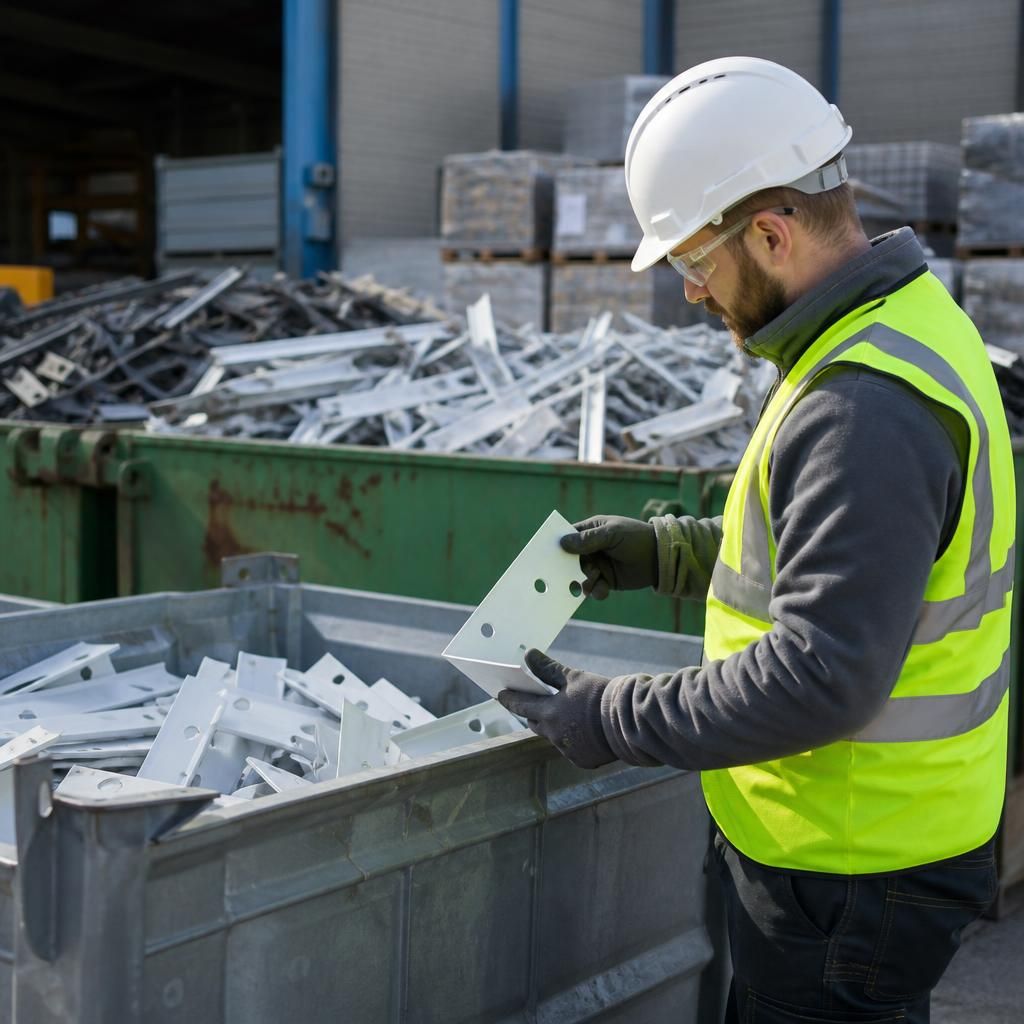
End-of-life planning is an important environmental consideration when selecting thermoplastic powder coating. Confirm whether the coated component can enter the intended metal recycling route, whether the coating must be removed first, and how the selected polymer behaves during any approved stripping or recovery process.
Thermoplastic coatings are not chemically cross-linked in the same way as thermoset coatings, but this does not mean they can always be removed or recycled without preparation. The result depends on the formulation, coating thickness, substrate, adhesion and recycling facility’s acceptance criteria. Request technical guidance on separation, rework and disposal rather than assuming that all thermoplastic systems have the same end-of-life profile.
For components likely to be refurbished, repaired or redeployed, also check whether the coating can be locally repaired or reapplied without creating incompatible layers. Clear identification of the coating material and any stripping restrictions helps future operators avoid unnecessary disposal and supports more controlled material recovery.