

What types of pre-treatment are most effective for different metal surfaces before powder coating?
The most effective pre-treatment depends on the metal: steel commonly requires degreasing followed by abrasive blasting or iron/zinc phosphating, while aluminium benefits from cleaning, deoxidising and a suitable conversion coating. Galvanised steel and other zinc-coated surfaces generally need contaminant removal, controlled abrasion and a compatible conversion treatment to promote powder adhesion without damaging the substrate.
The most effective pre-treatment is the one matched to the metal’s chemistry, surface condition and intended service environment. Preparation must remove contaminants, deal with oxides or corrosion, create a chemically compatible surface and avoid damaging the substrate. A treatment that is suitable for carbon steel may be unsuitable for aluminium, zinc, stainless steel or copper alloys.
Carbon and mild steel generally tolerate a more intensive preparation regime than non-ferrous metals. The correct choice depends on whether the surface has light oil, mill scale, weld residues, rust or an existing coating. Alkaline cleaning is suitable for removing oil and grease, while abrasive preparation is more appropriate where firmly bonded scale, corrosion or fabrication residue is present. A phosphate or other approved conversion treatment can then improve the bond between the metal and powder film and provide an additional barrier against corrosion. The abrasive must be selected and controlled so that it cleans the surface without leaving embedded contamination or an unsuitable surface profile.
Stainless steel needs particular care because its naturally corrosion-resistant surface can also make adhesion more difficult if it is left smooth, contaminated or covered with fabrication residues. Preparation commonly involves thorough degreasing, removal of weld heat tint and controlled activation of the surface. Abrasive equipment previously used on ordinary steel should not be allowed to introduce ferrous contamination, as this can create staining or localised corrosion. A conversion treatment designed for stainless or a compatible adhesion-promoting system may be appropriate, but the powder coating specification should determine the chemistry used.
Aluminium alloys are relatively soft and develop an oxide layer rapidly. Harsh alkaline cleaners or excessive blasting can etch the surface, alter dimensions or create an uneven appearance. Preparation therefore needs controlled cleaning and oxide removal, followed by a conversion coating or other treatment confirmed as compatible with the selected powder system. Different aluminium alloys can respond differently, particularly where the component contains casting residue, machining lubricants or areas of heat-affected metal.
Galvanised and zinc-coated steel should be prepared without unnecessarily removing the zinc layer. The process must account for passivation films, storage oils, white corrosion products and the smoother surface often found on newly galvanised work. Excessive blasting can expose the underlying steel or create an inconsistent profile. A treatment intended for zinc surfaces, combined with controlled mechanical preparation where required, is usually more appropriate than applying a standard steel process without modification.
Cast iron and steel castings can contain pores that retain oil, moisture or casting residues. These contaminants may be released during oven curing and produce pinholes, bubbles or loss of adhesion. Cleaning and abrasive preparation need to reach the accessible surface, while heavily contaminated castings may require additional thermal conditioning or repeated preparation. The component should be inspected after preparation for exposed pores, remaining residue and areas where corrosion has been driven into the substrate.
Zinc die castings require a gentler approach because the substrate can be relatively thin, porous or dimensionally sensitive. Aggressive blasting or strongly alkaline chemistry can damage the surface. Preparation should remove release agents and grease while preserving the component’s geometry, followed by a compatible conversion or adhesion treatment. The curing schedule also needs consideration because trapped gases in porous castings can affect the finished film.
Copper, brass and other copper alloys need cleaning to remove grease, tarnish, oxide and handling marks. Light, controlled abrasion or a suitable chemical activation process can provide a more consistent surface, but excessive treatment may alter edges or remove detail. The selected conversion coating must be compatible with the alloy and the powder system, particularly where the component will operate in a damp, corrosive or electrically demanding environment.
Surface condition is as important as the identity of the metal. The preparation method may need to change when a component has:
- weld spatter, heat tint or fabrication scale;
- deep rust, pitting or white corrosion products;
- cutting fluids, drawing compounds, silicone, adhesive or marking ink;
- old powder coating, paint or another difficult-to-remove film;
- machined areas alongside cast, forged or galvanised areas; or
- recesses, threaded holes and enclosed sections that can retain chemicals or moisture.
Assemblies made from more than one metal require special planning. A chemical treatment suitable for one component may attack another, and dissimilar metals can require separate processing or masking. Drainage holes, contact points and joints should be reviewed so that cleaning solution does not remain trapped and cause later blistering or corrosion. Any masking material must also withstand the preparation and curing stages without transferring residue to the coating surface.
Pre-treatment selection should also reflect the service conditions. Interior components in a dry environment may need a different conversion system from exterior fabrications exposed to rain, road salt, condensation or industrial pollutants. Where corrosion resistance is important, the complete system matters: substrate preparation, conversion coating, powder chemistry, film thickness and curing must work together. A visually clean surface is not necessarily chemically ready for coating.
Quality checks help confirm that the chosen method has worked. These can include visual inspection under suitable lighting, checking for residual oil or corrosion, assessing whether the surface is uniformly prepared and confirming that components are dry before powder application. A water-break observation can help identify remaining oily contamination on some substrates, while test panels or sample components can be used to assess adhesion and corrosion performance before a larger batch is processed. The checks and acceptance criteria should be agreed for the particular metal, coating specification and operating environment.
In practice, the best specification records the substrate, alloy or coating type, contaminants present, preparation method, conversion chemistry, masking requirements and inspection standard. This prevents a mixed batch of steel, aluminium, galvanised parts and castings from being treated as if every item had the same surface characteristics.
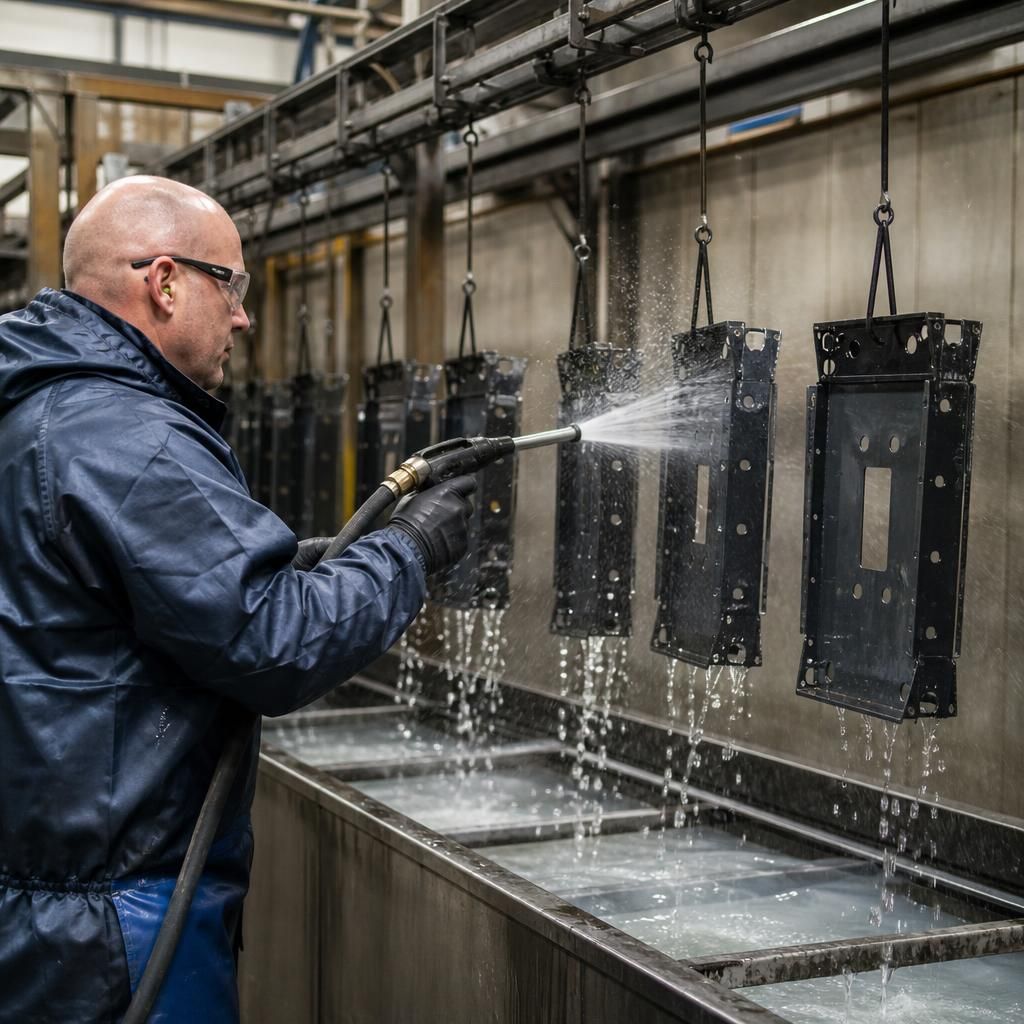
After cleaning or conversion treatment, thorough rinsing and drying are essential parts of pre-treatment. Residual cleaner, dissolved salts or chemical film can interfere with powder adhesion and may contribute to staining, blistering or corrosion beneath the coating. Components should therefore be checked for trapped solution in recesses, joints, threaded holes and enclosed sections before powder is applied.
The required rinse and drying approach depends on the metal and the treatment chemistry used. A surface that appears clean may still carry residues, so preparation checks should consider both visible condition and whether the part is fully dry and chemically suitable for coating.
Discuss the right pre-treatment for your metal surfaces
Discuss your component materials, existing surface condition and intended service environment with our powder-coating team to identify a suitable pre-treatment specification. We can then advise on the preparation requirements for your batch before coating.