

What are the steps involved in the powder coating preparation process?
The powder coating preparation process typically involves assessing the metal, removing existing coatings and contaminants, cleaning and degreasing the surface, abrasive blasting or other suitable surface treatment, applying any required chemical pre-treatment, and inspecting the prepared substrate. Parts are then dried and masked where necessary before powder application and curing.
Powder coating preparation is a controlled sequence of checks and surface-conditioning operations that makes a metal component suitable for a consistent coating application. The exact route depends on the substrate, its previous use, the condition of the surface, the required finish and the environment in which the finished part will be used.
- Review the component and coating requirements. The part is assessed before work begins to identify its base metal, dimensions, geometry, welded areas, threaded features, drain points and any areas that must remain uncoated. The intended powder system and service conditions also influence the preparation route. Steel, aluminium and galvanised components can respond differently to mechanical and chemical treatment, so the process should be selected for the specific substrate rather than applied as a universal routine.
- Check the incoming condition. Preparation includes identifying rust, mill scale, weld residue, sharp edges, dents, corrosion pits, silicone contamination and remnants of previous repairs. These defects are important because coating can reproduce surface irregularities rather than conceal them. Any concern that could affect the finished appearance or the integrity of the coating should be identified before the part proceeds.
- Deal with geometry and access. Hollow sections, folded returns, recesses and close-fitting joints require particular attention. Trapped moisture, abrasive media or cleaning residues can later cause blistering, contamination or corrosion beneath the coating. Components may therefore need suitable orientation, access to internal areas and clearly defined drainage or venting arrangements before treatment.
- Prepare areas that must not receive powder. Contact faces, bearing seats, threaded holes, electrical earth points and close-tolerance locations may need protection during the process. Masking materials and plugs must be selected to withstand the subsequent coating conditions and positioned accurately so that they do not leave unwanted overspray or interfere with assembly.
- Choose the mechanical treatment. Abrasive treatment is selected according to the substrate and the condition of the existing surface. Its purpose is not merely to make the metal look clean: it creates a suitably receptive surface and removes weak material that could undermine adhesion. The treatment must be controlled carefully, since excessive aggression can alter dimensions or damage edges, while insufficient treatment can leave unstable material behind.
- Use chemical treatment where appropriate. Some substrates benefit from a conversion or other chemical pre-treatment after cleaning. This can help control very light oxidation, improve the interface between the metal and the powder film, and provide additional protection at the substrate boundary. The chemical stage must be compatible with the metal and the chosen coating system, with residues controlled rather than allowed to remain on the part.
- Control rinsing and drying. After wet stages, the component must be free from cleaning chemicals and moisture before powder is applied. Particular care is needed around joints, cavities, folded sections and drilled holes, where liquid can remain hidden. A part that appears dry externally may still hold moisture internally, making drainage and drying an important part of preparation quality.
- Carry out the final preparation inspection. The prepared component is checked for remaining oil, dust, abrasive residue, flash rust, water marks, damaged masking and areas that have not received the intended treatment. The inspection also confirms that critical dimensions, contact points and protected sections remain usable. If the surface is not in an acceptable condition, it should be corrected before coating rather than relying on the powder layer to hide the problem.
- Maintain clean handling before coating. Once prepared, parts should be handled in a way that avoids fingerprints, workshop dust, moisture and contact with contaminated supports. Clean suspension or support points are also important because poor contact can affect the application process and leave marks or untreated areas. The interval between final preparation and coating should be managed so that the prepared surface does not deteriorate.
These stages form a decision-based process rather than a fixed checklist. A previously coated component may need more extensive removal work, while a clean new fabrication may require a different combination of cleaning, surface treatment and masking. The preparation route should also account for welds, mixed-metal assemblies and areas where corrosion protection is especially important.
Preparation is complete only when the substrate is clean, stable, suitably profiled where required, dry, correctly masked and confirmed to be free from conditions that could interfere with powder adhesion. The component can then move into powder application and curing, where the prepared surface provides the foundation for the specified finish.
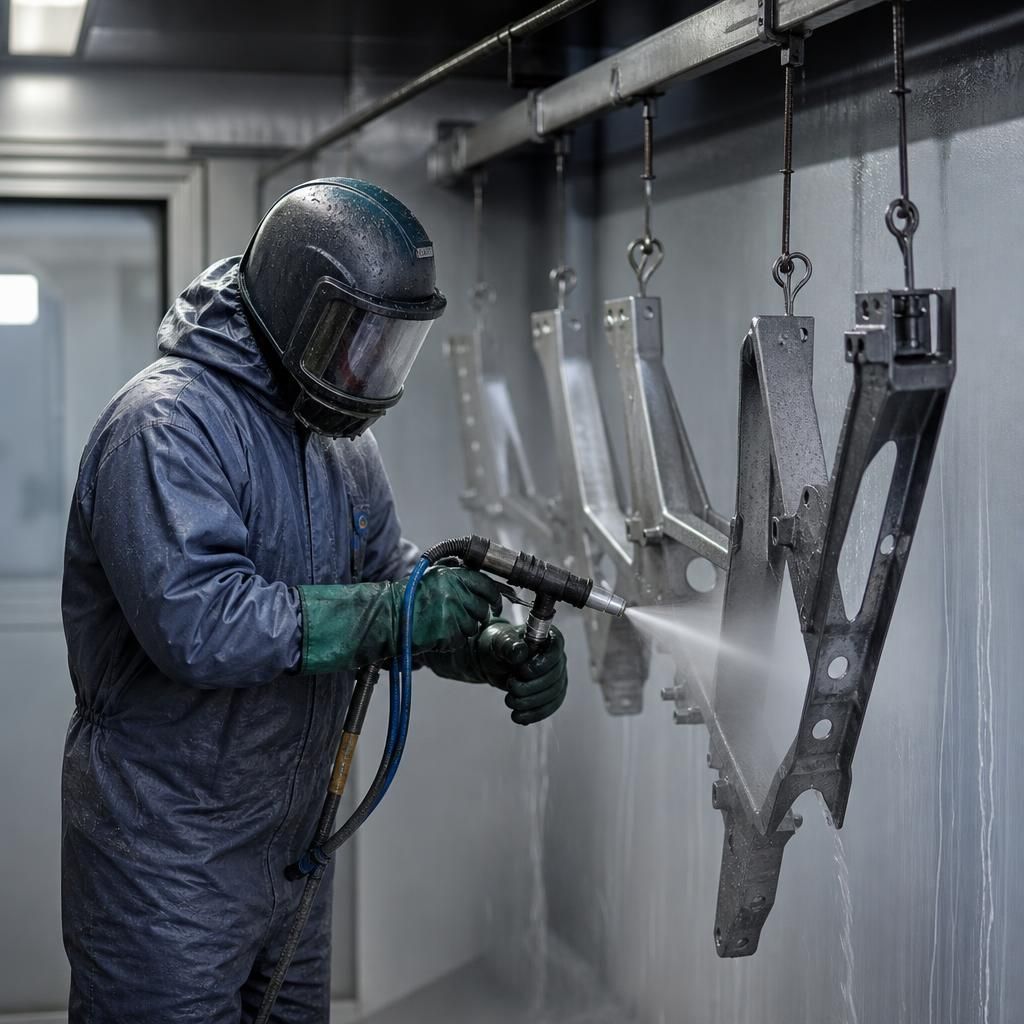
The order of preparation stages is important because each one establishes the conditions needed for the next. Cleaning cannot be treated as a final cosmetic step: oil, dust or residues left on the metal can interfere with abrasive treatment and chemical pre-treatment. Likewise, a correctly treated surface can lose its suitability if it is exposed to moisture or handled with contaminated equipment before powder application.
For this reason, preparation includes decision points as well as physical treatments. The component should only progress when the previous stage has produced a suitable condition—for example, a clean surface before further treatment, a residue-free surface after rinsing, and a dry substrate before coating. This staged approach helps identify problems while they can still be corrected, rather than allowing them to appear later as adhesion or finish defects.
Discuss your powder coating preparation requirements
Discuss your component details and coating requirements with the Powder-coatings.co.uk team to establish the most suitable preparation route. This can help identify any substrate, geometry or existing-finish considerations before your parts are processed.