

What types of contaminants should be considered during the powder coating degreasing process?
Contaminants to consider during powder coating degreasing include oils, grease, cutting fluids, lubricants, dust, dirt, fingerprints, rust residues and remnants of previous processing. Identifying the contaminant type helps determine the appropriate cleaning method and ensures the metal surface is suitable for consistent powder adhesion.
In addition to visible dirt, powder coating degreasing must account for chemical films, fabrication residues, embedded particles and contamination introduced during storage or handling. These materials can remain on the metal after ordinary wiping and may interfere with cleaning, pretreatment, powder coverage or curing.
Fabrication residues are often specific to how a component was made. Welding can leave anti-spatter products, heat-tint residues and fine weld debris. Cutting, drilling and grinding may introduce metal fines, abrasive particles and remnants of layout dye or permanent marker. Weld spatter and sharp adhered particles are not simply degreasing problems; they may require mechanical removal so that the coating is not applied over an unstable surface.
Silicone-based materials deserve particular attention. Silicone can be present in polishing compounds, sealants, lubricants, anti-spatter products and some workshop aerosols. Small traces may cause fisheyes, craters or areas where powder pulls away during application. Because silicone can spread beyond the original work area, equipment, racks, gloves and packaging should also be considered when investigating repeated coating defects.
Adhesive and masking residues can be left by labels, protective films, tapes and temporary plugs. Their composition varies, so a residue may be soft and tacky, hard and varnish-like, or chemically resistant. Degreasing alone may not remove an aged adhesive film, particularly where heat has bonded it to the substrate. The residue should be identified before selecting a solvent, alkaline cleaner or mechanical treatment.
Previous chemical treatments can also contaminate a component. Examples include cleaner carryover, conversion-coating residues, stripper deposits, pickling products and salts left by inadequate rinsing. These films may be difficult to see but can affect the consistency of subsequent pretreatment. Residual alkalinity or acidity can also alter the behaviour of later process stages, making thorough rinsing and drying as important as the initial cleaning step.
Oxide and manufacturing scale may be firmly attached rather than loose surface dirt. Mill scale, heat-affected oxide and galvanising-related residues can change the surface chemistry and may not be removed by a degreaser designed for organic contamination. Where these conditions are present, the preparation specification should distinguish between removing contamination and preparing the underlying metal for a suitable pretreatment.
Storage and packaging materials can introduce less obvious contaminants. Paper fibres, cardboard dust, waxes, corrosion-inhibiting compounds, protective oils and plasticiser transfer may be left on parts during transport or storage. Condensation can deposit soluble salts, especially where components have been enclosed before they were completely dry. The length and conditions of storage, along with the materials used to separate components, are therefore relevant when assessing their condition.
Water-borne residues should not be overlooked. Hard-water minerals, chlorides, sulphates and other dissolved solids can remain after washing and drying. They may appear as spots or a light haze, or remain inside seams and recesses. Soluble residues are particularly important on fabricated assemblies because liquid can be trapped in joints, folded edges, threaded holes and hollow sections.
Contamination can also be embedded rather than merely deposited. Abrasive media, swarf and workshop dust may become lodged in textured surfaces, weld irregularities, perforations or crevices. A visual inspection of the broad face may therefore give a misleading impression of cleanliness. Components should be assessed across edges, joints, recesses and other areas where cleaning solution or rinse water may not circulate effectively.
The most useful assessment starts with the component’s manufacturing and handling history. Information about cutting fluids, welding products, previous coatings, storage conditions and packaging helps separate organic residues from inorganic deposits and substrate oxides. Inspection under suitable lighting, a clean-water wetting check and, where necessary, a small test area can help establish whether a film remains. A water-break pattern may indicate incomplete cleaning, although it does not identify every contaminant or replace a controlled process check.
Correct identification matters because different contaminants respond differently. Organic films may need a compatible degreasing treatment, whereas mineral salts require effective rinsing and oxide or scale may require a separate preparation stage. Persistent or recurring defects should be traced back to the fabrication, storage and cleaning process rather than assuming that a stronger degreaser will solve every problem. This approach helps determine whether the part is ready for pretreatment and supports a more consistent powder-coated finish.
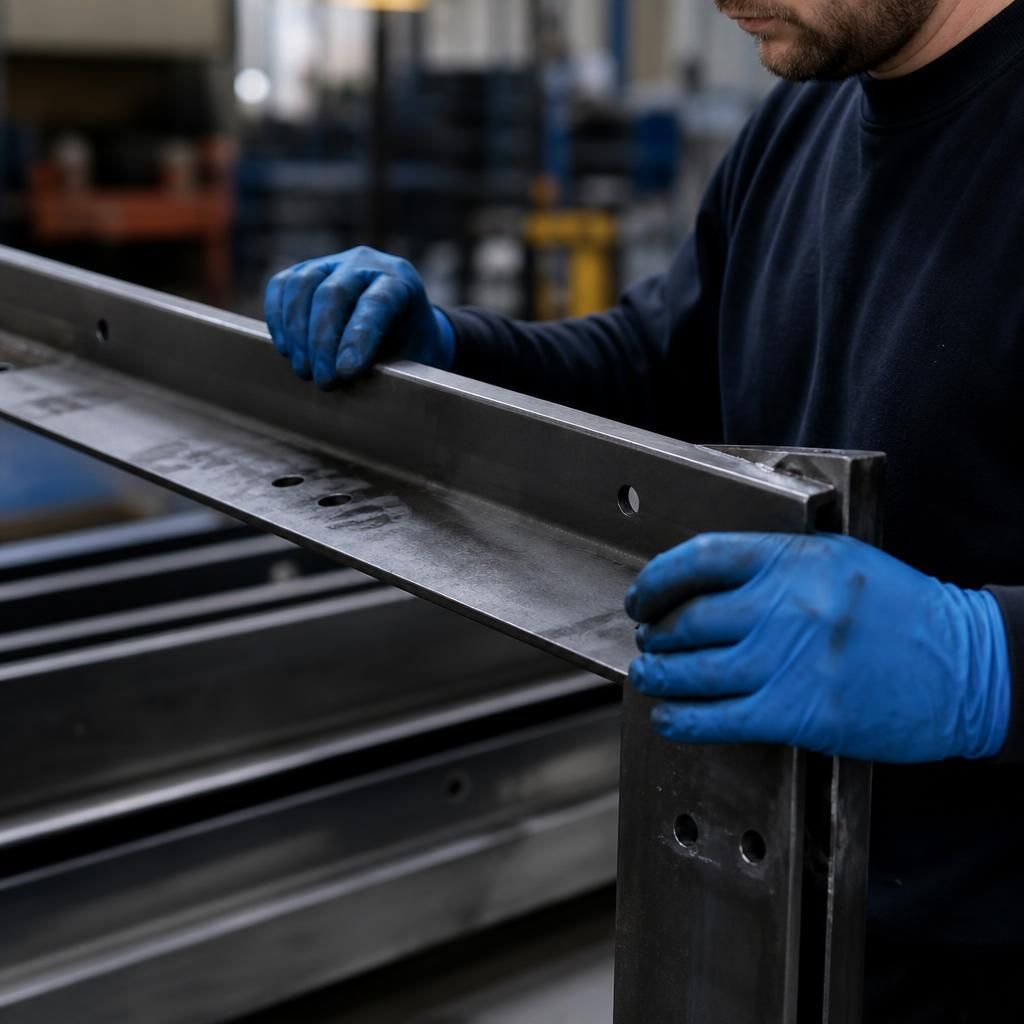
Contamination can be introduced after degreasing as well as during manufacture. A cleaned component may pick up skin oils, residue from handling equipment, moisture from surrounding air or particles from an unclean work surface before pretreatment begins. This is why clean parts should be handled with suitable gloves and kept away from untreated components, dirty racks and exposed workshop dust.
Fixtures and contact points also deserve attention. Hooks, racks and supports can transfer oils or old coating fragments onto areas that have already been cleaned, creating localised adhesion defects. Cleaning these items as part of the process, and checking areas where the component rests or is suspended, helps prevent a finished surface from being compromised after degreasing has taken place.
Discuss Contaminant Assessment for Your Components
Share your component’s manufacturing, storage and handling history with a powder coating specialist so any likely contaminants can be assessed before preparation begins. This helps establish an appropriate cleaning and pretreatment approach for the metalwork.