

What safety regulations and environmental considerations should be taken into account during the powder coating degreasing process?
Powder coating degreasing should be managed under UK chemical-safety requirements, including COSHH controls, suitable PPE, ventilation and safe handling based on the product’s safety data sheet. Environmental controls should cover chemical storage, spill prevention and the compliant collection, treatment and disposal of spent degreaser, contaminated rinse water and other process waste.
Compliance during powder coating degreasing involves controlling chemical, fire, workplace and environmental risks at every stage, from selecting the process through to transferring residues for disposal. In practice, this means documenting the assessment, applying the relevant UK requirements and demonstrating that workers, drainage systems and waste contractors are not exposed to uncontrolled risks.
Key regulatory considerations
- Risk assessment and work procedures: The employer should assess the specific degreasing operation rather than relying solely on the product label. The assessment should cover the chemical concentration, application method, temperature, contact time, mist or vapour generation, splash hazards, manual handling, compatibility with the metal substrate and the consequences of a spill. Written procedures should define preparation, use, transfer, equipment cleaning, emergency action and waste handling.
- Product classification and labelling: Under the GB Classification, Labelling and Packaging regime, hazardous mixtures must be correctly classified and labelled. Containers used at the workplace should remain identifiable, including where a degreaser is decanted into a smaller vessel. Unlabelled bottles, food containers and incompatible reused packaging create avoidable risks.
- UK REACH information: The supply and use of chemical substances are supported by information requirements under UK REACH. A business should check that the product is supplied for the intended use and that any restrictions or conditions attached to that substance are understood. The safety data sheet should be current and accessible to the people carrying out the task.
- Control of exposure: Where a product can generate airborne vapour, mist or dust, the assessment should consider workplace exposure limits and whether local exhaust ventilation is needed at the point of release. Controls should be checked periodically, particularly after changes to tanks, spray equipment, heating arrangements or production volumes. Airborne contamination should not be assessed only by whether an odour is noticeable.
- Emergency arrangements: Staff should know how to respond to skin or eye contact, inhalation, a container failure or a reaction caused by mixing incompatible products. Emergency eyewash and washing facilities should be suitable for the substances in use, and the procedure should explain when medical advice is required. Incident records can identify recurring failures in handling or equipment.
- Fire and explosive-atmosphere risks: Some solvent-based or flammable degreasers may create fire or explosive-atmosphere hazards, especially near heated equipment, ignition sources or poorly controlled spray applications. The assessment should establish whether the Dangerous Substances and Explosive Atmospheres Regulations apply, and should address ignition control, bonding and earthing where relevant, equipment suitability and separation from incompatible operations.
- Training and supervision: Operators need practical instruction on dilution, application, contact time, equipment operation, first aid, spill response and waste segregation. Training should be refreshed when the chemical, process or equipment changes. Contractors and maintenance personnel also need relevant information before entering the area or working on contaminated plant.
- Workplace equipment: Tanks, pumps, spray guns, hoses and heating systems should be selected and maintained for the chemical being used. Seals, linings and hoses can deteriorate if the product is incompatible with the material. Guarding, interlocks and isolation arrangements should prevent contact with moving parts, hot liquid or pressurised spray.
Environmental controls beyond the immediate work area
- Drainage protection: Degreaser, rinse water and oily residues should not be allowed to enter surface-water drains, foul drains or unprotected ground unless the discharge has been specifically authorised. Drainage routes should be identified in advance, and bunding or drain covers should be available where a release could reach them.
- Waste classification: Spent solution, sludge, filters, absorbents, contaminated containers and tank clean-out residues may be hazardous waste, depending on their composition and properties. Waste should be assessed and described accurately using the appropriate waste code before collection. Different streams should not be mixed simply to reduce the number of containers, as this can create additional hazards and complicate treatment.
- Consignment and contractor checks: Waste transfers should be accompanied by the required documentation, with hazardous waste handled by an appropriately authorised carrier and destination facility. Retaining transfer notes, consignment notes and records of quantities supports the producer’s duty of care and helps demonstrate where the material went.
- Storage of waste: Waste containers should be closed, compatible with their contents and protected from impact and weather. They should be kept in a designated area with suitable containment and clear identification. Containers showing corrosion, swelling or leakage require prompt isolation and assessment.
- Water and energy use: The environmental burden is affected by bath temperature, rinse stages, bath life, drag-out and the frequency of solution replacement. Process control can reduce unnecessary chemical use without compromising cleaning, but changes should be validated against the required surface condition. Counter-current rinsing, controlled workpiece drainage and suitable filtration may reduce the volume of contaminated water where the system supports them.
- Discharge permissions: Any proposed discharge to a sewer or watercourse should be checked with the relevant water company, local authority or environmental regulator before the process starts. Consent conditions can specify limits, sampling, pre-treatment and record keeping. Trade effluent should never be assumed to be acceptable because the liquid appears diluted or clear.
- Pollution prevention: A site plan should show chemical and waste storage, drains, interceptors, spill equipment and sensitive receptors. Routine inspections can identify damaged bunds, missing lids, blocked drainage protection or leaking pipework before a release occurs. Significant incidents may require notification to the relevant regulator, so the escalation route should be known in advance.
For a powder coating project, the degreasing method should therefore be selected alongside its compliance requirements, not considered only as a cleaning decision. The substrate, contamination level, coating specification and production equipment all influence the chemical and environmental risk profile. Keeping the assessment, product information, training records, maintenance checks, waste documentation and discharge arrangements together gives the coating team a traceable basis for safe preparation and helps identify when a process change requires the assessment to be reviewed.
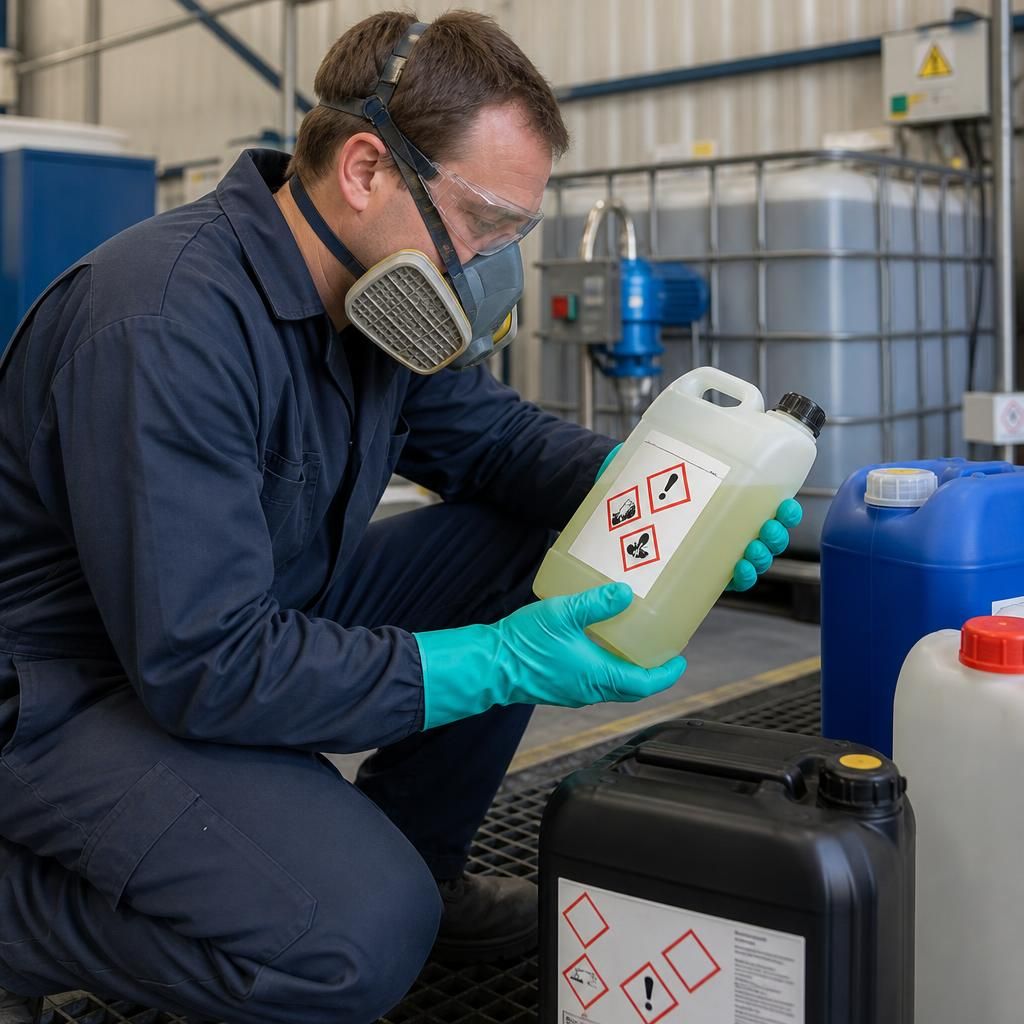
Chemical substitution means considering whether a less hazardous degreaser can deliver the required level of cleanliness without creating greater risks elsewhere. A water-based product is not automatically harmless: its formulation may still be corrosive, harmful to aquatic life or capable of generating contaminated rinse water.
When comparing alternatives, assess the product classification, vapour generation, temperature requirements, rinse demand and waste characteristics alongside cleaning performance. Any change should be tested on representative components to confirm that it removes the relevant contaminants and leaves a surface suitable for powder coating. The assessment should record why the chosen product and process provide effective control without transferring risk to operators, drainage systems or waste treatment.