

What is the impact of skipping the degreasing step in the powder coating process?
Skipping degreasing leaves oil, grease and other contaminants on the metal, preventing the powder coating from bonding properly. This can cause adhesion failure, blistering, uneven coverage and premature corrosion, often requiring stripping and rework.
Skipping degreasing compromises the entire surface-preparation system, not just one stage of the powder coating process. Oils, machining fluids, handling residues and storage films can alter how later pretreatment stages interact with the metal, making the finished coating less consistent and less predictable.
Degreasing is intended to remove organic contamination before rinsing, conversion treatment or other preparation stages. If it is omitted, those contaminants may remain embedded in fine surface irregularities or spread across the component during subsequent washing. A surface can then appear clean while still carrying a thin film that interferes with the intended pretreatment response.
The effects may become visible as coating defects rather than as obvious areas of missing powder. Typical examples include:
- fisheyes, craters or small voids where contamination disrupts the coating surface;
- poor wetting, causing the powder to pull away from isolated areas during melting;
- gas-related defects when oils or residues volatilise during oven curing;
- patchy gloss, colour variation or texture differences across the same batch;
- localised flaking or lifting around contaminated edges, recesses and joints; and
- inconsistent results between components that have been handled or stored differently.
These problems are particularly difficult to control on fabricated parts. Weld areas may contain residues from grinding, anti-spatter products or fabrication fluids, while folded sections, holes and recessed details can retain contamination that is not obvious during a visual inspection. Components assembled from different materials may also present different cleaning requirements, so treating the whole batch as though it has the same surface condition can produce variable results.
Skipping degreasing can also make quality control less reliable. A coating may look acceptable immediately after curing but fail during adhesion testing, forming, assembly or service. If a defect is discovered only after further manufacturing, installation or delivery, the affected parts may need to be isolated, stripped and prepared again. Rework can involve additional handling, transport, inspection and curing, as well as disruption to production planning.
Degreasing does not replace the other preparation stages, and it cannot correct damage such as heavy scale, oxidation or unsuitable substrate condition. Its purpose is to provide a controlled starting surface so that the selected rinsing and pretreatment steps can work as intended. Where parts have been exposed to cutting oils, workshop handling, protective films or prolonged storage, the need for suitable degreasing is greater and the cleaning method should be matched to the contaminant and substrate.
Before powder coating, the preparation process should therefore confirm the component material, fabrication history, type of contamination and required finish. A suitable process normally includes an appropriate degreasing stage, thorough rinsing where required, complete drying and inspection before powder application. If contamination is suspected after preparation, coating over it is usually less reliable than stopping to assess and clean the affected parts.
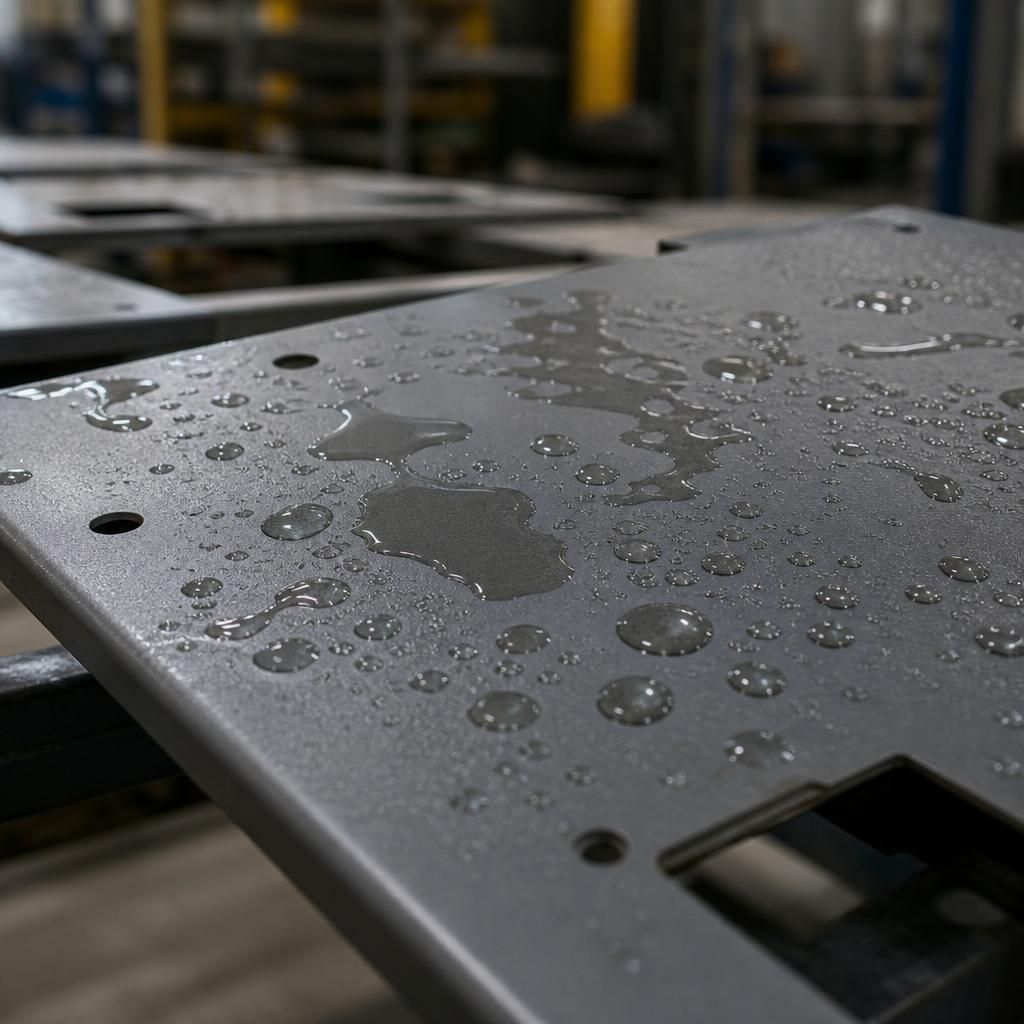
Skipping degreasing can prevent the chemical pretreatment from forming a consistent surface for the powder coating. Oils and processing residues can repel aqueous treatment solutions, leaving some areas insufficiently prepared even when the metal appears clean after washing. The powder may then conceal an underlying preparation problem until the component is exposed to moisture, handling or service conditions.
A simple water-break check can help identify residual contamination: after rinsing, water should spread into a continuous film rather than separating into beads or clear patches. This check is an indication of surface cleanliness, not a replacement for the specified degreasing and pretreatment process. If the result is inconsistent, the parts should be held for assessment before powder is applied.