

How does the degreasing process affect the overall timeline of a powder coating project?
Degreasing adds a preparation stage to a powder coating project, with the time required depending on the condition, size and quantity of the metal components. Thorough cleaning helps prevent adhesion defects and rework, so allowing sufficient time for degreasing can support a more predictable overall project timeline.
Degreasing affects the overall timeline by adding controlled cleaning, rinsing, drying and inspection steps before coating can begin. The time required is not determined by the cleaning stage alone: the condition of the parts, the selected cleaning method, drying requirements, batch arrangement and any follow-on preparation all influence how soon components can move into powder application and curing.
Initial assessment and process selection
Before degreasing starts, the coating team needs to establish what is on the metal and how the components are configured. Light handling oil may be removed through a relatively straightforward process, while heavier machining fluids, drawing compounds, grease or storage residues may require a stronger treatment or more than one cleaning stage. Complex shapes, blind holes, folded sections and welded areas also need consideration because contaminants can be retained and may need additional attention.
This assessment affects scheduling because the most suitable process must be selected before parts enter the cleaning sequence. Using an unsuitable cleaner can extend the work by requiring repeat treatment, additional rinsing or closer inspection. The cleaning method must also be compatible with the substrate and the coating specification, particularly where the components include different metals, delicate machined surfaces or areas that must retain tight dimensional tolerances.
Where time is spent during degreasing
- Loading and handling: Parts must be positioned so that cleaning solution can reach the relevant surfaces and drain away afterwards. Poor positioning can create shaded areas or fluid traps, leading to extra handling and inspection.
- Cleaning: Contact time, agitation, spray coverage or immersion conditions must be sufficient to loosen and remove the contamination. The correct duration depends on the residue and the component rather than on a fixed time for every job.
- Rinsing: Residual cleaner and loosened contamination need to be removed before the next stage. Inadequate rinsing can interrupt the process because parts may need to be washed again.
- Drying: Components must be dry before powder is applied. Moisture retained in joints, recesses or hollow sections can require extra draining, air movement or manual drying.
- Inspection: The cleaned surface is checked for remaining oil, residue, staining or areas that have not been reached. Inspection may identify a need for local cleaning or a return through part of the process.
Effects on the rest of the production sequence
Degreasing sits within a wider sequence that can include masking, plugging holes, surface treatment, powder application, curing and final inspection. If cleaning runs beyond the planned point, each dependent activity may have to be rearranged. This is especially relevant for batch work: a partially cleaned batch may not be suitable for coating until all parts have passed the same preparation and inspection requirements.
Drying can be a significant scheduling consideration for assemblies and fabricated parts. Water or cleaning solution may remain in seams, overlaps, threaded holes and enclosed sections even when the external surface appears dry. These areas may need to be drained and checked before coating, so the physical design of the component can affect the handover from degreasing to application.
When contamination causes extra work
Heavy or aged contamination can lengthen the timeline because cleaning may need to be repeated or combined with another preparation method. In some cases, residues reveal damage, corrosion, weld spatter or existing coatings that were not apparent before cleaning. Those findings can lead to additional preparation decisions before powder coating proceeds. The resulting delay is not caused by degreasing alone; it comes from dealing with the condition of the metal revealed by the cleaning process.
Parts arriving with excessive grease, mixed contaminants or inadequate protection during transport can also require more careful segregation and assessment. Keeping different materials and contamination types identified helps prevent one group from dictating the treatment of an entire batch unnecessarily.
Planning a more predictable timeline
Accurate planning starts with complete information about the metal, component dimensions, approximate batch arrangement, previous use, known contaminants and the required finish. Photographs or sample parts can help clarify whether the items are lightly soiled, heavily contaminated or likely to contain hard-to-reach residues. It is also useful to identify whether parts have enclosed sections, drainage limitations or surfaces that must not be masked by the cleaning arrangement.
Components should be supplied in a condition and configuration that allows them to be handled, cleaned, rinsed and dried efficiently. Removing loose packaging debris and separating incompatible items before processing can reduce avoidable handling, although any oil or grease still needs to be dealt with through the appropriate degreasing process.
For manufacturers, fabricators, construction firms and automotive businesses, the practical implication is that the coating programme should allow time for the full preparation sequence rather than treating degreasing as an incidental task. Powder-coating specialists serving businesses across the Midlands can review the parts and agree how collection, delivery, batch grouping and preparation fit into the wider production schedule. The most reliable timeline is one based on the actual components and contaminants, with sufficient allowance for drying and inspection before coating begins.
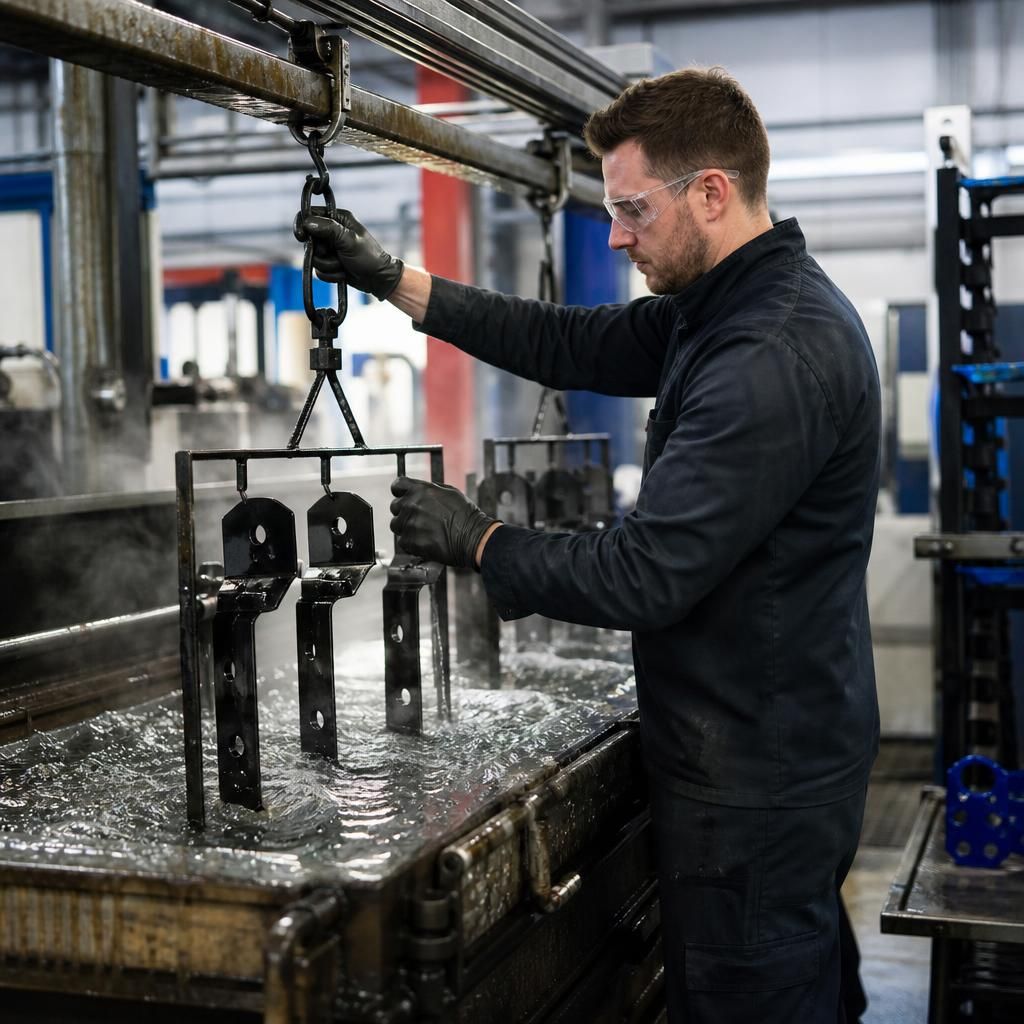
Degreasing affects the project timeline not only through the time spent cleaning, but also through the point at which the prepared parts can be formally released for coating. Where a specification requires checks for residual oil, cleaner or moisture, those checks become a necessary hold point before masking, powder application or curing can proceed.
Clear acceptance criteria help prevent uncertainty at this stage. The coating team can assess whether the surface is ready, requires local attention or needs to return through part of the preparation process. This makes the programme easier to sequence because coating is based on verified surface condition rather than an assumed cleaning duration.