

What preparation is needed before powder coating steel tubes?
Before powder coating, steel tubes should be degreased and thoroughly cleaned, with rust, mill scale and existing coatings removed by suitable abrasive blasting where required. The prepared surface must be dry and inspected before masking areas that must remain uncoated, so the powder can bond evenly and cure to a consistent finish.
Preparation for powder coating steel tubes involves more than making the outside surface clean. The tube design, weld quality, internal drainage, coating specification, handling method and areas requiring protection should all be agreed before the parts enter the coating process. These checks help prevent defects, trapped treatment chemicals, blocked openings and dimensional problems after curing.
Confirm the coating specification first. The required colour, gloss level, coating type, film build, performance requirements and service environment should be defined before preparation begins. A tube used indoors may have different requirements from one exposed to moisture, chemicals, abrasion or changing temperatures. The specification should also identify whether internal surfaces, cut ends, threaded sections or contact faces need coating.
Review the tube design and fabrication. Hollow sections need suitable drain and vent holes so air, water and pre-treatment solutions do not become trapped. Enclosed cavities without adequate openings can retain liquid, cause staining or release vapour during curing. Drainage holes should be positioned so that liquid can leave during processing, while remaining compatible with the component’s structural and functional requirements. If the tube forms part of a fabricated assembly, check that its geometry allows all surfaces to be reached and that no narrow gaps will create shadowed or poorly coated areas.
Complete fabrication before coating. Cutting, drilling, welding, grinding and other fabrication work should normally be finished before the parts are prepared for coating. Welds should be continuous where the design requires them, and sharp projections, excessive weld spatter, burrs and rough ground areas should be removed or corrected. These features can affect coating coverage and may remain visible beneath the finished surface. Silicone, marker residue, adhesive, protective films and other fabrication contaminants should not be left on the steel.
Check welds and joints carefully. Porous welds or crevices can retain gases or treatment fluids and may lead to pinholes, bubbling or local discolouration during curing. Where a high-quality appearance is required, weld profiles should be blended consistently and inaccessible crevices considered during design. Galvanised, previously coated or mixed-metal assemblies may require a separate assessment because different substrates can respond differently during preparation and curing.
Decide which areas require masking. Threads, precision bores, bearing seats, electrical earth points, press-fit locations and identification surfaces may need to remain free of powder. Masking materials must tolerate the curing conditions and should be applied so that edges remain defined without contaminating adjacent areas. If a hole or internal section must remain open, specify this before racking rather than relying on post-coating removal.
Allow for coating thickness in the design. Powder coating adds a measurable layer to the tube, so close-fitting parts, threaded connections and sliding interfaces should have suitable clearance. Small holes may become partially restricted, and mating components may no longer fit if tolerances are too tight. Where dimensions are critical, provide the required uncoated surfaces or state the acceptable finished dimensions on the drawing.
Plan racking and contact points. Each tube must be supported securely during preparation, spraying and curing. The selected contact points should minimise visible marks while providing a reliable electrical path for electrostatic application. Parts should be presented so that powder can reach the required faces and so that tubes do not touch one another while coated. Racking marks are usually limited to agreed locations, but they should be considered when appearance is important.
Inspect the substrate before processing. Steel condition can vary between batches and suppliers. Check for pitting, laminations, embedded scale, oil contamination, corrosion beneath temporary protection and damage caused during transport or fabrication. Surface preparation can improve adhesion, but it will not correct deep dents, poor welds or unsuitable tube geometry. Defects that need filling, reworking or rejection should therefore be dealt with before the coating stage.
Control handling after preparation. Prepared steel should be handled with clean equipment and protected from renewed contamination, moisture and unnecessary contact. Operators should avoid touching prepared surfaces with bare hands, dragging tubes across dirty supports or placing them on materials that can transfer oils or fibres. Parts should be identified and kept in the correct sequence where colour, specification or assembly position differs between batches.
Use a final pre-coating checklist. Before the tubes are released for powder coating, confirm that fabrication is complete, openings and masking requirements are clear, critical dimensions are recorded, racking points are acceptable and the agreed coating specification is attached to the job. Photographs or marked drawings can help identify areas that must remain uncoated. This information gives the coating provider a clear basis for processing and helps avoid rework caused by missing instructions.
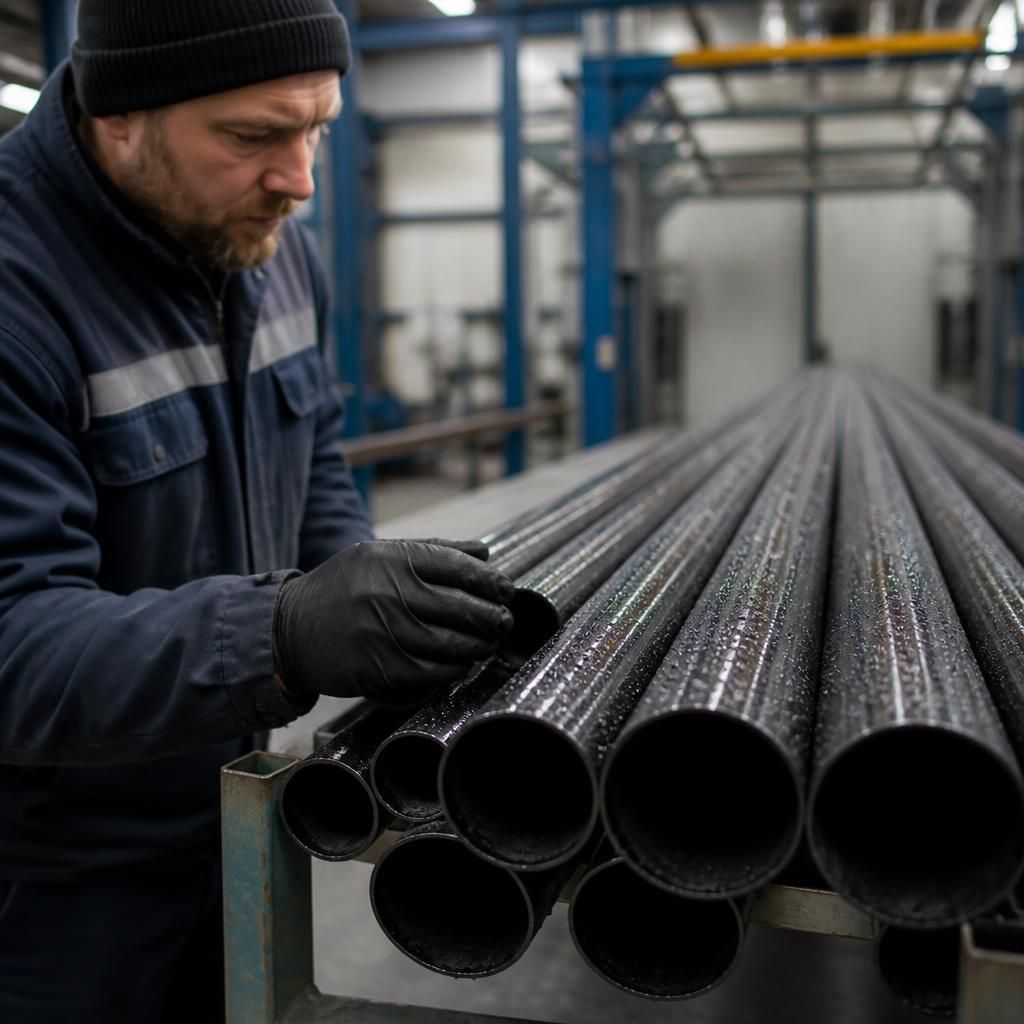
Steel tubes should be checked for condensation immediately before powder application, even when the surface appears clean. If the metal is colder than the surrounding air, moisture can form on it and interfere with adhesion or contribute to early corrosion beneath the coating. The surface should therefore be allowed to reach a suitable temperature and remain visibly dry before coating begins.
Pay particular attention after abrasive blasting or wet pre-treatment. Freshly prepared steel can develop flash rust if exposed to damp conditions, and any affected areas may need to be reprocessed rather than coated over. Keeping the prepared tubes in a clean, dry location and limiting the time between final preparation and powder application helps preserve the surface condition established during preparation.