

What specific benefits does the Perfect-It Powder Coating process offer for industrial metal components compared to other coating methods?
Perfect-It Powder Coating provides industrial metal components with a durable, corrosion-resistant finish that is more robust than many conventional coating options. Its controlled application and curing process supports consistent coverage, efficient batch processing and specialist finishes for components requiring demanding protection.
Perfect-It Powder Coating offers industrial metal components a practical combination of finish uniformity, production efficiency and material economy that can be difficult to achieve with conventional wet-paint systems. The main advantages are created by applying dry powder electrostatically and then curing it to form a continuous coating, rather than relying on liquid paint to evaporate or dry on the component.
- Less reliance on solvent evaporation: Powder coating is applied without the solvent content associated with many liquid coating systems. This reduces the risk of solvent entrapment, runs and sagging during application, provided the component is correctly prepared and the coating is applied to the appropriate specification.
- Efficient material use: Powder that does not initially adhere to the component can, where the equipment and coating system allow, be collected for controlled reuse. This can reduce material waste compared with overspray from some liquid-paint processes, where recovered material is generally more difficult to return to the coating system.
- Rapid progression after curing: Once the coating has been correctly cured, the component does not require the extended air-drying period associated with some liquid finishes. This supports more straightforward movement, packing and integration into a manufacturing workflow, subject to the required cure schedule and handling conditions.
- Reliable appearance across production runs: The dry powder format supports repeatable application of the specified colour, texture and coating type when preparation, film build and curing are controlled. This is particularly useful where components need to match one another across a batch or across repeat orders.
- Choice of surface appearance: Powder systems can provide different visual effects, including variations in colour, gloss and texture. This allows a component to be specified for a functional industrial environment while also meeting an required appearance or identification standard.
- Strong adhesion depends on preparation: Powder coating is not a substitute for proper surface preparation. Removing contamination, managing oxidation and selecting suitable pre-treatment helps the coating bond to the metal and reduces defects such as poor adhesion, pinholing or uneven finish. This preparation stage is an important advantage of a controlled industrial process because it makes the coating specification part of a defined production sequence rather than an improvised finishing step.
- Suitable for repeatable component handling: Powder-coated parts can be specified with a finish appropriate to their intended handling and installation conditions. The coating becomes an integrated cured layer rather than a film that remains vulnerable to the drying conditions of a liquid application, although the final result still depends on correct curing, transport and assembly practices.
Compared with wet paint, powder coating is therefore most valuable where a metal component needs a repeatable industrial finish with a defined appearance and a process that fits batch production. Compared with some other treatments, it also provides a coating layer that can combine visual specification with protection in one finishing operation, rather than requiring separate painting stages for each requirement.
There are process considerations. The metal must generally be electrically suitable for electrostatic application, and the component must tolerate the curing conditions. Parts may also need masking where coating is not wanted on threads, contact faces or accurately machined areas. Components with complex geometry require appropriate racking and application control so that recesses, edges and exposed faces receive the intended coverage.
For manufacturers, fabricators and other industrial users, the practical benefit is not simply the finished appearance. Perfect-It Powder Coating can help make the finishing specification more repeatable, reduce dependence on wet-film drying, support efficient batch handling and provide options for components with different functional or visual requirements. The correct comparison will still depend on the base metal, component size and geometry, required coating performance, finish specification and curing requirements.
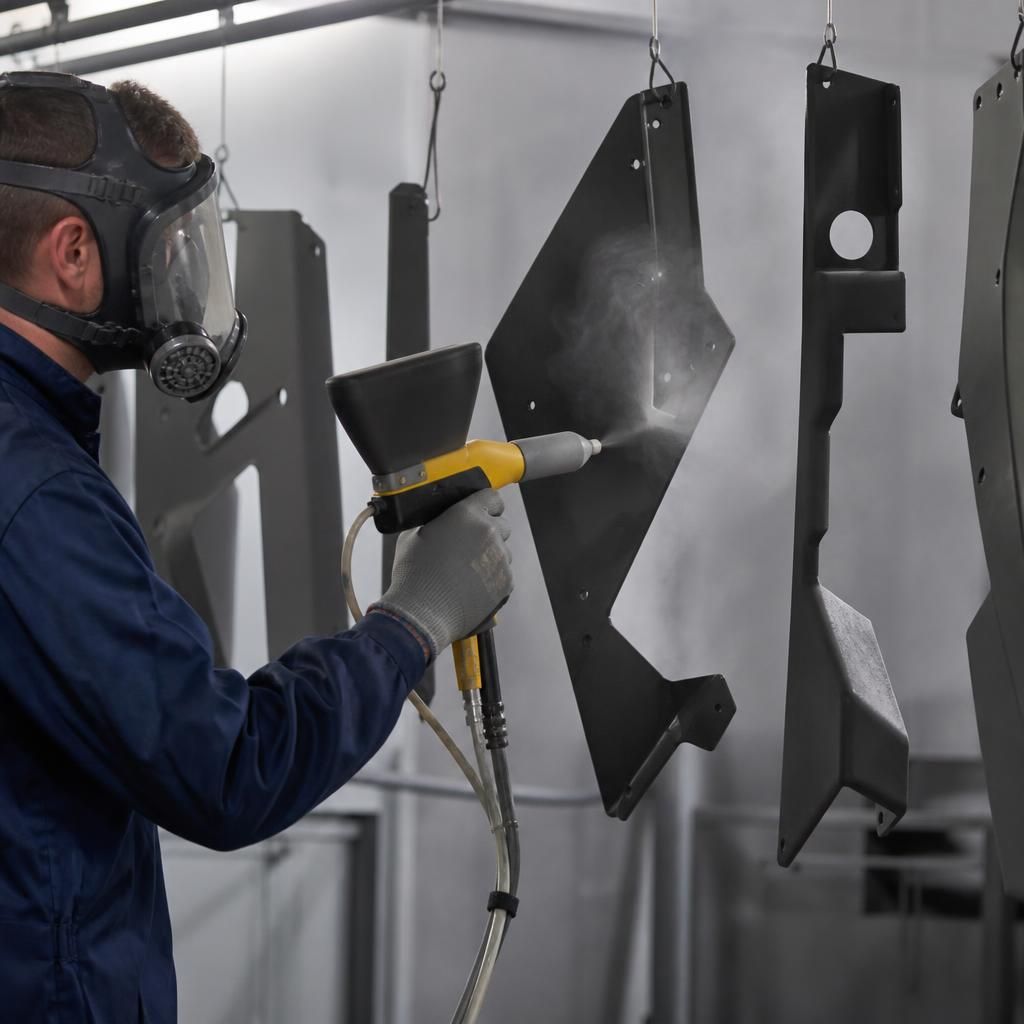
A further benefit of the Perfect-It Powder Coating process is its ability to accommodate specialist coating systems, including nylon and protective coatings, rather than limiting industrial components to a standard decorative powder. This gives manufacturers and fabricators more scope to match the coating specification to the component’s intended use, construction and exposure conditions.
That flexibility is important when a conventional finish does not provide the required combination of appearance and protection. The appropriate system can be considered alongside the base metal, component geometry, preparation requirements and curing conditions, helping ensure that the selected finish is suitable for the part rather than chosen solely for colour or visual effect.