

What are the specific performance benefits of using Perfect-It Powder Coating for industrial applications?
Perfect-It Powder Coating provides industrial metal components with a durable, even finish designed to withstand demanding use and protect the underlying surface. Its specialist options, including nylon and protective coatings, support performance requirements across manufacturing, fabrication, construction and automotive applications.
The specific performance benefits of Perfect-It Powder Coating come from forming a controlled, cured polymer film over a prepared metal surface. In industrial applications, this can provide resistance to mechanical wear, corrosion, weathering and routine chemical exposure, while giving components a finish that is easier to specify and maintain than an uncoated surface.
- Improved resistance to abrasion and handling: The cured coating can help protect components exposed to rubbing, contact, movement and repeated handling. This is relevant to fabricated parts, machinery components, automotive items and construction products that may experience wear during installation or use.
- Protection against corrosion: Powder coating creates a barrier between the metal and moisture or other corrosive contaminants. Its effectiveness depends on the metal, surface preparation, coating specification and curing conditions, but the result can help extend the usable service life of suitably prepared components.
- Resistance to outdoor conditions: Where the correct formulation is selected, the coating can help components withstand exposure to sunlight, rain and changing temperatures. This makes specification important for external construction and automotive applications, where a finish must retain its protective function as well as its appearance.
- Greater resistance to routine chemicals: Industrial parts may come into contact with oils, cleaning products, lubricants or other substances. The appropriate powder formulation can provide resistance to the particular environment, although aggressive chemicals, prolonged immersion and high temperatures require confirmation before coating is specified.
- Reliable adhesion to prepared metal: Cleaning, preparation and suitable pretreatment remove contaminants that could undermine the finish. Good adhesion helps prevent premature lifting, flaking or under-film corrosion, particularly where components are exposed to impact, moisture or frequent handling.
- Consistent coverage on repeat components: Controlled application and curing support repeatable film formation across batches. This matters when coated parts must fit with other components, meet a defined appearance standard or be used across a manufactured product range.
- Specialist performance for demanding uses: Nylon and other protective coating options can be considered where standard decorative powder coating is not the most suitable choice. Nylon coatings are commonly selected for their combination of toughness, low-friction properties and resistance to wear in appropriate applications; the correct option depends on the component’s operating conditions.
- Easier cleaning and routine upkeep: A sound, continuous finish gives dirt and handling residues fewer opportunities to reach the underlying metal. Components can therefore be simpler to clean and inspect, subject to using cleaning methods compatible with the selected coating.
These benefits are not produced by the powder alone. Performance depends on matching the coating system to the component’s material, geometry and environment. Factors such as sharp edges, welds, threaded areas, enclosed sections, expected impact, chemical contact, operating temperature and exposure to weather should be considered before the specification is agreed.
For industrial buyers, the practical advantage is that the finish can be selected around the component’s actual duty rather than appearance alone. A part used indoors may require a different formulation from one exposed to road contamination, moisture or ultraviolet light. Discussing the end use, preparation requirements and acceptable finish with the coating provider helps establish whether a standard, nylon or other protective system is appropriate.
Perfect-It Powder Coating is therefore most valuable where the coating specification is linked to measurable operating demands: protection from corrosion, resistance to wear, tolerance of the surrounding environment and repeatable results across manufactured parts. Collection and delivery options support businesses across the Midlands and surrounding areas when components need to move between the customer’s production operation and the coating service.
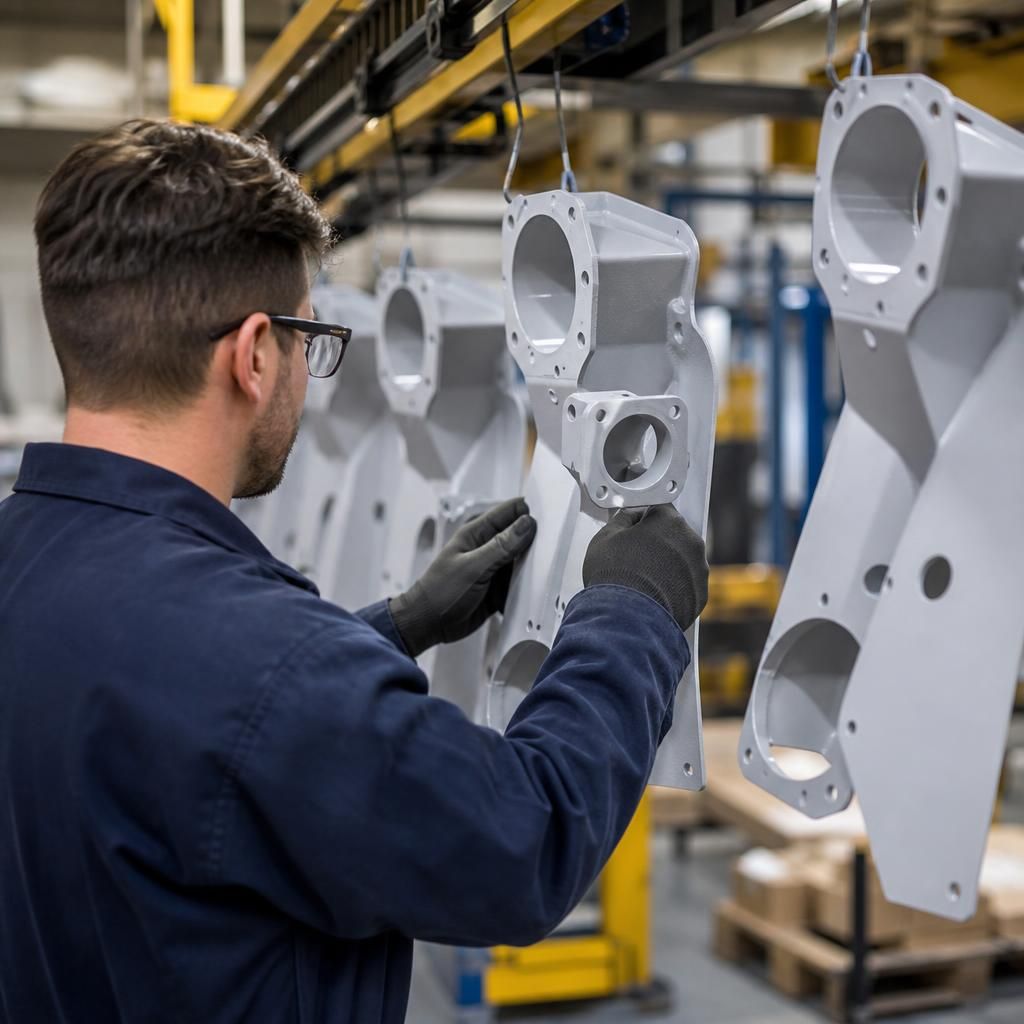
One important performance benefit is the ability to specify the coating around the component’s functional interfaces, rather than treating every surface in the same way. Areas such as mounting faces, threaded sections, apertures and moving contact points may require masking, clearance or a different coating approach so the finished part remains usable after treatment.
This is particularly relevant for engineered components that must assemble accurately or operate alongside other parts. Controlling where the coating is applied helps avoid interference at mating surfaces while retaining protection on exposed areas. The required tolerances, contact conditions and assembly method should therefore be confirmed before processing, especially for batch-produced components where the same dimensional outcome is required across the order.
For industrial applications, this makes powder coating a design consideration as well as a surface finish. The best result is achieved when the coating specification, masking requirements and component drawings are reviewed together before production.
Discuss Your Industrial Coating Requirements
Discuss your component material, operating environment and required performance with Perfect-It Powder Coating to identify a suitable industrial coating specification. Provide drawings or batch details where relevant so preparation, masking and finish requirements can be considered before processing.