

How do you apply an epoxy primer to metal surfaces before powder coating?
Apply epoxy primer to clean, degreased and suitably prepared metal, then mix and apply it evenly in accordance with the product’s technical instructions. Allow the primer to cure within its specified overcoating window before applying the powder coat, so the layers bond correctly and provide corrosion protection.
Applying an epoxy primer before powder coating involves preparing the metal, selecting a compatible primer system, controlling the application conditions and checking the primed surface before the powder coat is applied. The primer must form a continuous, well-adhered film without interfering with the powder coating’s cure or appearance.
1. Assess the metal and existing surface. Start by identifying the substrate and checking for mill scale, rust, weld spatter, sharp edges, old coatings, casting residue and other defects. Aluminium, galvanised steel, stainless steel and mild steel can require different preparation methods and primer choices. Any oil, coolant, silicone, adhesive residue or marking ink should be treated as a potential source of adhesion failure.
Welds and cut edges should be inspected particularly carefully. Spatter can create raised points beneath the coating, while sharp edges may receive less coating coverage than adjacent flat areas. Where appropriate, remove spatter, smooth unsuitable edges and repair surface defects before the primer is applied. Drainage holes and cavities should also be considered so that treatment materials do not become trapped.
2. Use a preparation method suited to the substrate. Mechanical abrasion, abrasive blasting or chemical treatment may be used depending on the metal, its condition and the coating specification. The objective is not simply to make the surface look clean; it is to create a stable surface profile and remove weak or contaminated material. Blasting parameters should be controlled so that thin sections are not distorted and the substrate is not unnecessarily damaged.
After preparation, handle the components with clean gloves or suitable equipment. Touching prepared metal with bare hands can transfer oils that affect primer adhesion. If flash rust, dust or other contamination appears before application, the surface should be dealt with again rather than coated over.
3. Confirm primer compatibility. Check the epoxy primer’s technical data sheet before use. It should be suitable for the particular metal and compatible with the powder coating chemistry and curing conditions. Important information includes the required mixing ratio, induction or standing time where applicable, application method, recommended film thickness, recoat or overcoating limits, drying conditions and permitted cure schedule.
Do not assume that every epoxy product can be powder coated. Some are intended only for liquid topcoats, while others may soften, blister, release gases or lose adhesion during the powder-coating bake. The powder manufacturer’s requirements and the primer supplier’s instructions should both be considered where the systems come from different sources.
4. Prepare the primer accurately. For a multi-component product, measure and combine the components at the specified ratio rather than estimating by eye. Mix thoroughly while avoiding the unnecessary introduction of air. Only prepare an amount that can be applied within the product’s usable working life. Material that has begun to thicken or has exceeded its working life should not be diluted or used simply to avoid waste unless the technical instructions specifically permit this.
Maintain suitable environmental conditions during application. Temperature, humidity, ventilation and the temperature of the metal can affect flow, drying and adhesion. A cold component may remain wet for longer, while condensation on metal can compromise the coating before it has formed a sound film. The technical data sheet should take priority over general workshop assumptions.
5. Apply a controlled, continuous film. Epoxy primer may be applied by spray, brush or another approved method, although the appropriate method depends on the component’s shape, production requirements and the product instructions. Apply enough material to achieve the specified coverage, but avoid runs, sags, pinholes, heavy edges and areas of uneven build. Complex fabrications may need attention to corners, weld zones, recesses and internal faces that are easy to miss.
Mask areas that must remain free of coating, including threads, bearing fits, electrical contact points and close-tolerance faces. Masking must withstand the primer and subsequent powder-coating process. Remove temporary masking at the correct stage so that it does not leave a damaged edge or become trapped beneath the finish.
6. Inspect before powder coating. Once the primer has reached the condition specified for overcoating, inspect the component under suitable lighting. Look for missed areas, contamination, pinholes, blistering, runs, poor edge coverage and visible substrate defects. Minor faults should be corrected in accordance with the coating system’s instructions; significant defects may require removal and re-preparation rather than another layer applied over an unsound surface.
The interval between primer application and powder coating matters. If the permitted overcoating period is exceeded, the surface may need additional preparation to restore intercoat adhesion. Conversely, applying powder before the primer is ready can trap solvents or moisture and lead to bubbling, loss of adhesion or other finish defects during curing.
7. Apply and cure the powder coat as a complete system. The powder layer should be applied using settings appropriate to the primed component and the selected powder. The curing schedule should be based on the metal temperature specified for the powder, not merely the oven’s air temperature or the time that the component spends in the oven. Thick sections and assemblies with different mass can heat at different rates, so the process should be verified where coating performance is critical.
For industrial components, record the primer used, batch details, preparation method, application conditions and curing information where traceability is required. A controlled sequence reduces variation between batches and helps identify the cause if an adhesion, appearance or corrosion-performance issue is found later.
For large, fabricated or mixed-metal components, the correct epoxy primer procedure depends on the substrate, geometry and intended service environment. A coating specialist can assess whether the proposed primer and powder combination is suitable before production parts are processed.
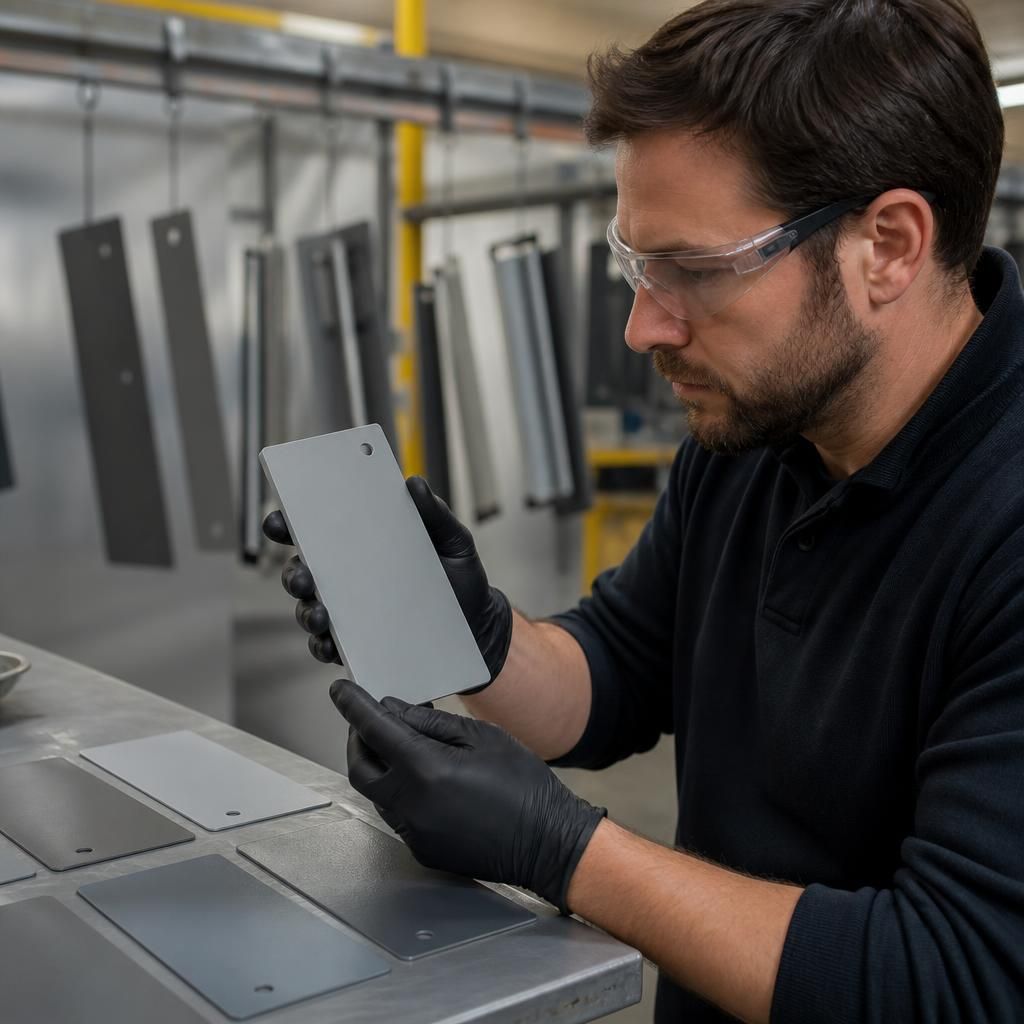
For an unfamiliar combination of metal, epoxy primer and powder coating, validate the complete system on a representative sample or test panel before processing a production batch. This can reveal incompatibility, trapped solvent, loss of adhesion, colour change or surface defects that may not be apparent from the individual product data sheets alone.
The test should reflect the proposed preparation method, primer film build and powder-coating cure. Inspect the finished sample for adhesion and appearance, and retain the agreed result as a reference for subsequent components.
Ask about epoxy primer before powder coating
If you are considering an epoxy primer beneath powder coating, discuss the substrate, component design and intended service conditions with a coating specialist before processing. This helps establish a suitable preparation and coating specification for your metal components.