

What steps are involved in preparing stainless steel for epoxy primer application?
Preparing stainless steel for epoxy primer involves removing grease, oils, dirt and surface contaminants, followed by creating a clean, lightly profiled surface for mechanical adhesion. The steel should then be thoroughly rinsed or cleaned as appropriate, dried completely and inspected before the epoxy primer is applied.
Preparing stainless steel for epoxy primer is a controlled process that goes beyond making the surface look clean. The substrate must be assessed, physically corrected, protected from recontamination and brought into the condition specified by the primer manufacturer and the complete coating system.
1. Confirm the substrate and coating requirements
- Identify the stainless steel grade where this affects chemical resistance, surface treatment or service performance.
- Check the primer technical data sheet for requirements relating to surface profile, approved preparation methods, mixing, application and recoating.
- Confirm that the epoxy primer is suitable for stainless steel and compatible with the intended powder coating or other subsequent finish. A technically sound preparation can still fail if the products are not designed to work together.
2. Examine the condition of the component
Look for weld discolouration, heat tint, embedded particles, scratches, pitting, corrosion staining, burrs, sharp edges and areas that may be difficult to reach. Welds and fabricated joints require particular attention because uneven profiles, spatter and small crevices can interrupt primer coverage. Any damaged or unstable material should be dealt with before coating rather than concealed beneath the primer.
3. Correct physical defects
Remove burrs and weld spatter, smooth sharp edges where the coating could become thin, and repair or reject components with unacceptable pits or surface damage. Edges, corners, recesses and the underside of brackets should be considered during preparation because they are common areas for incomplete coverage. Threaded holes, bearing faces, electrical contact points and close-tolerance mating surfaces should be masked or otherwise protected where primer would interfere with assembly.
4. Control iron and abrasive contamination
Stainless steel should be prepared using equipment and abrasive materials that have not been contaminated with ordinary carbon steel. Transferred iron particles can later produce rust staining and undermine the expected corrosion resistance of the stainless surface. Dedicated tools, clean work areas and suitable non-contaminating abrasives help prevent this problem. After preparation, handle the component with clean gloves rather than bare hands to avoid reintroducing salts and skin oils.
5. Deal with weld heat tint appropriately
Heat tint around welds can differ chemically and physically from the surrounding stainless steel. It should not simply be painted over if it is loose, heavily oxidised or inconsistent with the specified coating system. The appropriate treatment may involve controlled mechanical preparation or a chemical treatment approved for the particular stainless grade and coating process. Chemical products must be fully compatible with the primer and handled according to their safety and technical instructions.
6. Establish suitable application conditions
Before primer application, check the temperature of the steel, the surrounding air and the likelihood of condensation. The surface should meet the primer manufacturer’s requirements, including any stated dew-point margin, humidity limit or temperature range. Stainless steel can appear dry while still carrying condensation, particularly when its temperature changes during handling. Components should therefore remain protected from moisture and airborne contamination between preparation and priming.
7. Plan masking and handling
Masking should be completed after preparation has been defined but before the primer is applied. Use masking materials that will not shed fibres or leave adhesive residue. Lifting points and support locations should be planned so that prepared areas are not touched, scraped or placed on dirty surfaces. If the component must be moved, use clean supports and minimise the time it is exposed before coating.
8. Carry out a final pre-application check
The final check should confirm that the required surface condition has been achieved, that no visible residue or loose material remains, and that the component has not been recontaminated during handling or masking. Where the part is complex, inspect welds, recesses, corners and concealed faces separately. A surface profile measurement, cleanliness check or trial panel may be appropriate when required by the specification or when the coating system has not previously been validated on that stainless substrate.
Only after these checks should the epoxy primer be prepared and applied in accordance with its product data sheet. The mixing ratio, induction period, usable pot life, film thickness and overcoating interval are product-specific; treating them as generic values can cause poor curing or interfere with the subsequent powder coating. For production work, recording the substrate condition, preparation method, primer batch and application conditions provides useful traceability if the finished coating later requires investigation.
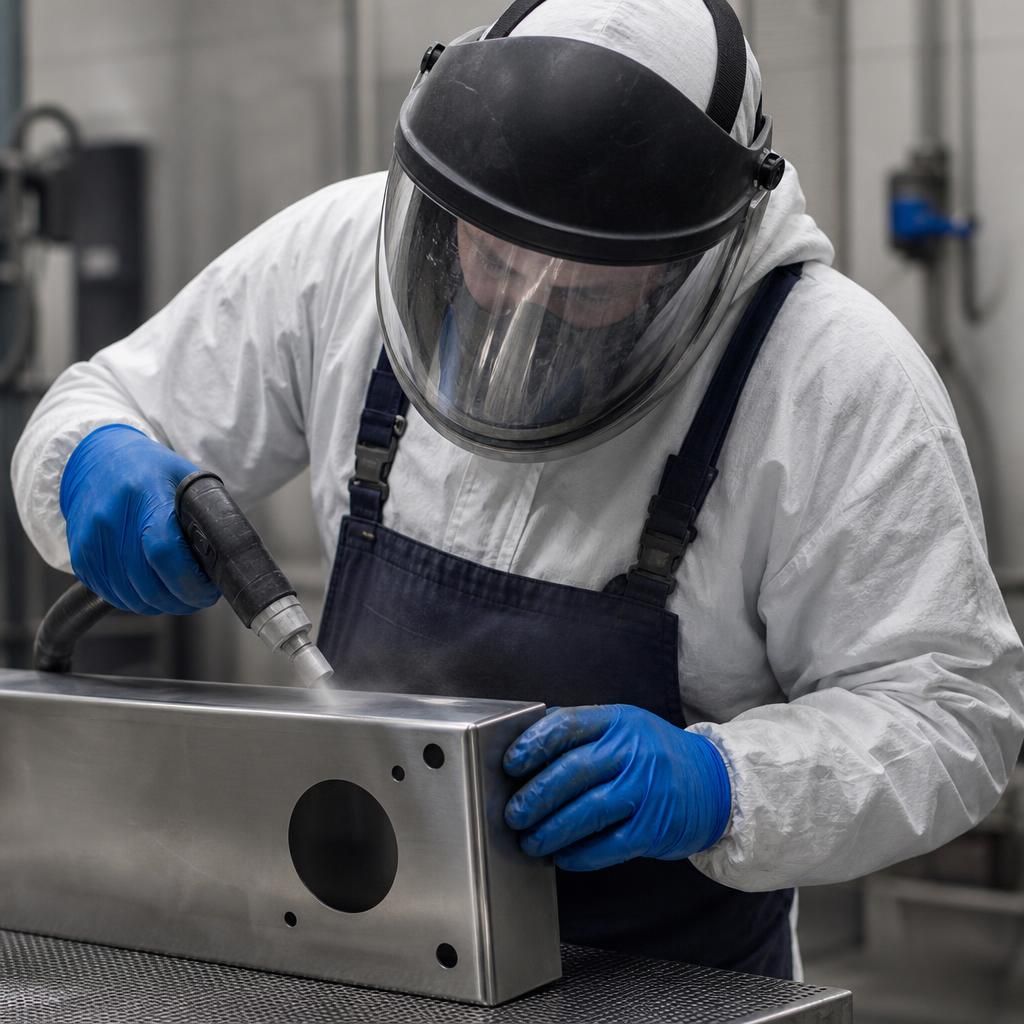
Stainless steel’s passive surface layer should be considered when selecting the preparation sequence. Chemical passivation is intended to improve corrosion resistance, not to create the mechanical key required for epoxy adhesion, so it should not be treated as a substitute for the specified surface preparation.
If an acid treatment is used to remove heat tint or contamination, it must be approved for the stainless grade and coating system. Any residue should be removed using the method stated by the treatment and primer manufacturers, because trapped chemicals or salts can interfere with curing and may cause blistering or loss of adhesion beneath the primer.