

What preparation processes are necessary to ensure optimal adhesion of epoxy primer on stainless steel?
Optimal adhesion of epoxy primer on stainless steel requires thorough degreasing, removal of oxides and contaminants, controlled abrasion or suitable abrasive blasting, followed by rinsing and complete drying. The prepared surface should be clean, lightly profiled and free from dust, salts, moisture and handling residue before the primer is applied.
Optimal epoxy-primer adhesion on stainless steel depends on controlling the entire preparation sequence, not simply making the surface appear clean. Stainless steel forms a passive chromium-rich oxide layer that can be chemically resistant and relatively smooth, so preparation must produce a sound, consistent bonding surface without embedding contaminants or damaging the substrate.
Begin with a condition assessment. Identify the stainless-steel grade where possible, examine the component for polishing compounds, oil, weld residue, heat tint, corrosion staining, sharp edges and areas that have been previously coated. Check whether the part contains crevices, threaded sections, folded joints or drainage points that could retain chemicals or moisture. The intended service environment also matters: immersion, outdoor exposure, chemicals and frequent handling place greater demands on the primer-to-metal bond than a dry, lightly used application.
Deal with fabrication defects before final preparation. Weld spatter, raised burrs, sharp corners and loosely attached scale can create weak points beneath the coating. Welds should be continuous and sound where required, while pinholes, crevices and incomplete joints should be assessed because they can trap preparation residues and later contribute to underfilm corrosion. Edges should be suitably treated so the primer and subsequent powder coating can cover them consistently rather than pulling away from an excessively sharp edge.
Weld heat tint and localised discolouration require particular attention. These areas may have a different surface chemistry from unaffected stainless steel and can behave inconsistently during coating. They should be treated as part of the preparation plan rather than assumed to be equivalent to the surrounding material. Any chemical treatment used for this purpose must be compatible with the stainless grade, the component design and the waste-handling requirements.
Control the preparation materials. Tools, abrasives, cloths, blasting media and handling equipment should not introduce free iron, carbon steel particles, grease or other foreign matter. Equipment previously used on ordinary steel can contaminate stainless steel and create rust staining after coating. Dedicated or suitably controlled tools and media are therefore preferable. Abrasive selection should also reflect the required surface profile: an aggressive process can distort thin sections or obscure detail, while an insufficiently controlled process may leave an inconsistent key for the primer.
Pay attention to chemical residues. Pickling, passivation or other specialist treatments may be appropriate in some fabrication situations, but they are not interchangeable with coating preparation. If such treatments are used, all residues and reaction products must be removed according to the treatment specification. Acids, alkaline cleaners, salts and detergent films left in joints or surface depressions can interfere with curing and may promote blistering or loss of adhesion. The final rinse quality should be controlled rather than judged only by appearance.
After preparation, inspect the component under suitable lighting and, where the specification requires it, use relevant surface checks to confirm that no visible residue, loose matter or damaging contamination remains. Pay particular attention to weld toes, recesses, holes, folded areas and the underside of the part. A surface that looks acceptable in an open area may still contain contamination in these less accessible locations.
Manage the interval before priming. Stainless steel should not be left exposed to conditions that allow condensation, airborne salts, workshop dust or handling contamination to accumulate. Use clean gloves when moving prepared components and avoid touching coating areas with bare hands. Components should be supported in a way that does not mark the prepared surface or transfer oil from racks, hooks and transport equipment.
Environmental control is part of preparation. Before applying epoxy primer, confirm that the metal and surrounding air are suitable for the product’s application instructions. The surface must be above the dew point by the specified margin, with no visible condensation and with humidity, temperature and ventilation within the primer manufacturer’s limits. This is especially important when stainless steel is cooler than the surrounding air, as it can attract an invisible moisture film even when the workshop feels dry.
Mask areas that must remain uncoated. Threads, earth points, bearing fits, drainage holes, mating faces and dimensional interfaces should be protected using materials that will not shed fibres, leave adhesive residue or react with the primer. Masking should be planned before the final preparation stage so that the coating boundary is clean and the prepared surface is not contaminated during handling.
Before production coating, establish a documented inspection point covering the substrate condition, preparation method, surface cleanliness, profile where specified, environmental readings, masking and primer recoat window. A representative test piece or trial area can help confirm that the selected preparation and primer system are compatible with the stainless substrate, particularly where the component has mixed weld zones, polished areas or a demanding service environment. The epoxy primer should then be mixed, applied and overcoated strictly within its technical data-sheet requirements, because correct stainless-steel preparation cannot compensate for incorrect mixing, excessive film thickness or application outside the product’s curing limits.
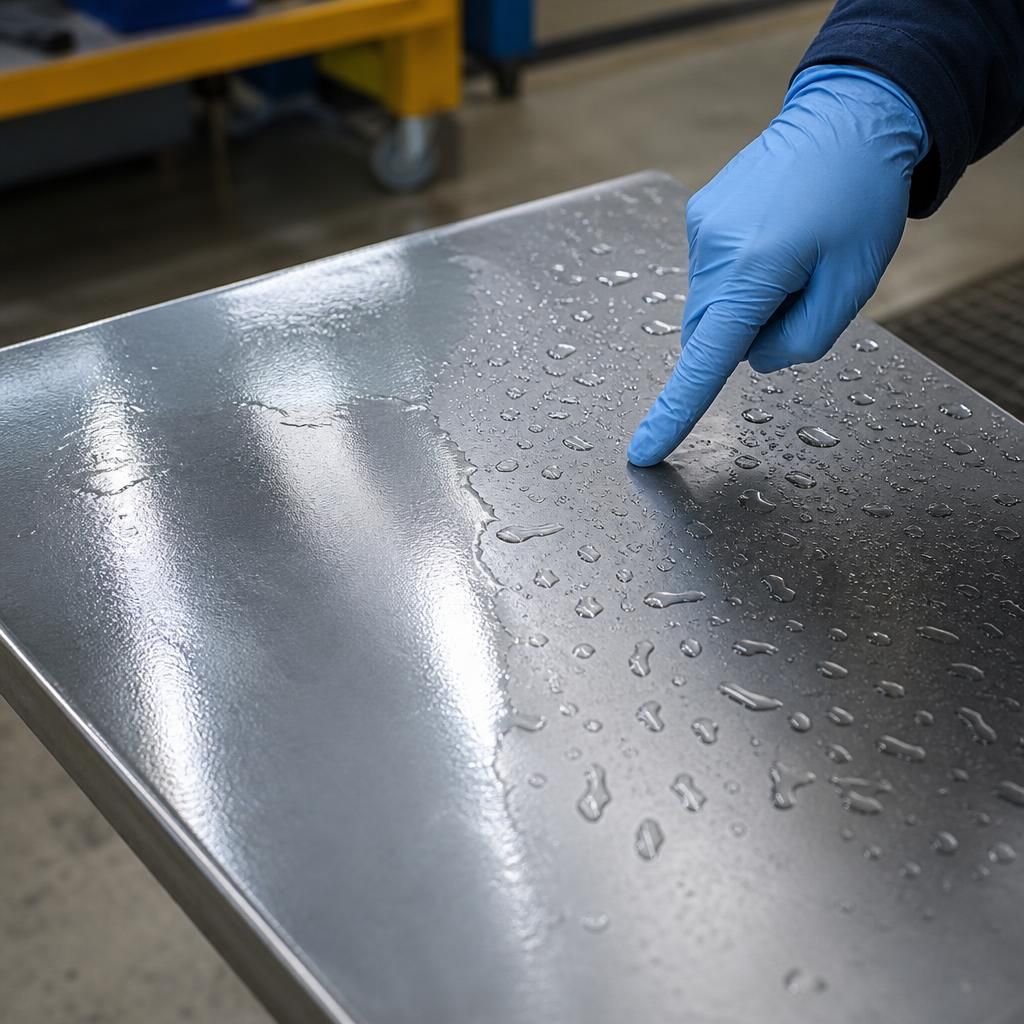
A water-break check can help verify that degreasing has removed oily contamination from stainless steel before epoxy primer application. After the final cleaning and rinse, clean water should form a continuous film across the surface. Beading or pulling back indicates that oil, polish residue or another hydrophobic contaminant may still be present, so the area should be cleaned again and reassessed.
This check is a practical indication of surface cleanliness, not a replacement for the primer manufacturer’s specified inspection requirements. It does not confirm the absence of salts, abrasive dust or chemical residues, and the component must still be rinsed appropriately and dried completely before priming.