

What impact does the application method of epoxy primer have on its effectiveness for stainless steel?
The application method directly affects the epoxy primer’s film thickness, coverage and adhesion to stainless steel, which in turn influences the performance of the subsequent powder coating. Spray application generally provides the most uniform finish on production parts, while brushing or rolling can be suitable for small areas but may leave visible marks or uneven thickness if not carefully controlled.
The application method affects how effectively epoxy primer protects stainless steel by controlling surface contact, film build, edge coverage, solvent release and the condition of the cured primer. A suitable method must match the component’s size, geometry, production volume and the type of powder coating that will follow. The best result comes from a controlled process in which preparation, mixing, application and curing are treated as one system rather than as separate stages.
Liquid spray application is commonly preferred for fabricated components and production work because it can place a controlled layer over broad faces, recessed areas and complex profiles. The spray equipment must be correctly set up for the primer’s viscosity and formulation. Excessive atomisation or an unsuitable spray distance can cause dry spray, overspray or poor wetting, while excessive material flow can create runs, sags and solvent entrapment. Operators should use consistent gun movement and overlap, paying particular attention to welds, corners, holes and other areas where the coating may retreat or accumulate.
Spray application is not automatically effective simply because it is fast. Stainless steel has a relatively smooth, chemically resistant surface, so the primer must wet the prepared metal rather than sit on contamination or a weak surface film. Parts should be positioned so that the spray reaches all required faces without heavy build-up on lower edges. Where components have internal sections or narrow returns, the equipment and spray sequence may need adjusting to prevent shadowing and incomplete coverage.
Brushing and rolling provide useful control for small components, repairs, localised areas and awkward sections that cannot be reached easily with spray equipment. These methods can work well when the applicator maintains a consistent wet layer and avoids repeatedly working material after it has begun to set. Brush marks, roller texture and localised thickening may remain visible, and excessive working can introduce air into the coating. For parts that will receive a smooth decorative powder finish, the cured primer should therefore be checked for texture or defects before overcoating.
Dipping or flow application may be considered for suitable small components with relatively simple geometry, but it requires careful control of drainage, pooling and access to enclosed features. Primer can collect in recesses, threaded holes and downward-facing corners, creating excessive thickness or slow solvent release. Unless the component can drain properly and the coating system is designed for that method, these defects can undermine the performance of the subsequent finish.
Two-pack liquid epoxy primers require accurate mixing before application. The resin and hardener must be combined in the specified ratio and mixed thoroughly without creating unnecessary air. The usable working life begins once the components are mixed, so material that has started to react should not be extended with additional thinner or applied after its stated working period. Incorrect proportioning can leave the primer under-cured, brittle or poorly receptive to the powder coat applied later.
Application technique also influences the primer’s interaction with stainless steel at edges and welds. Sharp edges can receive less coating than adjacent flat surfaces, while weld zones may contain heat tint, oxides, spatter or residues that interfere with adhesion. These areas need the same preparation and inspection as the main substrate. A primer that is sound on a flat panel may still fail locally if the applicator overlooks weld profiles, cut edges or crevices.
Environmental control is important for every application method. Stainless steel should be above the coating system’s minimum surface-temperature requirement and free from condensation, oil, fingerprints, abrasive dust and cleaning residues. Excessive humidity, airborne contamination or inadequate ventilation can affect wetting, drying and solvent release. The primer should be allowed to cure according to the product and powder-coating system requirements; applying powder too early can trap residual solvent, while waiting too long without following the system guidance may affect intercoat adhesion.
Before powder coating, the primed component should be inspected for:
- complete coverage, including edges, welds, recesses and difficult-to-reach faces;
- runs, pinholes, craters, blistering, dry spray, brush marks or other surface defects;
- consistent curing rather than soft, tacky or easily marked areas; and
- contamination or damage introduced during handling.
Where the primer is intended to form part of a powder-coating system, compatibility must be confirmed rather than assumed. The primer’s permitted film build, recoat window, curing schedule and recommended preparation for overcoating should align with the powder product and the intended service conditions. A technically suitable primer can still give a poor result if it is applied outside those limits.
In practical terms, spray is generally the most controllable option for repeat production, while brush or roller application can be appropriate for limited areas and smaller work. Dipping or flow methods may suit specific geometries only when drainage and film control are proven. Whichever method is selected, effectiveness depends less on the name of the method than on correct stainless-steel preparation, controlled application, proper curing and inspection before the powder coating is applied.
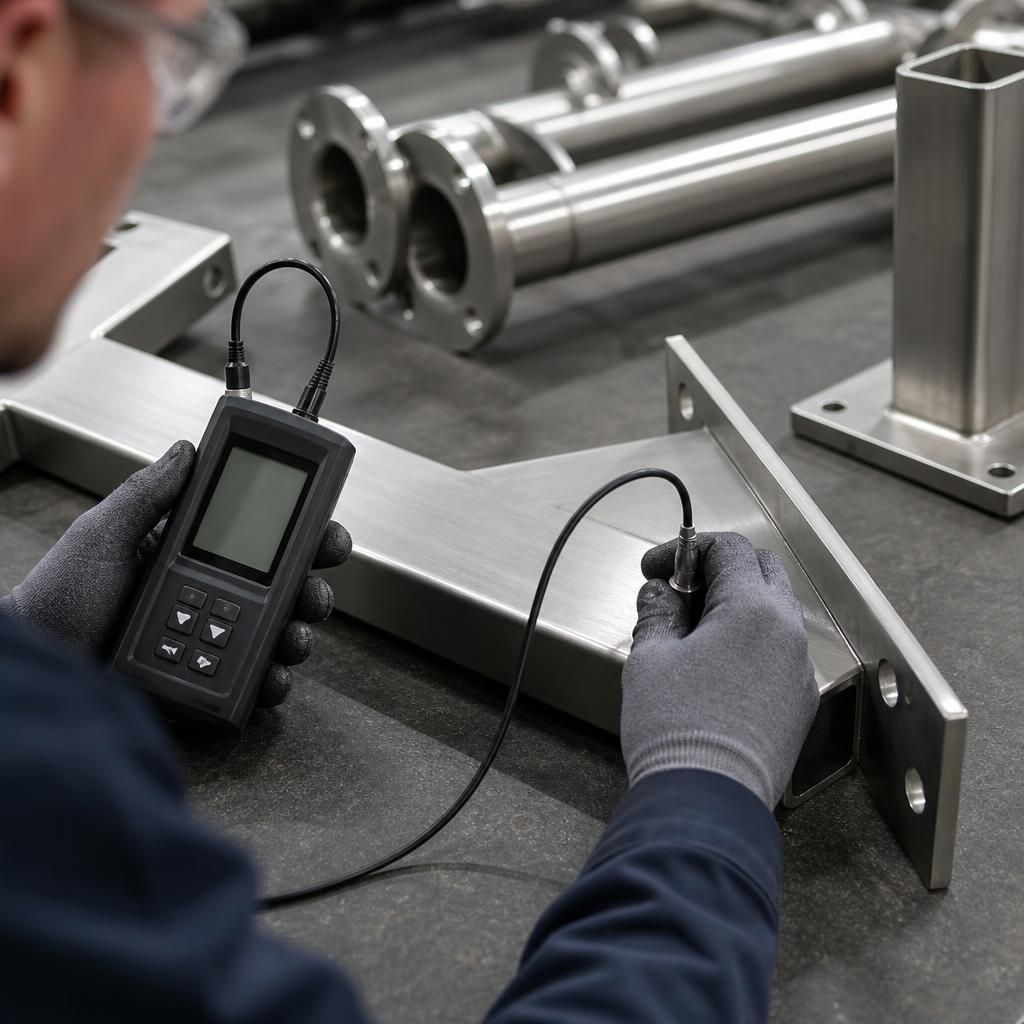
The effectiveness of an epoxy primer application should be assessed by measured dry-film thickness, not by appearance alone. A surface may look evenly coated while having thin areas on edges or excessive build in recesses. After curing, readings taken across representative flat faces, edges and complex features can show whether the chosen application method is producing a consistent film.
Measurement equipment must be suitable for the stainless-steel grade and coating system, with calibration carried out on a comparable uncoated surface or reference standard. For repeat work, a test component or designated inspection panel can help compare application settings before full production begins. This provides objective evidence that the method is depositing the required primer layer without creating excessive build that could affect the powder coating applied afterwards.
Discuss Epoxy Primer Application for Stainless Steel
If you are deciding how epoxy primer should be applied to stainless steel before powder coating, discuss your component geometry, production requirements and intended service conditions with our team. We can help assess a suitable coating approach for your parts.